
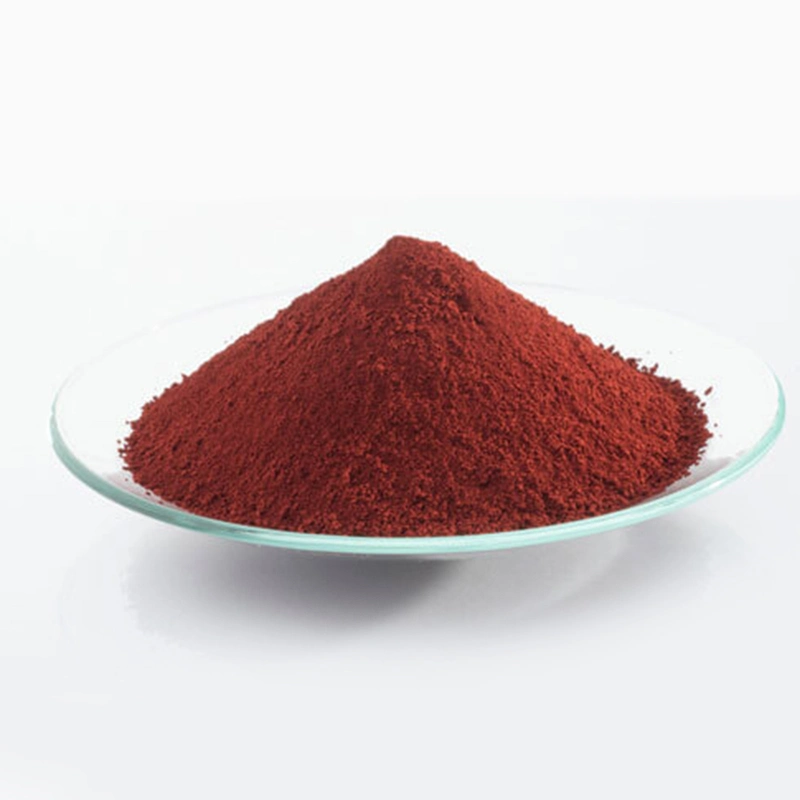
Procurement teams sourcing iron oxide red are confronting a specification reality that the CAS number alone conceals. Iron oxide red, registered under CAS#1309-37-1 and classified as C.I. Pigment Red 101 (C.I. 77491), is not a single product. Within the dominant 130-grade family alone, suppliers offer three distinct undertone modifications: a balanced base grade, a yellow-shifted variant (130H), and a blue-shifted variant (130A). For a coatings formulator or concrete paver manufacturer, the difference between these grades is not a minor color nuance. It is the difference between a batch that matches the approved master standard and one that requires rework, tinting adjustment, or rejection.
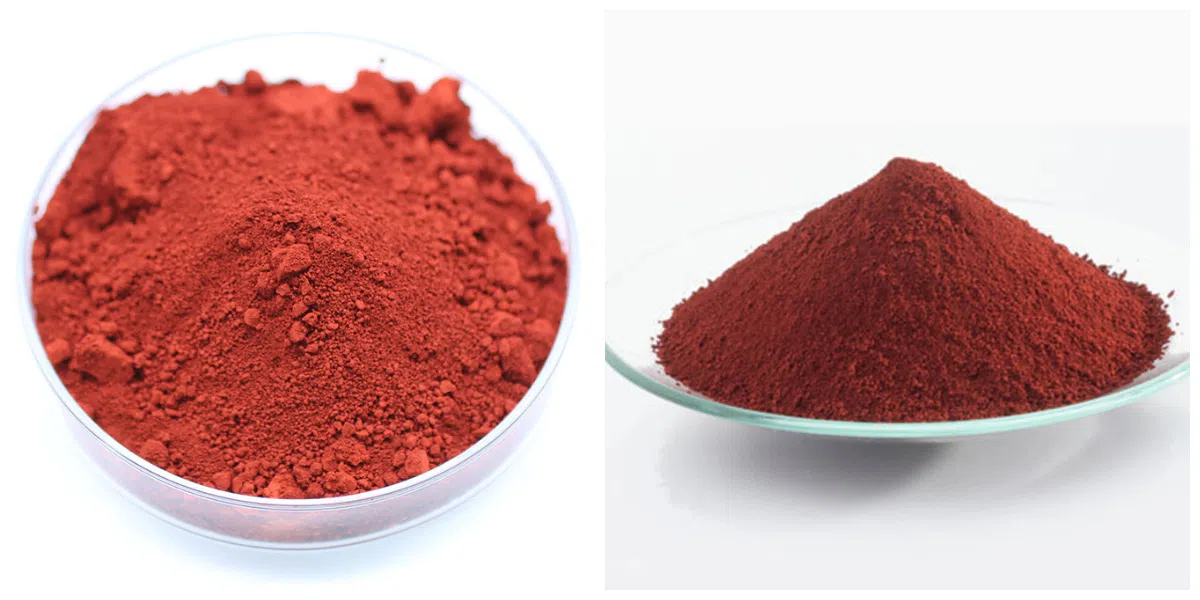
The 130-Grade Matrix: Why Undertone Is the Real Selection Variable
The 130 grade is the volume workhorse of the synthetic iron oxide red market, valued for its pure, bright scarlet tone, extreme opacity, and batch-to-batch color stability. But the base 130 grade is only one of three commercially available undertone modifications. The 130H variant carries a distinctly warmer, yellow-shifted hue, while the 130A variant carries a cooler, blue-shifted or bordeaux-leaning tone. For formulators matching an existing color standard, the selection error most frequently observed is specifying “iron oxide red 130” without defining the undertone. Two suppliers quoting the same CAS number and the same Fe₂O₃ content may deliver materials that produce visibly different finished colors in a white base or a cementitious matrix.
The technical specifications that govern this selection are well established. Fe₂O₃ content is typically specified at ≥96.0% for the premium 130 grades, with oil absorption of 15–25 g/100 g and residue on 45 µm sieve ≤0.3%. The oil absorption figure deserves attention beyond its role as a dispersion proxy: a low oil absorption value economizes binder demand, which matters in high-PVC architectural coatings and in concrete coloring where the pigment competes with cement for available water.
Alkali Resistance: The Construction Industry Non-Negotiable
For construction applications—concrete paver coloring, facing brick, terrazzo, and dry-mix systems—the selection criterion that outranks all others is alkali resistance. Iron oxide red is chemically inert and does not react with calcium hydroxide generated during cement hydration, which is the mechanism that protects colored concrete from color wash-out and efflorescence-related fading. This is not a differentiating feature among reputable suppliers; it is a baseline requirement. The differentiating feature is consistency: whether the pigment disperses uniformly in a low-water cementitious mix without streaking or agglomeration.
The dispersion quality specification—residue on 45 µm sieve ≤0.3%—is the procurement lever that controls this outcome. A supplier whose material routinely approaches the 0.3% ceiling is delivering a coarser grind that will require longer mixing times and may produce visible specks in thin-section concrete products. Buyers qualifying new sources should request sieve residue data on a batch basis, not a typical value.
Market Signals: Cost Pressure Meets Export Growth
The Chinese iron oxide pigment sector, which dominates global supply, is sending mixed signals in 2026. First-half production of iron oxide pigments reached approximately 350,000 tonnes, a slight year-on-year increase. Iron oxide red market prices held at roughly RMB 6,000–6,500 per tonne in June, described as generally stable. But the cost side is tightening: raw materials including sulfuric acid, alkali, iron scrap, and ferrous sulfate have risen materially, and the China Coatings Industry Association forecasts a price increase of RMB 300–500 per tonne in the second half of 2026.
Export data tells a more encouraging story for suppliers. Iron oxide pigment exports rose 7.63% year-on-year by volume and 8.15% by value in the first half, with Russia, India, and Indonesia showing the strongest growth. Exports to Europe were stable to slightly up, while Vietnam and Japan declined. The United States, the primary single-country export destination, grew 0.73%. For international buyers, this export growth pattern implies that Chinese suppliers are actively cultivating non-traditional markets, which may translate into more competitive pricing for buyers in growth regions and firmer pricing for European and North American buyers competing with those flows.
Regulatory Positioning: REACH and the Food-Contact Distinction
For EU-destined shipments, iron oxide pigments require REACH registration. The substance is listed under three CAS numbers—1309-37-1, 1317-60-8, and 1332-37-2—and for formal REACH registration, the correct CAS to use is 1309-37-1. The Iron Oxides Consortium administers the Letter of Access mechanism, and buyers should confirm that their supplier’s registration covers the specific grade and use. For cosmetic applications, C.I. 77491 is listed in the EU CosIng inventory under Regulation (EC) 1223/2009 as of May 2026.
A distinction that procurement teams occasionally blur: the food additive designation E172(ii) for red iron oxide applies to surface coatings of culinary decorations only, and iron oxides are not permitted in foods for infants and young children. A supplier marketing “food-grade” iron oxide red should be asked to specify the exact regulatory basis and intended use, because the food-contact and food-additive pathways carry different documentation requirements.
Selection Checklist for Procurement and Technical Teams
Specify undertone, not just grade number. For 130-family material, define whether the formulation requires the base, 130H (yellow-shifted), or 130A (blue-shifted) variant. Request a drawdown or color chip against the master standard before qualification.
Verify Fe₂O₃ and sieve residue on a batch COA. The ≥96.0% Fe₂O₃ and ≤0.3% residue on 45 µm are the baseline quality markers. Excursions toward the residue ceiling signal dispersion problems in concrete and coatings.
Confirm REACH registration under CAS 1309-37-1 for EU shipments. The other two associated CAS numbers are not the correct basis for formal registration.
Anticipate second-half 2026 price pressure. Chinese producers are absorbing raw material cost increases, and the industry association forecasts RMB 300–500/tonne increases. Annual contracts that lock pricing through Q4 should be evaluated against this outlook.
Audit dispersion performance in the actual matrix. Lab-scale color matching does not predict performance in a low-water cementitious mix or a high-shear coatings dispersion. Request application-specific dispersion data or run a pilot batch.
Iron oxide red is one of the most mature pigments in the industrial catalogue, and that maturity encourages the assumption that CAS#1309-37-1 defines the material. It does not. In a market where the top three Chinese producers hold over half the domestic share and the remaining supply base is fragmented, the procurement decision that protects product quality is the one that treats undertone, dispersion, and regulatory pathway as defined specifications rather than assuming the grade number tells the full story.