Procurement teams sourcing amphoteric surfactants for personal care formulations are encountering a specification problem that the CAS number alone cannot resolve. Lauryl hydroxysultaine, registered under CAS#13197-76-7 and commonly abbreviated as LHSB, is commercially supplied at two distinct concentration tiers: a 35% active aqueous solution and a lower-activity 28–32% grade. The distinction is not a minor dilution adjustment. It determines whether the material delivers the foam-boosting, viscosity-building, and mildness-enhancement performance that formulators specify it for—or whether it becomes an expensive water contribution to the batch.
The Active Matter Gap: 35% vs. 28–32%
Published supplier specifications for the 35% grade cluster around a defined performance window: active content 35.0±2.0%, free amine ≤0.5%, sodium chloride ≤6.0%, pH 5.0–8.0 (some suppliers report 6.0–7.0 at 1% solution), and APHA color ≤200 . The lower-activity grade, by contrast, is listed with effective content of 28–32%, with NaCl content up to 6% and free amine ≤0.5% . For a formulator building a mild body wash or baby shampoo, the 35% grade delivers approximately 17–25% more surfactant per kilogram of purchased material. On a cost-per-active basis, the lower-activity product may be the more expensive input despite a lower drum price.
The chloride ceiling deserves separate attention. LHSB is produced via quaternization chemistry that generates sodium chloride as a byproduct. A specification allowing NaCl up to 6% is standard, but buyers formulating low-chloride or “salt-free” claims should request batch-level chloride data. For systems thickened with sodium chloride, the inherent salt load in LHSB contributes to the rheology profile and must be accounted for in the thickener addition calculation.
Structural Rationale: The Hydroxyl Group and Hard-Water Performance
The selection case for LHSB over conventional betaines rests on its molecular architecture. The molecule couples a quaternary ammonium cation with a sulfonate anion via a hydroxypropyl bridge: C₁₂H₂₅N⁺(CH₃)₂CH₂CH(OH)CH₂SO₃⁻ . This structure confers several performance advantages that suppliers consistently emphasize: superior hard-water resistance, antistatic properties, and biodegradability compared to amidopropyl betaine (CAPB), along with better mildness and foam stability due to the amide-type sulfobetaine character .
The hydroxyl group is not incidental. It increases hydrophilicity and contributes to the “soft feel” that formulators seek in conditioning shampoos and body washes. For procurement teams comparing LHSB against CAPB, the relevant question is not which is cheaper per kilogram, but which delivers the required foam profile and sensory claim at the lowest use level. Published application guidance positions LHSB as a primary or secondary surfactant in premium shampoos, body washes, hand washes, and foam cleansers, with documented utility as a softening and conditioning agent .
Regulatory Positioning: The Green Circle and the CIR Finding
A frequently overlooked selection criterion for LHSB is its regulatory and safety positioning, which is more favorable than many commodity surfactants. The EPA’s Safer Chemical Ingredients List classifies this chemistry with a Green Circle designation—verified to be of low concern based on experimental and modeled data . The Cosmetic Ingredient Review has concluded it is “safe in the present practices of use and concentration” . For brands pursuing clean-label or low-hazard ingredient marketing claims, this documentation is a tangible asset.
The GHS classification is equally relevant: Eye Irrit. 2, notified at 95% by companies in the ECHA C&L Inventory . This is a milder hazard profile than many anionic surfactants used in the same formulations. For formulators replacing a portion of SLES or CAPB with LHSB to reduce irritation potential, the Eye Irrit. 2 classification supports the mildness claim substantiation.
Supply Chain Reality: Chinese Producers Dominate, Documentation Varies
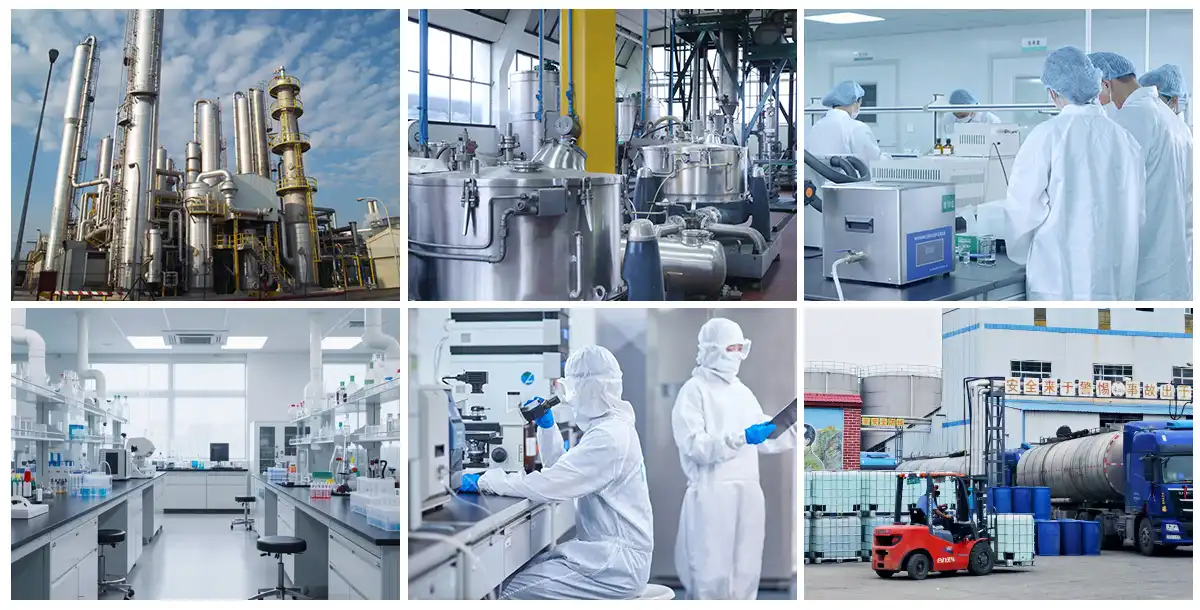
The commercial supply base for CAS#13197-76-7 is overwhelmingly Chinese. ChemicalBook listings show multiple Shandong, Henan, Hubei, and Guangdong-based suppliers offering the 35% grade in 200 kg drums and smaller packaging, with laboratory-scale quantities available through Macklin, Bide, and other reagent distributors at 35% in water . International specialty distributors such as Parchem list the material for personal care and detergent applications .
The documentation quality across this supplier base is uneven. Some suppliers provide full TDS-level specifications including APHA color, free amine, NaCl, and pH. Others list only “35%” and “light yellow viscous liquid.” For procurement teams qualifying new sources, the minimum acceptable documentation set should include: active content by method (not nominal), free amine, NaCl, pH at specified dilution, APHA color, and a batch-specific COA. The difference between a supplier who can provide this and one who cannot is the difference between a qualified raw material and a formulation variable.
Application Selection Guidance
For personal care formulators, LHSB is most appropriately specified where the following performance requirements coincide: mildness to skin and eyes, foam volume and stability in hard water, viscosity response in surfactant blends, and compatibility with cationic conditioning agents. The recommended use level varies by application, but typical guidance positions it as a secondary surfactant at 2–8% active in body wash and shampoo systems, with higher loadings in “sulfate-free” or “gentle” claims where it contributes both foaming and mildness.
For industrial applications, the same chemistry appears in hard-surface cleaners, metal cleaning, and oilfield applications where its hard-water tolerance and antistatic properties are valued . These uses typically tolerate the lower-activity grade, but buyers should verify that the NaCl load does not interfere with the intended formulation.
Selection Checklist
Specify active content explicitly and verify by batch COA. The 35% grade is the performance standard; 28–32% material requires reformulation or higher use levels.
Request APHA color and free amine data. APHA ≤200 and free amine ≤0.5% are the standard quality markers for personal care use.
Account for inherent NaCl in thickener calculations. At up to 6% NaCl, LHSB contributes to the electrolyte load that affects viscosity response.
Use the regulatory documentation. The EPA Green Circle and CIR safety finding support clean-label and mildness claims; request the supporting documentation from the supplier for substantiation files.
Qualify beyond the CAS number. Two suppliers offering “CAS 13197-76-7, 35%” may differ materially in color, free amine, and chloride. The specification sheet, not the CAS listing, defines the material.
Lauryl hydroxysultaine is not a high-volume commodity, and that is precisely why specification discipline matters. In a market served by numerous small and mid-sized Chinese producers with variable documentation, the procurement decision that protects formulation performance is the one that treats the 35% active grade as a defined specification rather than a generic CAS number purchase.