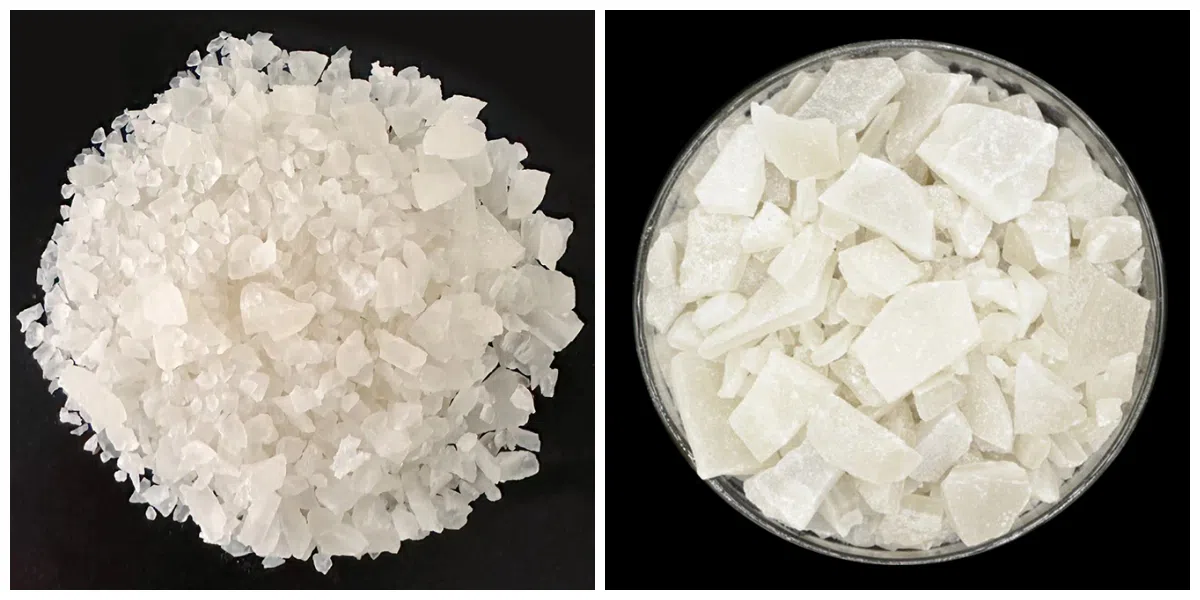
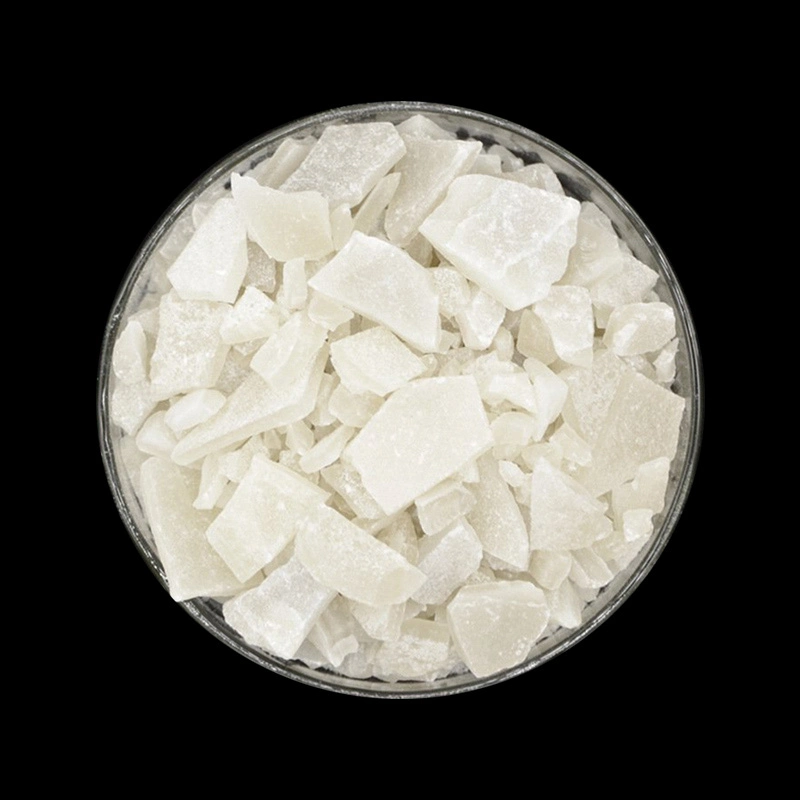
As municipal water infrastructure spending accelerates globally, procurement teams are revisiting a deceptively simple specification: aluminium sulphate. The commodity coagulant, registered under CAS#16828-11-8, is facing a bifurcated supply landscape in 6, with standard-grade material competing on price while low-iron and iron-free grades command premiums tied to regulatory compliance and membrane downstream compatibility. The product selection decision is no longer merely a function of Al₂O₃ content.
The Grade Matrix: Why “Standard” Is Rarely Enough
Commercial dry aluminium sulphate is not a single specification. According to product profiles aligned with ANSI/AWWA B403, the material is typically offered in Standard, Low Iron, Iron-Free, and FCC Food Grade designations. The distinction hinges on total soluble iron expressed as Fe₂O₃: Standard grade permits up to 0.7%, Low Iron caps at 0.05%, and Iron-Free at 0.02% . For potable water treatment, the iron content directly affects coagulant performance and post-treatment colour. In paper sizing and food processing, iron can catalyse undesirable reactions or discolouration.
The CAS#16828-11-8 designation specifically corresponds to the hexadecahydrate form, Al₂(SO₄)₃·16H₂O, with a molecular weight of 630.38 and a minimum assay of 98.0% for purified grades . Buyers should note that commercial “dry alum” often approximates the 14-hydrate form, and assay specifications must be matched to the actual hydration state on the certificate of analysis. For laboratory or pharmaceutical-adjacent applications requiring the 16-hydrate, the impurity profile is tighter: chloride ≤0.01%, iron ≤0.01%, and ammonium ≤0.05% .
Water Treatment: The Demand Anchor and Its Technical Nuance
Water and wastewater treatment remains the dominant consumption segment, and the technical rationale is well established. Aluminium sulphate is the most widely used aluminium coagulant in waterworks practice, available in block, kibbled, ground, and liquid forms. For solid grades, dissolution engineering matters: solubility increases with temperature, from approximately 33.5 g per 100 g water at 10°C to 40.4 g at 30°C, and saturated solutions are typically diluted four- to sixfold before dosing .
A less-discussed selection criterion is material compatibility. Aluminium sulphate is aggressive to concrete, and storage tanks must be lined with acid-resistant bricks, fibre glass, or resin coating. For dosing systems, thermoplastic materials such as PVC, polyethylene, and polypropylene are suitable, while common metals including iron, zinc, copper, and their alloys are unsuitable . Procurement specifications that ignore wetted-parts metallurgy risk premature failure in saturator and day-tank systems.
Recent research also points to operational refinements. Jar-test studies on cyanobacteria-laden source waters confirm that optimum aluminium sulphate dose and pH must be established empirically; the coagulant’s efficacy in removing algal cells and associated turbidity is highly pH-dependent, and cationic polyelectrolyte coagulant aids can improve performance . For plants facing seasonal algal blooms, this argues for maintaining dose-response curves rather than fixed feed rates.
Market Signals: Capacity Upgrades and Regional Shifts
On the supply side, investment is flowing toward higher-purity granular capacity. In September 6, a new resident of the Gomel-Raton Free Economic Zone announced a modernisation project targeting up to 9,000 tonnes per year of high-purity top-grade granular aluminium sulphate, with an additional 3,500 tonnes of other grades. The project explicitly targets drinking water treatment as the most effective coagulant application, alongside wastewater, pulp and paper, and textiles, with sales split between Belarus (39%) and Russia (61%) . The language of the announcement— “import substitution” and “raw material independence” for EAEU industrial consumers—signals that regional supply security remains a procurement priority in Eastern Europe and Central Asia.
Market forecasts place the global aluminium sulphate market at approximately USD 1.61 billion in 2025, growing at a CAGR near 3% through 2034 . Asia-Pacific is the dominant and fastest-growing region, with China alone accounting for roughly 17.9% of global sales in 2025, driven by municipal water infrastructure and textile dyeing operations . For exporters and multinational buyers, this geographic concentration implies that freight economics and anti-dumping exposure are as relevant as unit price when locking in annual contracts.
Selection Checklist for Procurement Teams
Match grade to application, not just assay. Standard grade (Fe₂O₃ ≤0.7%) is acceptable for many industrial wastewater and paper sizing uses. Potable water plants should specify Low Iron (≤0.05%) or Iron-Free (≤0.02%) and require NSF/ANSI 60 certification where applicable .
Verify hydration state and assay basis. CAS#16828-11-8 refers to the 16-hydrate. If the supplier’s COA reports Al₂O₃ content without stating hydration, request clarification; commercial 14-hydrate and 16-hydrate are not directly interchangeable on a weight-for-weight basis.
Audit dissolution and storage design. Confirm tank lining and dosing-system materials against the corrosivity profile. Concrete without acid-resistant lining is unacceptable for aluminium sulphate service .
Monitor regional capacity changes. The Belarus/Russia granular project coming online toward 2027–2031 may ease high-purity granular availability in the EAEU but is unlikely to materially alter global trade flows .
The aluminium sulphate market is mature, but maturity does not mean commoditisation at the specification level. The gap between a standard-grade quotation and a certified low-iron potable-grade quotation is where water treatment operators either secure compliance or inherit a coagulation problem.