Product Description
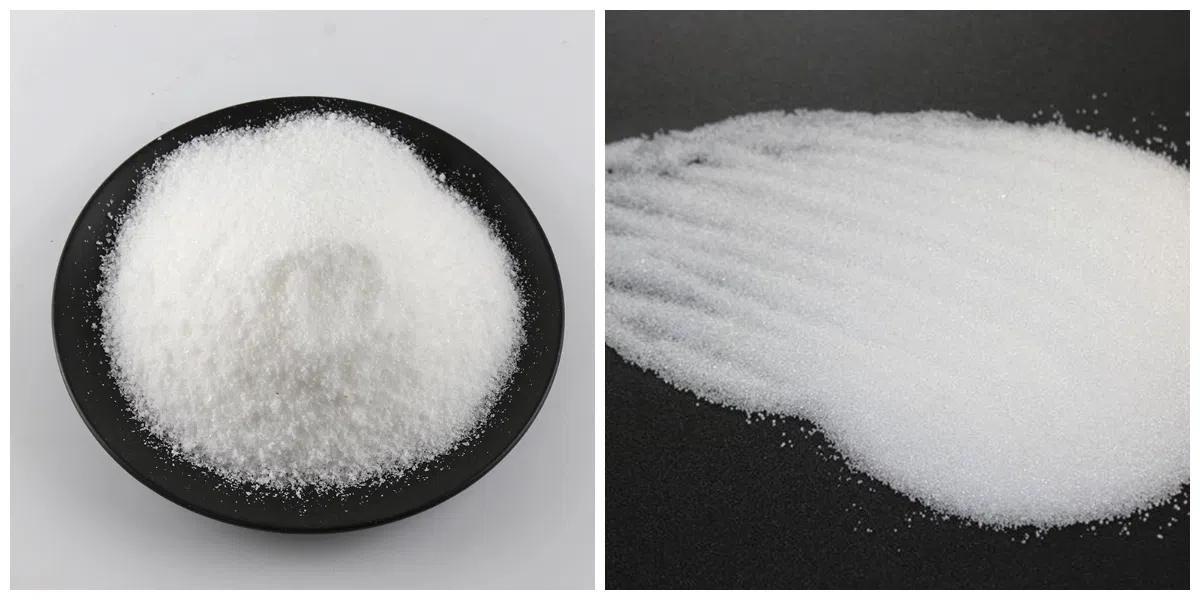
Sodium Polyacrylate is a high-molecular-weight anionic polymer typically supplied as a white, odorless powder with strong hygroscopic properties. Its molecular structure contains numerous hydrophilic carboxylate groups, which contribute to its excellent water affinity, thickening capability, and rheological properties.
When gradually dispersed and dissolved in water, Sodium Polyacrylate forms a transparent, highly viscous aqueous solution. Its thickening performance is primarily attributed to the electrostatic repulsion between negatively charged carboxylate groups along the polymer chains. This repulsion promotes molecular chain expansion and increases the hydrodynamic volume of the polymer, resulting in significant viscosity enhancement.
The viscosity of Sodium Polyacrylate solutions is influenced by factors such as polymer concentration, molecular weight, temperature, pH, and electrolyte content. Under alkaline conditions, increased ionization of carboxyl groups can promote polymer chain expansion and viscosity development. However, the presence of acids and multivalent metal ions, particularly divalent and trivalent cations, may reduce viscosity through charge screening and ionic interactions.
Sodium Polyacrylate is generally insoluble in common organic solvents such as ethanol and is widely used as a thickening agent, rheology modifier, dispersant, and functional polymer in various industrial formulations. Its solution properties can be maintained during storage under appropriate conditions, making it suitable for applications requiring consistent viscosity and formulation stability.
Product Parameters
| Density | 1.32 g/mL at 25 °C |
| refractive index | n20/D 1.43 |
| storage temp. | 2-8°C |
| form | powder |
| Specific Gravity | 1.23 |
| PH Range | 6 - 9 |
| Odor | Odorless |
| PH | 6-9 |
| Hydrolytic Sensitivity | 0: forms stable aqueous solutions |
| Stability: | Stable, but moisture sensitive. |
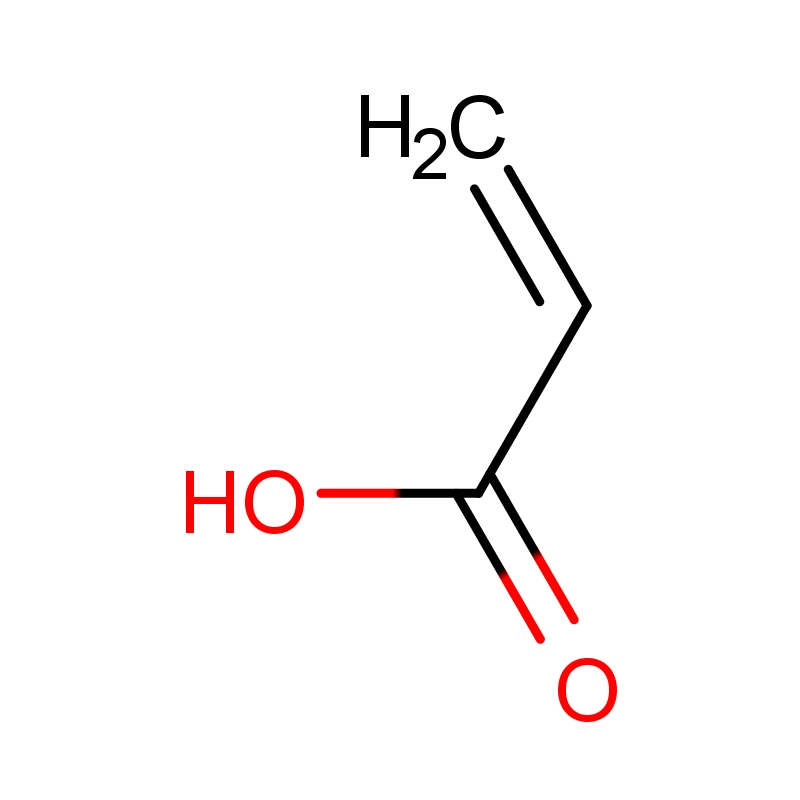
| InChI | InChI=1S/C3H4O2/c1-2-3(4)5/h2H,1H2,(H,4,5) |
| InChIKey | NIXOWILDQLNWCW-UHFFFAOYSA-N |
| SMILES | C(=O)(O)C=C |
| EPA Substance Registry System | Sodium polyacrylate (9003-04-7) |
Safety Information
| Hazard Codes | Xi |
| Risk Statements | 36/37/38-36 |
| Safety Statements | 26-36 |
| WGK Germany | 3 |
| RTECS | WD6826000 |
| F | 3 |
| TSCA | Yes |
| HS Code | 39069090 |
Application Scenarios
Sodium Polyacrylate is a multifunctional water-soluble polymer widely used in water treatment, detergent manufacturing, household cleaning products, and industrial formulations. Owing to its excellent dispersing, thickening, water-absorbing, and rheology-modifying properties, it serves several important functions across different industrial applications.
- Scale Inhibition and Water Treatment – Acts as a scale inhibitor and dispersing agent in industrial water treatment systems. It helps prevent the deposition of inorganic scale-forming substances, such as calcium carbonate, and improves the dispersion of suspended particles, contributing to more efficient water system operation.
- Detergent Formulations and Processing – Used as a detergent builder and processing aid in laundry detergents, soaps, and household cleaning formulations. It helps bind hardness ions, disperse particulate soils, and prevent dirt redeposition, thereby improving cleaning efficiency and formulation stability.
- Water Absorption and Retention – Certain grades of Sodium Polyacrylate exhibit strong water-absorbing and water-retention capabilities. They are used in absorbent materials for aqueous liquid spills, as well as in agricultural and horticultural formulations to improve soil moisture retention and support controlled water release.
- Suspension and Formulation Stabilization – Functions as a suspending agent, dispersant, and stabilizer in various aqueous formulations. Its viscosity-enhancing properties help maintain uniform particle distribution, reduce sedimentation, and improve the physical stability of formulated products.
- Emulsion and Rheology Modification – Used as a rheology modifier and formulation aid in selected industrial and household products. It helps adjust viscosity, improve texture, and maintain formulation consistency during storage and application.