Executive takeaway for procurement and formulation engineers: Sodium polyacrylate is not one product. It is a molecular-weight continuum spanning dispersants at 1,000–10,000 Da, chelating agents in the several-thousand to 100,000 Da range, thickeners at 100,000 to several million Da, and flocculants above 1,000,000 Da. A purchase order that specifies only “sodium polyacrylate, CAS 9003-04-7” without an MW window or viscosity target is functionally incomplete. The second force reshaping sourcing is the superabsorbent polymer (SAP) feedstock cycle: acrylic acid volatility and the exit of non-integrated producers are squeezing the hygiene-grade supply base, making backward integration a more reliable predictor of supply security than catalog availability.
Product Selection: The MW–Function Map Buyers Actually Need
The Japanese producer Nippon Shokubai publishes the clearest public guidance on grade selection, and it should be the first reference for anyone building a specification. The functional thresholds are not marketing language—they reflect real differences in solution rheology and adsorption behavior.
| Target function | Recommended MW range | Key formulation note |
|---|---|---|
| Dispersant (pigment, slurry, scale inhibition) | 1,000 – 10,000 | Adsorbs onto solids; efficacy depends on electrostatic repulsion, not viscosity |
| Chelating agent (detergent builder) | Several thousand – ~100,000 | Captures Ca²⁺/Mg²⁺; safer profile than low-MW chelators |
| Thickener | 100,000 – several million | Highest thickening near pH 10 due to expanded chain conformation |
| Flocculant (wastewater, food processing) | >1,000,000 | Bridges particles; high MW is essential |
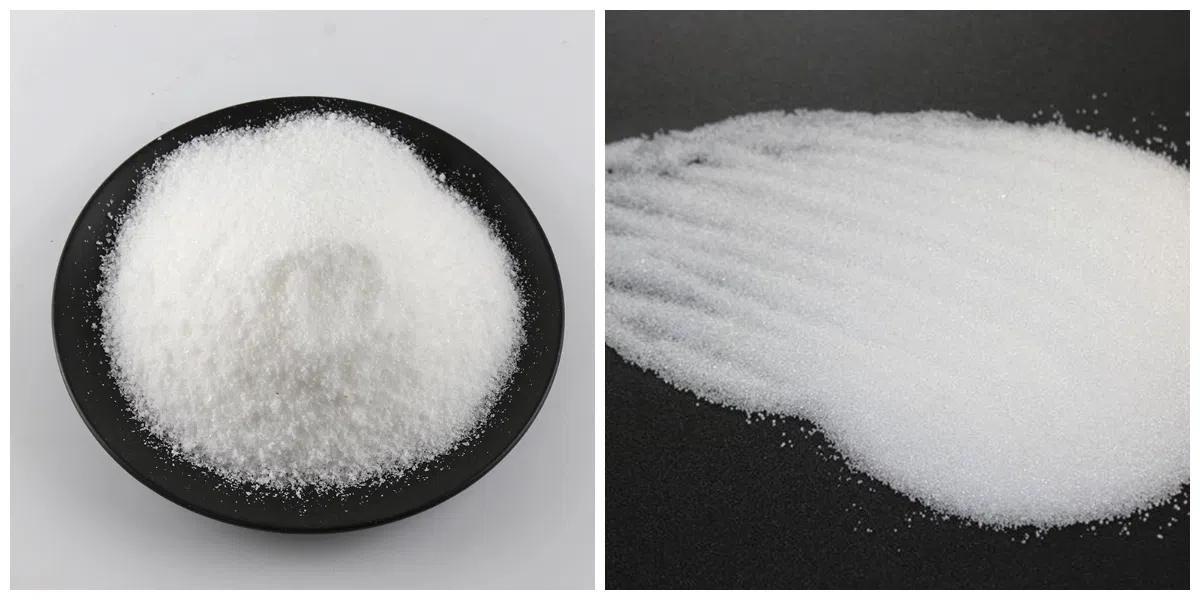
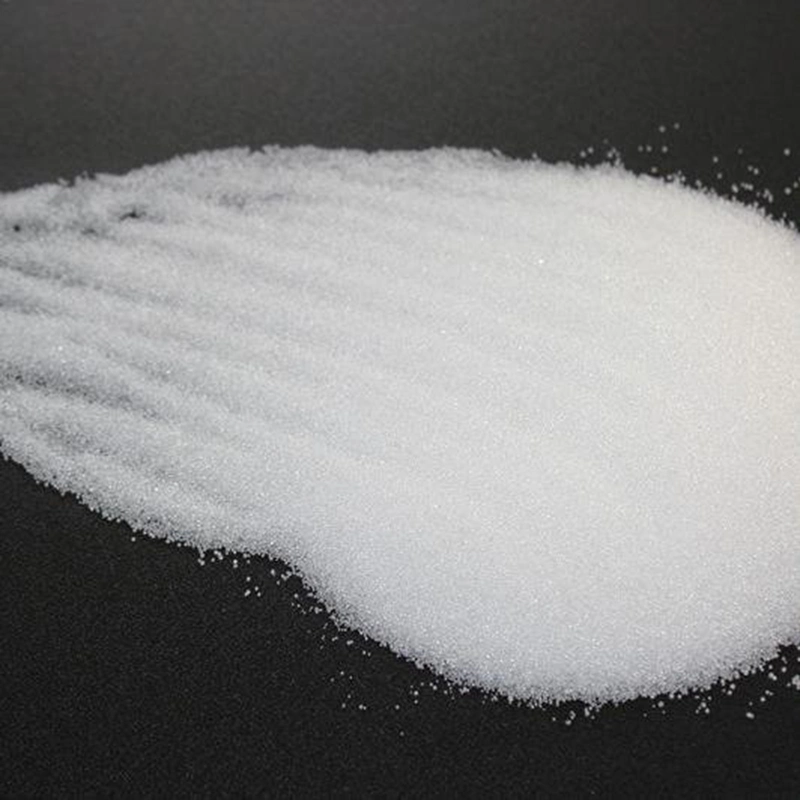
Physical form is the second decision axis. Aqueous solution grades eliminate dissolution time and dust exposure; powder grades are specified when added water is undesirable or when high solids concentration matters. For food-contact applications, the Chinese national standard GB 29948-2013 sets the relevant ceiling: residual monomer ≤1.0%, heavy metals (as Pb) ≤20 mg/kg, and a 0.2% solution viscosity window of 250–430 mPa·s at 20°C. Industrial-grade material under HG/T 2838-2018 has a wider specification envelope, with solid content ≥90% and molecular weight up to 30 million for crosslinked SAP-type grades.
A specification gap worth flagging: Many Chinese supplier listings quote “molecular weight 3 million–30 million” for industrial solid grades without specifying whether the material is linear or crosslinked. For dispersant and thickener applications, a crosslinked lot will not fully dissolve and will leave gel particles. Buyers should require a solubility test (e.g., 0.5% in deionized water, 2 h agitation, sieve residue) in addition to the CoA.
The SAP Feedstock Squeeze: Why Hygiene-Grade Supply Is Consolidating
The superabsorbent polymer market—sodium polyacrylate’s largest volume outlet—is in the middle of a structural shakeout. Northeast Asian acrylic acid spot quotes swung between USD 1,200 and USD 1,600 per ton in 2024 after unplanned cracker outages, and European contracts climbed 8% quarter-on-quarter in early 2025 as refiners throttled propylene co-product output. Non-integrated SAP converters lack bargaining power for multi-year monomer contracts, and the margin compression reached 150–200 basis points in a single quarter. The visible result: Evonik sold its SAP unit to ICIG, and Sanyo Chemical exited the field entirely in 2024.
The implication for buyers is straightforward. When evaluating a sodium polyacrylate supplier for hygiene-grade SAP, ask whether they are backward-integrated into acrylic acid or hold multi-year monomer contracts. A producer buying acrylic acid on the spot market is structurally disadvantaged and more likely to allocate during the next feedstock spike. The major integrated players—BASF, Nippon Shokubai, LG Chem, Sumitomo Seika, and Satellite Chemical—sit on the other side of that divide.
Process selection is also shifting. Gel polymerization held 60.64% of 2025 SAP capacity because it produces high-swelling particles in a single pass and avoids costly grinding. But solution polymerization is growing at 5.18% CAGR as feminine-care and ultra-thin diaper manufacturers demand sub-150 micron particles with uniform cores and no dusting. Solution reactors also achieve residual monomer below 200 ppm in-process, eliminating an extra washing step and aligning with tightening infant-product safety targets. For buyers specifying SAP for thin-core hygiene articles, solution-polymerized material is increasingly the default.
Market Context: Growth Is Real but Grade-Dependent
The sodium polyacrylate SAP market was projected at USD 9.76 billion in 2025, reaching USD 13.48 billion by 2033 at a 4.12% CAGR. Sodium polyacrylate specifically held the largest revenue share (21%) of the SAP type segment in 2024, supported by good gel strength and high absorption capacity. Personal hygiene accounted for 68% of SAP application revenue, with Asia-Pacific dominating at 41% of global revenue.
The demand drivers are demographic and structural, not speculative: China’s infant-diaper penetration reached 70% in 2025, with average SAP loading per diaper rising from 8 grams to 12 grams as ultra-thin cores displaced bulkier designs. Adult incontinence is the higher-value frontier—Japanese and South Korean reimbursement expansions and European aging demographics are pushing pads toward 15–20 grams of SAP per article, with surface-crosslinked grades holding over 800 mL without leakage. Brands command 10–15% price premiums for residual monomer below 300 ppm.
For non-hygiene applications, the picture is more fragmented. Agriculture is a growth channel for crosslinked polyacrylamide grades (6.67% CAGR to 2031) rather than sodium polyacrylate specifically, as formulators seek networks that hold water through extended drought cycles. Water treatment flocculants remain a steady high-MW outlet, but price sensitivity is high and Chinese commodity-grade exporters dominate the volume segment.
Safety and Handling: The Residual Monomer Question
Sodium polyacrylate itself has low acute toxicity (oral LD₅₀ >10 g/kg in mice), and industrial-grade material is described as >90% biodegradable. The procurement-relevant hazard is not the polymer but the residual acrylic acid monomer. Food-grade material is capped at ≤1.0% under GB 29948-2013. For hygiene applications, infant-product brands are pushing toward targets below 300 ppm and increasingly below 200 ppm. Buyers sourcing for diaper or feminine-care customers should require lot-specific residual monomer data by HPLC, not a generic “low monomer” claim.
For powder handling, the practical issue is dusting and inhalation of fine particles during bag dumping. Suppliers of high-purity or food-grade material typically offer agglomerated or granular forms with reduced fines; this is worth specifying for facilities without enclosed transfer systems. Aqueous solution grades eliminate the dust problem entirely but add freight cost and freeze sensitivity in cold-chain shipping.
Bottom line: Sodium polyacrylate sourcing is a two-variable problem: match the molecular weight window to the rheological function, and match the supplier’s feedstock position to the application’s quality tier. For dispersant and thickener buyers, the specification is the entire game—the market is commoditized and price competition is intense. For hygiene-grade SAP, the game is supply security, and the 2024 producer exits are a warning that non-integrated capacity may not be there when the next acrylic acid spike arrives.