Executive takeaway for procurement and medicinal chemists: 2-Aminoquinoline is not a volume intermediate. It is a privileged fragment scaffold whose commercial logic sits almost entirely in research and early development quantities, where the relevant question is not “what is the cheapest kilogram price” but “does this lot reproducibly support the SAR campaign.” The dominant catalog grade is ≥97% GC, and the price spread between research reagent houses and bulk-oriented Chinese suppliers is wide enough that qualification against an in-house HPLC method is the highest-leverage sourcing action available.
Product Selection: What the 97% Grade Actually Delivers
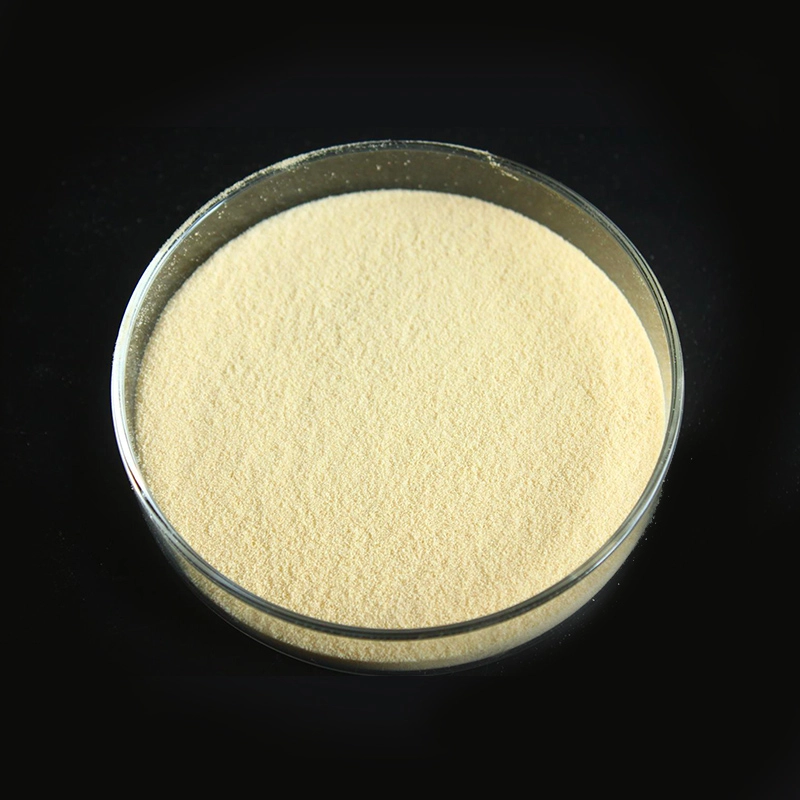
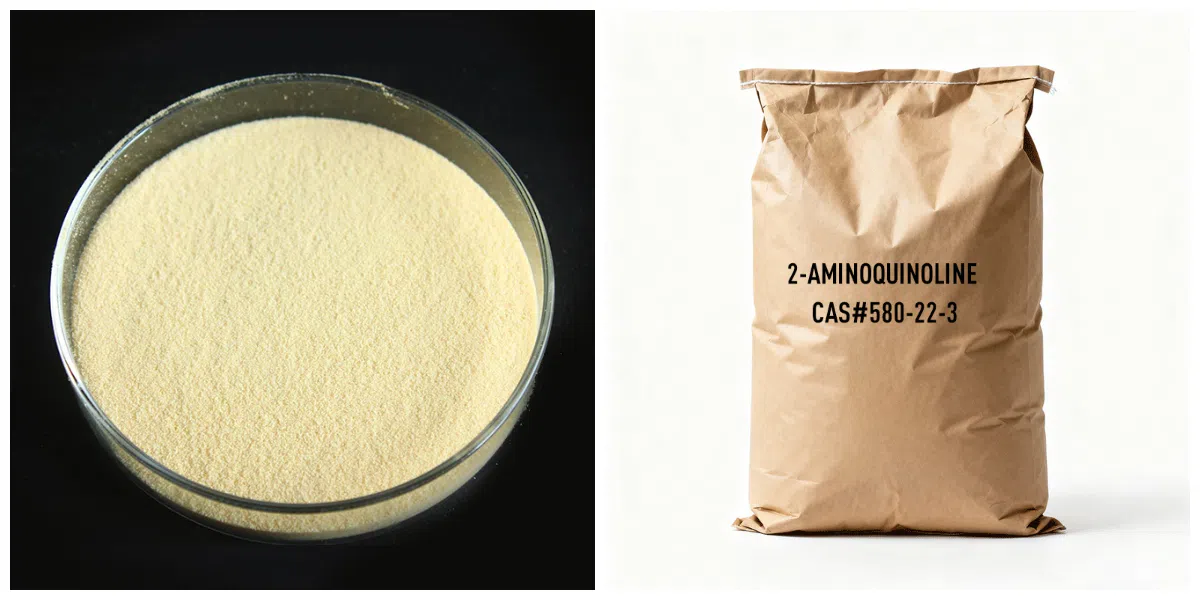
Commercial listings for CAS 580-22-3 cluster tightly around a single purity tier: ≥97% by GC, sometimes supplemented with titration (T) as a second analytical method. TCI lists >97.0% (GC)(T); Aladdin lists ≥97% GC; Fisher’s SDS and ChemicalBook entries describe the material as a yellow to brown or white to light-yellow powder/crystal with a melting range of roughly 127–132°C . There is no meaningful commercial market for a 99% “process-grade” material, because there is no process-scale downstream that consumes it in metric tons.
Selection guidance by end-use:
| Downstream application | Recommended grade | Rationale |
|---|---|---|
| Fragment screening / hit-to-lead SAR | ≥97% GC, 1 g–5 g packs | Purity sufficient; the scaffold is the variable, not the trace impurity profile |
| Fluorescent probe development | ≥97%, with fluorescence blank certificate if available | Quinoline scaffolds are used as fluorophores; residual quinoline or quinolone impurities can quench or shift emission |
| BACE1 / nNOS inhibitor optimization | ≥98% HPLC or custom spec | Structure-activity work at submicromolar potency is sensitive to competing amine impurities |
| Analytical reference standard | ≥98% HPLC, certified lot | Required for method validation; not interchangeable with catalog-grade material |
The supplier landscape is classic fine-chemical fragmentation: TCI, Aladdin, Fisher, TargetMol, and a long tail of Chinese trading houses (Zhengzhou Alpha, Jiangsu Runfeng, Wuhan Huajiu) all list the compound, with no single player holding meaningful share. For buyers, this means competitive pricing on small packs but inconsistent impurity profiles. Requesting a lot-specific CoA with residual quinoline and 2-chloroquinoline reported—not just GC area percent—is the practical filter.
Price Snapshot: The Spread Is Wide, and It Matters Less Than It Looks
Recent listing data shows the expected stratification. Aladdin lists 1 g at $11.90 and 5 g at $22.90 on promotion . ChemicalBook’s aggregated pricing shows TCI’s 1 g at ¥140 and 5 g at ¥430, with bulk-oriented Chinese listings reaching ¥288 for 10 g and ¥718 for 25 g . TargetMol lists 1 g at ¥140 and 10 g at ¥670 .
The apparent bargain at the 10–25 g scale deserves scrutiny. At these quantities, the cost of analytical qualification (HPLC method setup, reference standard, analyst time) can exceed the price differential between a Tier 1 catalog pack and a lower-cost bulk listing. For campaigns under 25 g total consumption, buying the documented catalog grade is almost always cheaper on a fully loaded basis than qualifying a new vendor.
Industry Hot Spot: The BACE1 Fragment Story Is the Real Demand Driver
The most commercially relevant technical narrative around 2-aminoquinoline is not its price or supply chain—it is its documented performance as a fragment starting point. A 2011 Journal of Medicinal Chemistry paper from the BACE1 field reported an initial 2-aminoquinoline fragment hit with an IC₅₀ of 900 µM, which was optimized over the course of the campaign to a subnanomolar lead (compound 59, IC₅₀ = 11 nM)—an approximately 80,000-fold potency improvement from the fragment starting point . That is not a marginal scaffold; it is a case study in fragment tractability.
The second hot area is nNOS inhibition. 2-Aminoquinoline-based nNOS inhibitors have been reported to maintain good Caco-2 permeability with low efflux, a profile that distinguishes them from arginine-mimetic nNOS inhibitors that often suffer poor oral bioavailability and CNS penetration . For neuroscience drug discovery programs, this is a meaningful differentiation: the scaffold does not just inhibit the target, it does so with physicochemical properties that support brain exposure.
Market research coverage reflects this pharmaceutical pull. A September 2026 Research and Markets report on CAS 580-22-3 is structured around applications, manufacturing methods, patents, and end-use sector trends through 2029 . A parallel Japanese-market report from BAC Reports covers the same 2020–2030 window . Both are paywalled and neither discloses headline CAGR figures in public summaries—standard practice in fine-chemical market intelligence—but the existence of dedicated reports for a compound sold in gram quantities signals that the downstream pharmaceutical interest is considered durable enough to track.
Safety and Handling: Air Sensitivity Is the Practical Issue
2-Aminoquinoline carries GHS H315 (skin irritation) and H319 (serious eye irritation), with a Fisher SDS health hazard rating of 3 and an oral LD50 >11,500 mg/kg in the component data . The more operationally relevant flag is air sensitivity: Fisher’s SDS specifies storage under argon, and multiple suppliers recommend inert atmosphere at room temperature or below 15°C in a dark, well-ventilated location . For long-term storage of gram quantities, the argon blanket is not optional—oxidation of the electron-rich quinoline ring is a real degradation pathway, and a discolored lot (brown vs. off-white) is a visual red flag worth rejecting at receipt.
Bottom line: 2-Aminoquinoline is a research-quantity scaffold with a compelling fragment-to-lead story and a fragmented, price-diverse supplier base. The sourcing decision is not about finding the molecule—it is about matching the analytical documentation to the sensitivity of the downstream assay. For SAR campaigns, buy the documented grade and move on. For anyone attempting to qualify a cheaper bulk lot, budget the analytical work honestly before assuming a savings.