Product Description
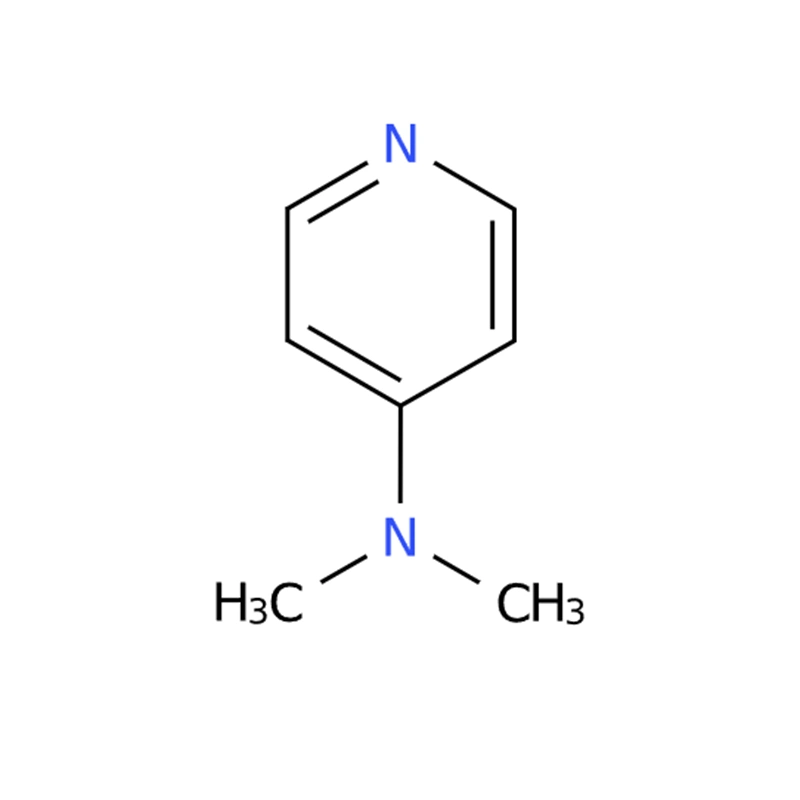
4-Dimethylaminopyridine (DMAP) is a highly efficient nucleophilic catalyst widely used in organic synthesis, particularly in acylation and esterification reactions. Its dimethylamino-substituted pyridine structure enhances its catalytic activity, facilitating acyl transfer and accelerating reactions involving alcohols and other suitable nucleophiles.
DMAP is especially valuable in reactions involving sterically hindered or less reactive substrates, where it can help improve reaction rates and overall process efficiency under appropriate conditions. Acyl transfer reactions are fundamental transformations in organic synthesis and chemical manufacturing, and DMAP is widely used in the preparation of esters and other acylated compounds. Chiral DMAP derivatives are also employed as catalysts in asymmetric acyl transfer reactions, enabling selective transformations in advanced synthetic chemistry.
With its broad utility and high catalytic efficiency, DMAP is an important catalyst for pharmaceutical intermediates, fine chemicals, and specialty organic compounds.
Product Parameters
| Melting point | 112 °C |
| Boiling point | 162 °C |
| density | 0.906 g/mL at 25 °C |
| vapor pressure | 0.169 hPa at 20 °C |
| refractive index | n20/D 1.431 |
| Fp | 110 °C |
| storage temp. | Store below +30°C. |
| solubility | methanol: 50 mg/mL, clear |
| form | prilled |
| pka | pKa (20°): 9.7 |
| color | off-white to yellow |
| Odor | characteristic odor |
| PH Range | 9.7 (10% aq soln) |
| PH | 11 (60g/l, H2O, 20℃) |
| Water Solubility | 76 g/L (25 ºC) |
| Merck | 143389 |
| BRN | 110354 |
| Stability: | Stable. Incompatible with acids, oxidizing agents. |
| LogP | 1.34 at 25℃ |
| CAS DataBase Reference | 1122-58-3(CAS DataBase Reference) |
| NIST Chemistry Reference | 4-Pyridinamine, N,N-dimethyl-(1122-58-3) |
| EPA Substance Registry System | 4-(Dimethylamino)pyridine (1122-58-3) |
Safety Information
| Hazard Codes | T,C,T+,Xn,F |
| Risk Statements | 25-34-24/25-36/37/38-27-36-24-20-61-40-23/24/25-67-66-21/22-11-36/37-22-19 |
| Safety Statements | 36/37/39-45-28A-26-28-36/37-53-27-22-16 |
| RIDADR | UN 2811 6.1/PG 2 |
| WGK Germany | 3 |
| RTECS | US8400000 |
| Autoignition Temperature | 420 °C |
| Hazard Note | Toxic/Corrosive |
| TSCA | T |
| HazardClass | 8 |
| PackingGroup | II |
| HS Code | 29333999 |
| Toxicity | LD50 orally in Rabbit: 140 mg/kg LD50 dermal Rabbit 90 mg/kg |
Application Scenarios
4-Dimethylaminopyridine (DMAP) is a highly efficient nucleophilic catalyst widely used in organic synthesis. Its primary applications include:
Esterification and Acylation: Facilitates the synthesis of esters and other acylated compounds by accelerating acyl transfer reactions involving suitable substrates.
Pharmaceutical Intermediate Synthesis: Used in selected synthetic routes for preparing pharmaceutical intermediates and fine chemicals.
Specialty Chemical Manufacturing: Supports the synthesis of functional organic compounds used in specialty chemical production.
Asymmetric Organic Synthesis: Chiral DMAP derivatives are employed in selected asymmetric acyl transfer reactions to achieve improved stereoselectivity.