

Product Description
Carbon black is a fine particulate carbon material with versatile industrial functional attributes. From a safety perspective, its airborne dust poses flammable and explosive hazards when encountering ignition sources, and it can generate slow spontaneous combustion after contact with moisture. Strict inhalation control is required during operation, with a standard occupational exposure threshold limited to 3.5 mg/m³.
Industrially, it serves as a multi-functional core material, functioning as a black colorant, rubber reinforcing agent and conductive modifier. It is extensively adopted in tire manufacturing, rubber goods, plastic modification, carbon paper, printing ink and solar heat-absorbing materials.
Compliant with food-grade standards, this carbon black can be used as a safe edible pigment. Within specified dosage ranges, it is suitable for coloring pastries, rice and flour products, candies, biscuits and various other foodstuffs.
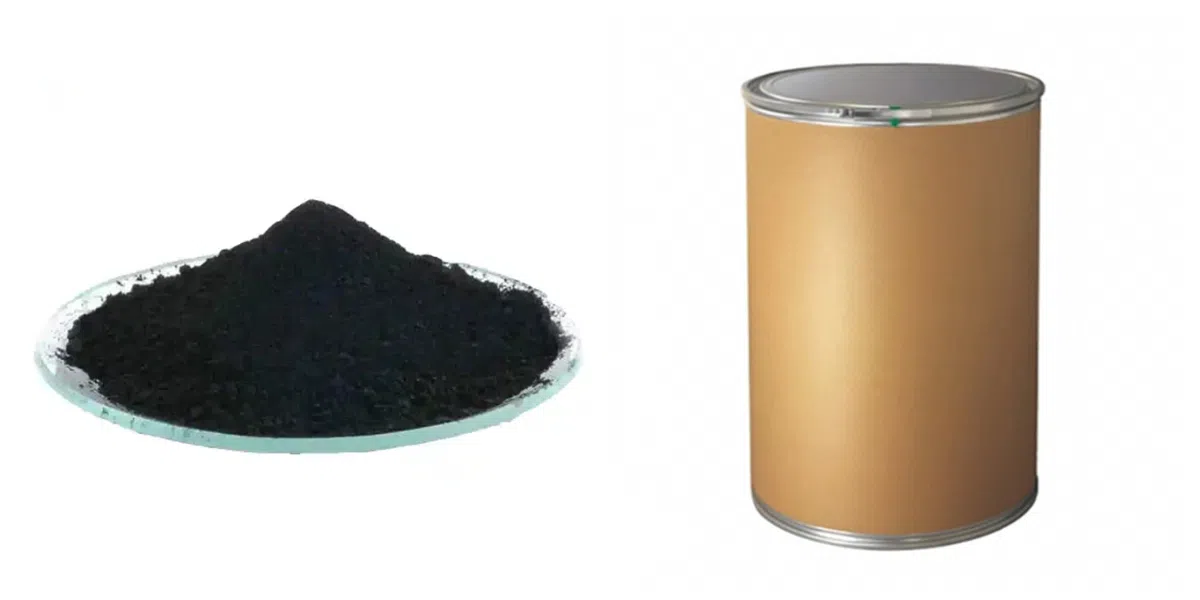
Product Parameters
| Melting point | 3550 °C(lit.) |
| Boiling point | 500-600 °C(lit.) |
| density | ~1.7 g/mL at 25 °C(lit.) |
| vapor pressure | <0.1 mm Hg ( 20 °C) |
| Fp | >230 °F |
| solubility | H2O: soluble0.1mg/mL |
| form | rod |
| color | Clear colorless |
| Specific Gravity | bulk 0.10/g/cm3 |
| Water Solubility | Insoluble |
| Merck | 141808 |
Exposure limits | ACGIH: TWA 3 mg/m3 |
| OSHA: TWA 3.5 mg/m3 | |
| NIOSH: IDLH 1750 mg/m3; TWA 3.5 mg/m3; TWA 0.1 mg/m3 | |
| Dielectric constant | 2.5(Ambient) |
| Stability: | Stable. Combustible. |
| InChIKey | VNWKTOKETHGBQD-UHFFFAOYSA-N |
| LogP | 1.090 (est) |
| IARC | 2B (Vol. Sup 7, 65, 93) 2010 |
| EPA Substance Registry System | Carbon black (1333-86-4) |
| OEB | B |
| OEL | TWA: 3.5 mg/m3 |
| WGK Germany | 3 |
| RTECS | FF5250100 |
| TSCA | Yes |
| Hazardous Substances Data | 1333-86-4(Hazardous Substances Data) |
| Toxicity | LD50 oral in rat: > 15400mg/kg |
| IDLA | 1,750 mg/m3 |
Application Scenarios
Carbon black acts as a core reinforcing additive in the rubber sector. It effectively boosts the tensile strength, abrasion resistance, elongation and tear resistance of vulcanized rubber. Widely applicable to automobile tires, treads, sidewalls, solid tires, conveyor belts and rubber hoses, it greatly improves the durability and overall performance of high-end engineering tires and industrial rubber parts.
With superior tinting power, it serves as a premium black pigment for paints, coatings and printing inks. It is also commonly used for producing black paper, photographic packaging materials, carbon paper, typewriter ribbons, shoe polish, leather finishes and colored cement, covering a wide range of coloration scenarios.
Thanks to its outstanding conductive performance, carbon black functions as an efficient conductive modifier. It is widely incorporated into lithium battery materials, electronic parts, anti-static rubber, electrodes and electric brushes. Additionally, it supports advanced applications in plastic modification, metallurgy and aerospace propellant materials.
As a multi-functional industrial raw material integrating reinforcement, coloring and conductive modification, carbon black occupies an irreplaceable position in modern manufacturing. Standardized storage and operational practices are required to guarantee safe and stable usage.