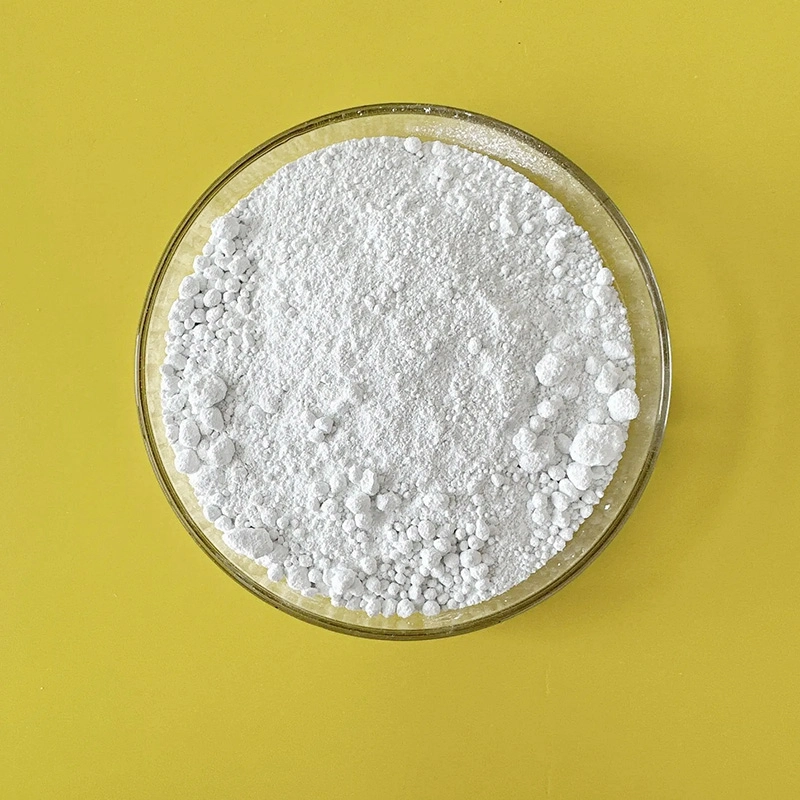
Procurement teams sourcing titanium dioxide under CAS#1317-70-0 are working with a specification that is narrower and more application-specific than the broader TiO₂ market suggests. This CAS number corresponds specifically to the anatase crystalline form, not the rutile form that dominates pigment-grade commerce. The distinction is not academic. Anatase’s higher photocatalytic activity—an asset in environmental catalysis and self-cleaning surfaces—becomes a liability in polymer and coating systems where UV exposure drives chalking and premature degradation. Selecting the right grade requires matching crystal form to function, not simply ordering “titanium dioxide.”
The Polymorph Distinction: Anatase Is Not a Drop-In for Rutile
Titanium dioxide crystallizes in three forms, but only anatase and rutile have commercial relevance. Rutile is the thermodynamically stable polymorph, denser and more weather-resistant, with a higher refractive index that makes it the preferred pigment for exterior coatings, plastics, and inks. Anatase, by contrast, is thermodynamically less stable and exhibits significantly higher photocatalytic activity. This property limits its utility as a pigment in polymer systems exposed to sunlight, but opens specific applications as a catalyst and photocatalyst.
The CAS number is the first selection filter. Buyers specifying CAS#1317-70-0 are contracting for anatase, whether they recognize it or not. A supplier quoting “titanium dioxide, anatase” against a purchase order that does not name the polymorph may deliver material with photocatalytic behavior unsuitable for the intended matrix. For coatings formulators, the consequence is measurable: anatase-containing exterior films are prone to chalking as the photocatalyst degrades the binder under UV irradiation.
Particle Size and Surface Area: The Nanoscale Specification That Drives Performance
Commercial anatase is not a single particle-size product. Industrial-grade fine anatase typically has primary particle diameters of 0.1–0.4 µm with BET surface areas of roughly 5–15 m²/g. Ultrafine or nanoscale anatase has primary particles below 100 nm, commonly 10–50 nm, with BET surface areas spanning 10–300 m²/g depending on synthesis route and surface treatment.
This surface-area range is the operational specification for photocatalytic applications. Higher surface area provides more active sites for pollutant adsorption and reactive oxygen species generation, but also increases the difficulty of dispersion and recovery. A representative laboratory-grade anatase nanopowder from Thermo Scientific specifies 15 nm average particle size and 99.7% purity on a metals basis. TCI’s anatase grade specifies >99.3% purity and minimum 26.0 m²/g specific surface area. For buyers sourcing photocatalyst material, the BET value and primary particle size should be specified explicitly; “nano anatase” without these figures is not a qualified purchase description.
Regulatory Context: The Carcinogenicity Classification Has Been Annulled, But the Food Ban Stands
The regulatory narrative around TiO₂ has been volatile, and procurement teams serving EU markets need to separate two distinct threads. The EU’s harmonized classification of TiO₂ as a suspected inhalation carcinogen (Category 2) was annulled by the General Court in November 2022, and the Court of Justice definitively rejected the Commission’s appeal on August 1, 2025. The legal obligation to apply that classification has therefore been removed.
However, the food additive prohibition is unaffected. The EU banned E171 (TiO₂ as a food additive) under Regulation (EU) 2022/63, effective January 2022, and this ban remains in force. The Court’s annulment explicitly did not extend to the food additive framework. For suppliers shipping to EU destinations, the relevant question is the end use: coatings and industrial applications face no E171 restriction, while food-contact or pharmaceutical uses require separate compliance verification.
The REACH process continues separately. The TiO₂ industry consortium is conducting toxicological studies on 13 nano and micro forms, with data due to ANSES by the end of 2026 to inform respiratory toxicity assessment. This is a watch item for suppliers and buyers with EU exposure, but it does not currently restrict anatase procurement for industrial uses.
Supply Chain Signals: European Capacity Restructuring and Chinese Cost Pressure
The anatase segment sits within a TiO₂ supply chain undergoing significant geographic rebalancing. Lomon Billions’ Greatham plant in the UK, acquired from Venator for $69.9 million, resumed production in August 2026 after nearly a year of shutdown. The plant operates the chloride process with a nominal capacity of 150,000 t/y, targeting full capacity restoration by early 2027 under the TIOXIDE and DELTIO brands. This capacity is primarily rutile-oriented, but its return to operation affects overall European supply dynamics and the competitive position of anatase imports.
On the cost side, Chinese anatase pricing has softened. October 2026 assessments place anatase-type TiO₂ ex-works at RMB 12,300–13,200 per tonne, with rutile at RMB 12,800–15,200 and chloride-process material at RMB 15,500–16,800. The weakness reflects oversupply in titanium concentrate feedstock: Panzhihua 46% grade ore has fallen to RMB 1,060–1,120 per tonne, and Mozambican 46% material to RMB 1,050–1,070, with port inventories high and downstream TiO₂ producers curtailing purchases. For anatase buyers, the near-term pricing environment is favorable, though the cyclical nature of the TiO₂ sector means this should not be extrapolated into multi-year contracts without review clauses.
Selection Checklist for Procurement and Technical Teams
Confirm the crystal form against the application. CAS#1317-70-0 is anatase. For exterior coatings, plastics, and inks requiring weatherability, rutile (CAS#13463-67-7) is the appropriate specification. Anatase is suitable for photocatalysis, certain ceramic applications, and interior uses where photocatalytic degradation is not a concern.
Specify BET surface area and primary particle size for photocatalytic grades. “Nano anatase” is not a sufficient specification. Request numeric BET (m²/g) and particle size (nm) values on the COA.
Verify purity basis. Laboratory and catalyst grades typically specify ≥99.3–99.7% on a metals basis. Pigment-grade anatase may carry surface treatments (alumina, silica) that alter dispersion and photocatalytic behavior; confirm whether the grade is coated or uncoated.
Separate the regulatory threads. The EU carcinogenicity classification has been annulled; the E171 food additive ban remains. For food-contact or pharmaceutical applications, obtain explicit compliance documentation rather than relying on the annulment news.
Monitor Chinese anatase pricing but contract with caution. Current weakness reflects feedstock oversupply, not structural cost reduction. The TiO₂ cycle has historically reversed, and suppliers with European production capacity (Lomon Billions’ Greatham) may adjust pricing strategy as their utilization ramps.
Anatase is the less commercially prominent polymorph, and that relative obscurity is precisely why specification discipline matters. The CAS number identifies the crystal form, but the surface area, purity, and surface treatment define the material’s performance in photocatalysis, ceramics, or any application where anatase’s higher activity is the reason for its selection. In a market where feedstock costs are falling and European capacity is restarting, the procurement decision that protects formulation outcomes is the one that specifies the functional parameters, not just the polymorph name.