
Product Description
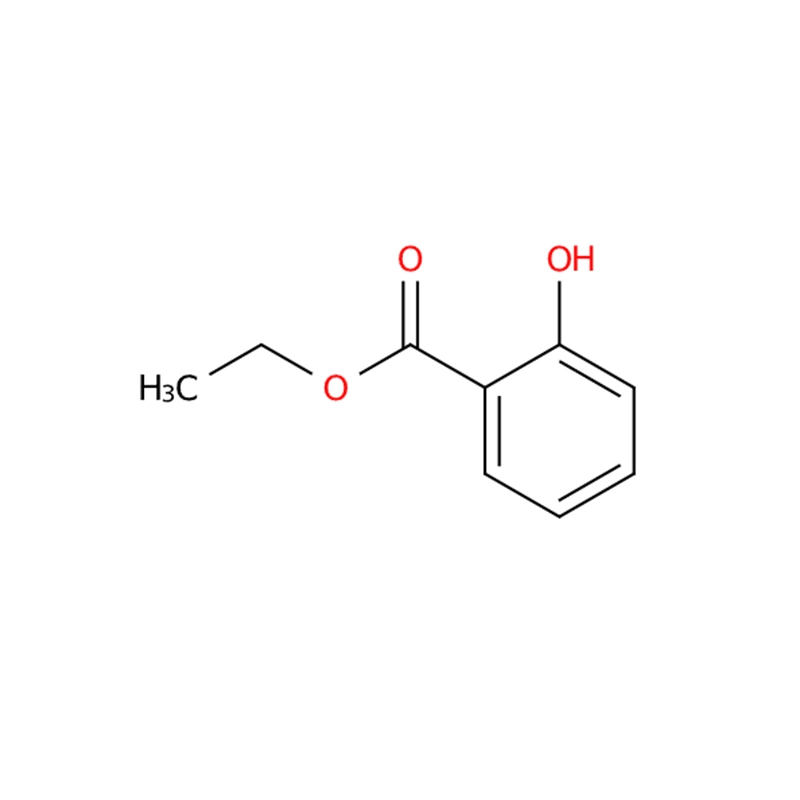
Ethyl salicylate is a clear, oily liquid known for its gentle wintergreen-like odor. Its boiling point is 234°C, and its melting point is 1.3°C. The substance shows good solubility in ethanol, ether, acetic acid, and most non-volatile oils. In contrast, it is only slightly soluble in water and glycerin.
Ethyl salicylate is commonly applied in organic synthesis, in the manufacture of flavors and fragrances, and as a solvent in a range of uses. It is manufactured by esterifying o-hydroxybenzoic acid (salicylic acid) with ethanol, producing an ethyl salicylate compound with valuable chemical characteristics for both industrial production and research applications.
Product Parameters
| Melting point | 1 °C (lit.) |
| Boiling point | 234 °C (lit.) |
| density | 1.131 g/mL at 25 °C (lit.) |
| vapor pressure | 0.05 mm Hg ( 25 °C) |
| refractive index | n20/D 1.522(lit.) |
| FEMA | 2458 | ETHYL SALICYLATE |
| Fp | 225 °F |
| storage temp. | Store below +30°C. |
| solubility | 0.25g/l |
| form | Liquid |
| pka | 9.93±0.10(Predicted) |
| color | Clear colorless to pale yellow |
| Odor | at 100.00 %. sweet wintergreen mint floral spicy balsam |
| Odor Type | minty |
| explosive limit | 1.1%(V) |
| Water Solubility | slightly soluble |
| Merck | 143850 |
| JECFA Number | 900 |
| BRN | 907659 |
| Dielectric constant | 8.6(21℃) |
| InChIKey | GYCKQBWUSACYIF-UHFFFAOYSA-N |
| LogP | 3.07 at 21.9℃ |
| CAS DataBase Reference | 118-61-6(CAS DataBase Reference) |
| NIST Chemistry Reference | Benzoic acid, 2-hydroxy-, ethyl ester(118-61-6) |
| EPA Substance Registry System | Ethyl salicylate (118-61-6) |
| Hazard Codes | Xn,Xi |
| Risk Statements | 22-36/38-52/53 |
| Safety Statements | 26-36 |
| WGK Germany | 1 |
| RTECS | VO3000000 |
| TSCA | Yes |
| HS Code | 29182390 |
| Toxicity | LD50 orally in Rabbit: 1320 mg/kg LD50 dermal Rabbit > 5000 mg/kg |
Application Scenarios
In accordance with GB 2760-96, ethyl salicylate is temporarily allowed as an edible flavoring ingredient. It is primarily used to formulate artificial cinnamon oil and a variety of fruit-based flavor systems, such as blackberry, black currant, strawberry, raspberry, and other related fruity flavor blends.
Ethyl salicylate is also widely employed in everyday personal-care products. For example, in soap fragrances, it provides pleasant sweet floral nuances and can be easily combined with other scent profiles, including acacia, ylang-ylang, and lily of the valley. In oral care applications like toothpaste, it may be used in small quantities to help refine, adjust, or strengthen the overall aroma and flavor, thereby tuning the scent profile in comparison with (or in place of) the corresponding methyl ester.
Beyond fragrance and flavor use, ethyl salicylate functions as a solvent for nitrocellulose, fragrance ingredients, and organic synthesis processes. It is extensively used as an intermediate for organic synthesis, for producing artificial flavors, and across a range of industrial and chemical applications.