
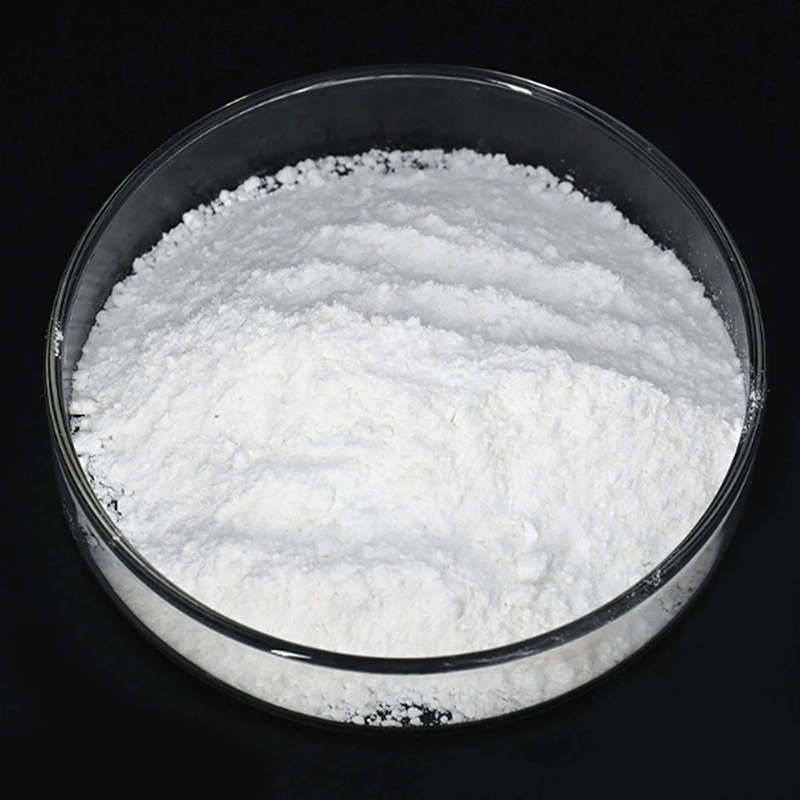
Executive takeaway for procurement and formulation scientists: Quaternium-15 is no longer a cosmetic preservative sourcing decision in most of the developed world. It is a regulatory-exit material whose remaining commercial demand sits in industrial biocidal applications, legacy formulations in permissive jurisdictions, and the shrinking pool of markets that have not yet aligned with EU or California restrictions. The sourcing question has flipped from “which grade and at what price” to “does my destination market still permit this molecule at all.” Buyers who treat it as a routine catalog item risk inventory that cannot be lawfully sold into their target market.
The Regulatory Picture: This Is Not a Purity Problem
The commercial status of Quaternium-15 has been reshaped by regulatory action, not by supply or quality issues. The European Union has prohibited its use in cosmetics under Annex II since 2017. China’s National Medical Products Administration listed it in the 2021 update to the Cosmetics Prohibited Ingredients Catalogue (Announcement No. 74 of 2021), Item 86. California announced a prohibition on Quaternium-15 in cosmetics and personal care products effective 2025. ASEAN Cosmetic Directive Annex II, reference 1385, likewise lists it as prohibited.
For buyers sourcing for personal care applications, this means the molecule is effectively a dead SKU in the EU, China, California, and ASEAN markets. The remaining legitimate demand is concentrated in industrial preservative uses—metalworking fluids, latex and emulsion paints, floor polishes, adhesives—where the cis/trans mixed product (historically sold as Dowicil 75 and Dowicil 100) remains relevant. The isolated cis isomer (Dowicil 200) was the cosmetic-grade material; that is the grade whose market has collapsed.
Selection guidance by remaining application:
| Application | Grade relevance | Sourcing note |
|---|---|---|
| Industrial preservative (metalworking, paint, adhesive) | Mixed cis/trans, ≥99% assay | Still commercially available; confirm destination market permits industrial use |
| Legacy cosmetic formulation (non-restricted market) | Cis-dominant, cosmetic grade | Verify local regulatory status before purchase; EU/China/California material is unsaleable for this use |
| Reference standard / analytical | ≥99%, certified | Available from fine-chemical suppliers for method development and regulatory testing |
Product Selection: What the 99% Grade Actually Specifies
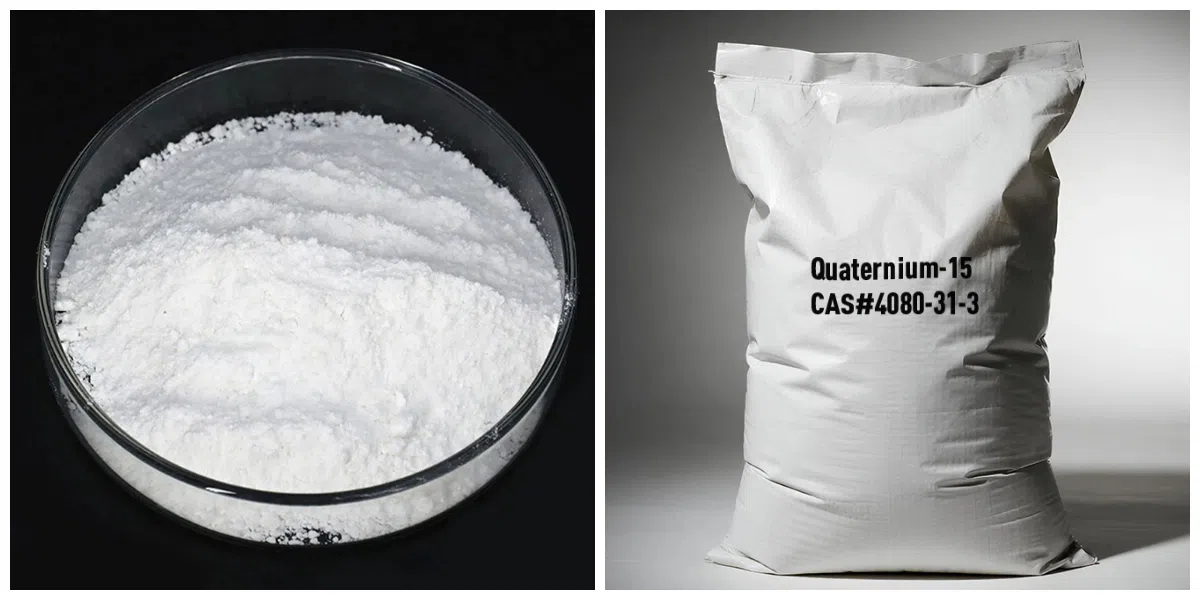
Commercial listings from Chinese producers still quote ≥99% assay for Quaternium-15, with a specification envelope that is straightforward: white to light-yellow powder, pH 6–8 at 5% aqueous solution, water content ≤0.5%, ash ≤0.1%, heavy metals ≤5 ppm. The compound is a quaternary ammonium salt produced by reacting hexamethylenetetramine with 1,3-dichloropropene. Shelf life is typically two years at room temperature.
The specification gap that matters for industrial buyers is isomer ratio. The cis isomer is the more biologically active form and the one classified as a Category 3 reproductive toxicant; the trans form is present as an impurity in the mixed product. For industrial preservative applications where the mixed product is acceptable, this is not a purchase blocker. For any buyer attempting to use remaining inventory in a cosmetic-adjacent application, the isomer profile becomes a regulatory documentation issue, not just a technical one.
The Sensitization Data That Drove the Exit
The regulatory exit was not arbitrary. Quaternium-15 is the most common cosmetic preservative allergen in North American patch test data, and it was the fourth most frequently positive allergen (10.3%) in the NACDG 2005–2006 cycle, with a statistically significant increase compared to the prior decade. European sensitization prevalence ranges from 0.6% to 1.9%.
The mechanistic story is formaldehyde release. Quaternium-15 is a formaldehyde releaser, and most patients allergic to Quaternium-15 are also allergic to formaldehyde; conversely, it is the most common co-allergen in formaldehyde-sensitive patients. A comparative study found its formaldehyde release is roughly equivalent to DMDM hydantoin and imidazolidinyl urea, and lower than diazolidinyl urea. One notable formulation property: its release is not significantly accelerated in aqueous matrices, unlike diazolidinyl urea and DMDM hydantoin, which release more formaldehyde in water. That made it a predictable preservative in water-based formulations—but predictability of release did not offset the sensitization liability.
What Buyers Should Do With Remaining Inventory
If your organization holds Quaternium-15 stock, the practical actions are regulatory, not commercial. First, confirm the destination market for any finished product. Material destined for EU, China, California, or ASEAN personal care applications cannot be used and should be quarantined for disposition. Second, if the material is industrial-grade and destined for metalworking fluid or paint preservative use, verify that the industrial chemical regulations in the destination market have not added restrictions parallel to the cosmetic bans—regulatory alignment often follows cosmetic prohibitions with a lag. Third, for analytical or reference-standard use, the material remains purchasable and the 99% grade from fine-chemical suppliers is adequate.
Bottom line: Quaternium-15 is a case study in how regulatory action converts a technically functional preservative into a procurement liability. The molecule still has industrial outlets, and the 99% grade remains available from Chinese producers. But any sourcing decision that does not start with a destination-market regulatory check is incomplete. For personal care formulators, the reformulation work is done or overdue; for industrial buyers, the specification is simple and the supply base is adequate, but the regulatory perimeter is tightening and should be monitored annually.