Product Description
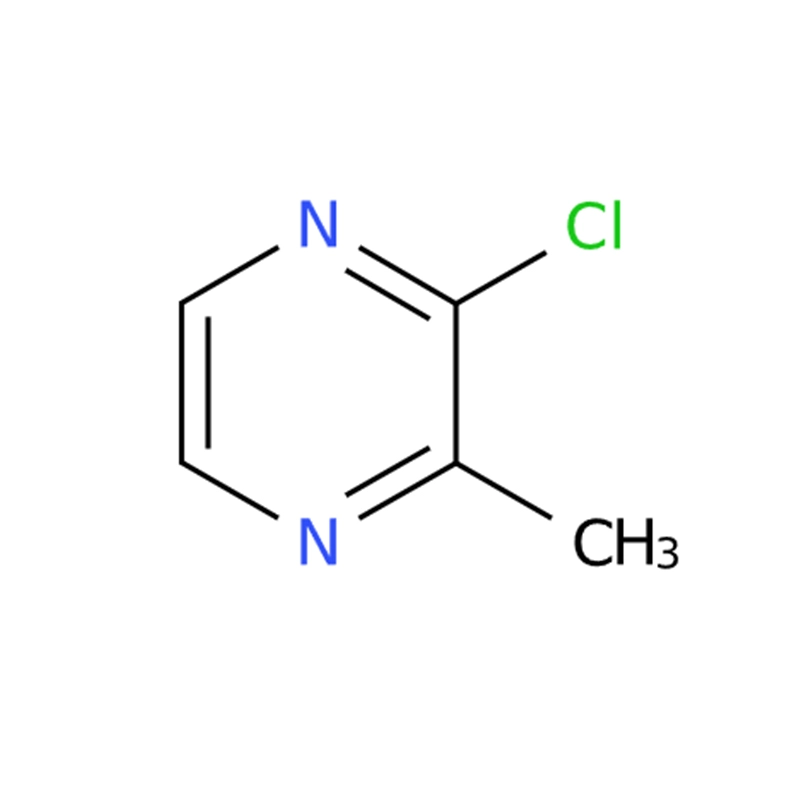
2-Chloro-3-methylpyrazine is a nitrogen-containing heterocyclic compound characterized by a pyrazine ring substituted with a chlorine atom and a methyl group. The reactive chlorine substituent provides a site for further chemical modification, making this compound a useful building block in organic synthesis and pharmaceutical intermediate development.
2-Chloro-3-methylpyrazine has been reported as a synthetic intermediate in the preparation of certain macrocyclic urea-based kinase inhibitors. Its functionalized pyrazine structure offers opportunities for selected substitution reactions and further molecular transformations, supporting the synthesis of structurally diverse heterocyclic compounds.
Due to its potential applications in medicinal chemistry and pharmaceutical research, 2-Chloro-3-methylpyrazine is a specialized intermediate for the development of advanced organic compounds and bioactive molecule candidates.

Product Parameters
| Boiling point | 80 °C(Press: 27 Torr) |
| Density | 1.234g/ml |
| Storage temp | under inert gas (nitrogen or Argon) at 2-8°C |
| Pka | -0.31±0.10(Predicted) |
| Form | Liquid |
| Color | Colorless |
| LogP | 1.058 (est) |
| CAS DataBase Reference | 95-58-9(CAS DataBase Reference) |
| EPA Substance Registry System | Pyrazine, 2-chloro-3-methyl- (95-58-9) |
| Hazard Codes | Xn |
| Risk Statements | 22-37/38-41 |
| Safety Statements | 26-39 |
| TSCA | Yes |
| HS Code | 2933119000 |
Application Scenarios
2-Chloro-3-methylpyrazine is a functionalized pyrazine derivative used as an intermediate in organic synthesis and pharmaceutical research. Its chlorine substituent provides a reactive site for further chemical modification, while the methyl-substituted pyrazine ring serves as a useful structural framework for developing more complex heterocyclic compounds.
Key Application Areas:
Pharmaceutical Intermediate: Used in selected synthetic routes for the preparation of pharmaceutical compounds and biologically active molecule candidates.
Macrocyclic Urea-Based Kinase Inhibitor Research: Reported as an intermediate in the synthesis of certain macrocyclic urea-based kinase inhibitors.
Medicinal Chemistry: Serves as a building block for the synthesis and structural modification of pyrazine-containing compounds in drug discovery research.
Heterocyclic Synthesis: Used in further chemical transformations, including selected substitution reactions, to prepare functionalized pyrazine derivatives.