
Product Description
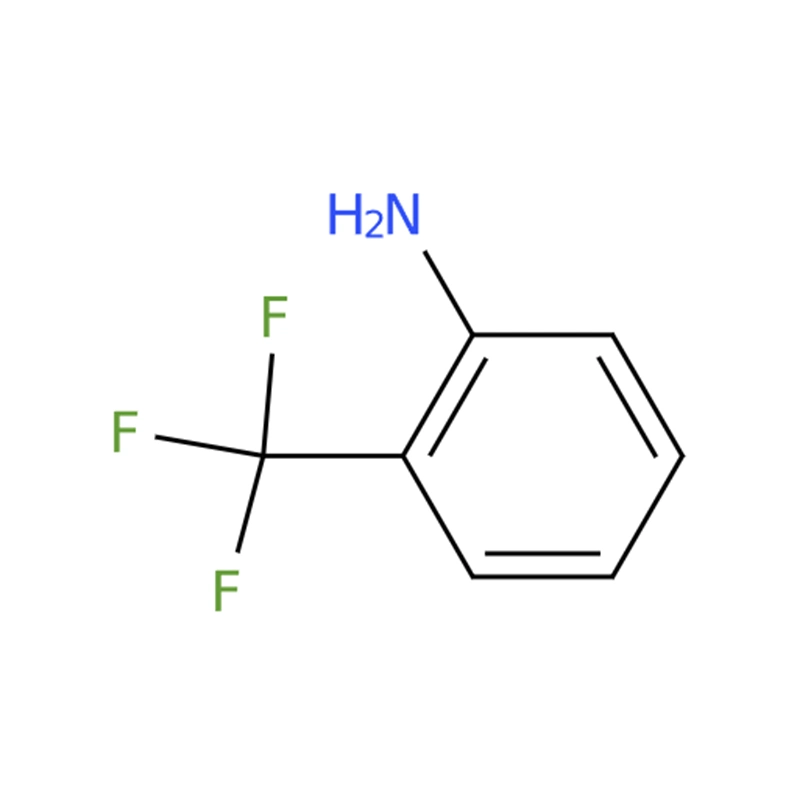
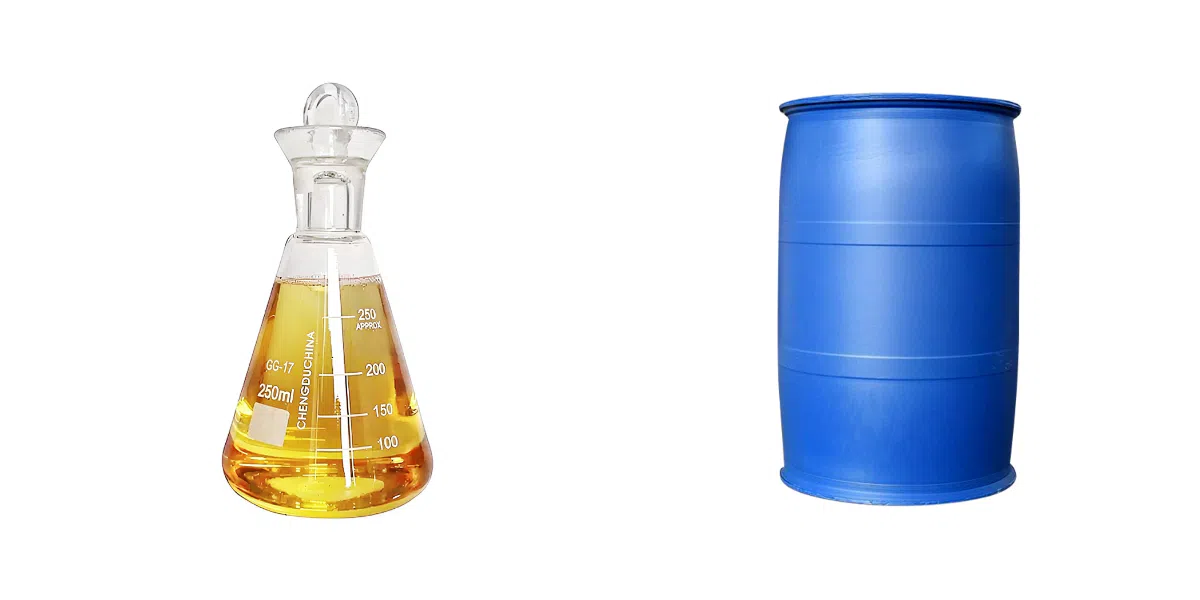
2-Aminobenzotrifluoride is a fluorine-containing aromatic amine used as an intermediate in organic synthesis. According to the supplied product specifications, it is described as a colorless to light yellow transparent liquid with a relative density of 1.282, a melting point of 34–35°C, and a boiling point of 174–175°C. It is reported to have limited solubility in water and good solubility in organic solvents such as alcohols and ethers.
As a fluorinated chemical intermediate, 2-Aminobenzotrifluoride may be used in the synthesis of selected compounds for pharmaceutical, agrochemical, and dye-related applications. Its suitability depends on the target compound, synthesis route, and product specifications.
Product Parameters
| Melting point | 34 °C(lit.) |
| Boiling point | 170-173 °C(lit.) |
| density | 1.282 g/mL at 25 °C(lit.) |
| vapor pressure | 2.1-12.1hPa at 20-50℃ |
| refractive index | n20/D 1.481(lit.) |
| Fp | 131 °F |
| storage temp. | Store below +30°C. |
| solubility | 4g/l |
| form | Liquid |
| pka | 1.10±0.10(Predicted) |
| Specific Gravity | 1.282 |
| color | Clear colorless to light amber |
| Water Solubility | 4 g/L (20 ºC) |
| BRN | 879494 |
| LogP | 2.32 at 23℃ and pH7 |
| CAS DataBase Reference | 88-17-5(CAS DataBase Reference) |
| NIST Chemistry Reference | Benzenamine, 2-(trifluoromethyl)-(88-17-5) |
| EPA Substance Registry System | o-(Trifluoromethyl)aniline (88-17-5) |
| Hazard Codes | T,Xi,Xn,F |
| Risk Statements | 10-23/24/25-33-36/37/38-22-20/21/22 |
| Safety Statements | 36/37/39-45-37/39-26-16-36 |
| RIDADR | UN 2942 6.1/PG 3 |
| WGK Germany | 1 |
| RTECS | XU9210000 |
| Hazard Note | Toxic/Irritant |
| TSCA | Yes |
| HazardClass | 6.1 |
| PackingGroup | III |
| HS Code | 29214300 |
Application Scenarios
2-Aminobenzotrifluoride is a fluorinated aromatic amine used as an intermediate in organic synthesis. It is primarily applied in the synthesis of selected compounds for the dye, pharmaceutical, and agrochemical industries. Its aromatic amine functionality and trifluoromethyl group make it a useful building block for developing fluorine-containing chemical compounds. Its specific applications depend on the target molecule, synthesis route, and required product specifications.