Product Description
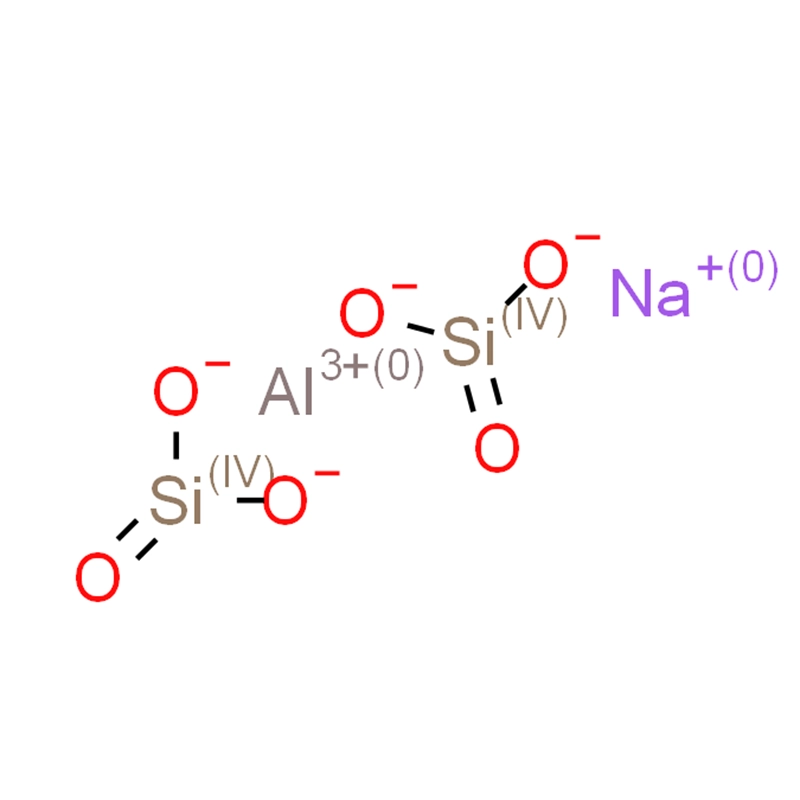
Molecular sieve is a crystalline aluminosilicate material characterized by a highly ordered, three-dimensional porous structure. Its crystal framework consists of silicon and aluminum atoms interconnected through oxygen bridges, forming a network of uniformly distributed pores, channels, and cavities.
This unique microporous structure provides a large internal surface area and well-defined pore openings, enabling molecular sieves to selectively adsorb molecules based on their molecular size and polarity. The framework also contains charge-balancing metal cations, which contribute to its adsorption characteristics and affinity for polar molecules such as water.
Due to its excellent adsorption capacity, molecular sieve offers outstanding moisture removal, molecular separation, and purification performance. It is widely used as an industrial desiccant and adsorbent in petrochemical processing, natural gas dehydration, refrigerant drying, air separation, and other applications requiring precise moisture control and molecular separation.
Product Parameters
| Storage temp. | room temp |
| Form | Powder or Crystals |
| Color | Yellow to yellow-green |
| Water Solubility | Insoluble in water. |
| Sensitive | Hygroscopic |
| CAS DataBase Reference | 308080-99-1 |
Safety Information
| Hazard Codes | Xi,Xn |
| Risk Statements | 36/37/38-20 |
| Safety Statements | 26-36 |
| WGK Germany | 3 |
| TSCA | Yes |
| HS Code | 28421000 |
Application Scenarios
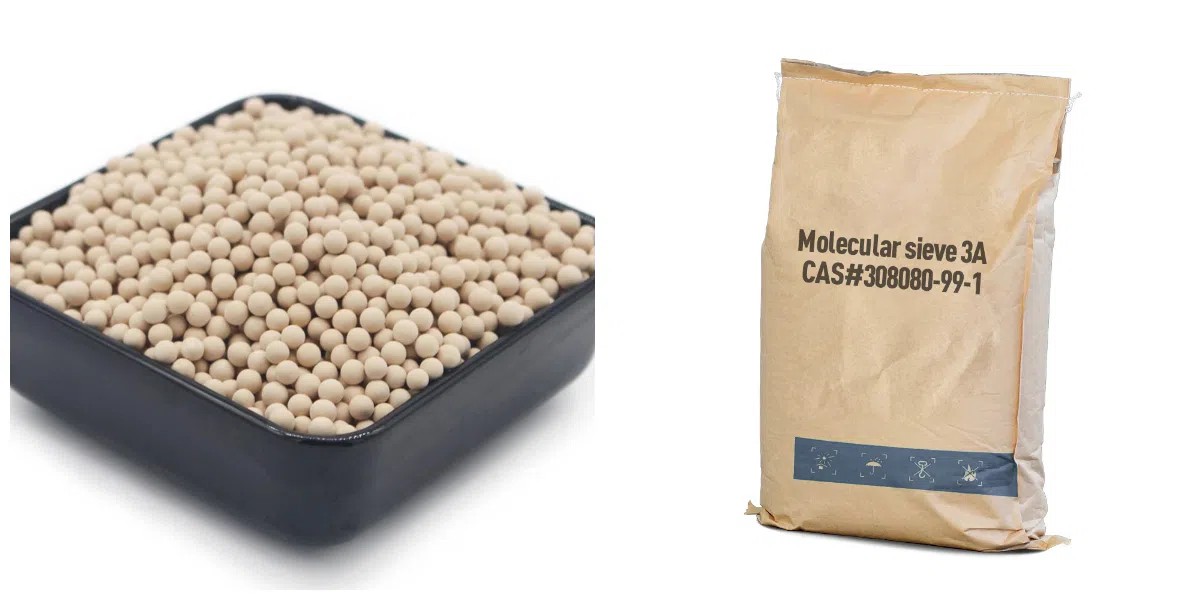
Molecular Sieve 3A is a potassium-based aluminosilicate adsorbent with a nominal pore size of approximately 3 Å. It is specifically designed for selective water adsorption, making it an effective desiccant for removing moisture from gases and liquids without significantly adsorbing larger molecules. Due to its excellent dehydration efficiency, high adsorption selectivity, and good regeneration performance, Molecular Sieve 3A is widely used in the following industrial applications.
1. Natural Gas Dehydration
Used in natural gas processing systems to remove trace moisture, helping prevent hydrate formation, pipeline corrosion, and operational problems during gas transportation and processing.
2. Petrochemical and Chemical Processing
Applied in the drying of hydrocarbon streams, solvents, and chemical feedstocks. It helps remove residual water, minimize moisture-related side reactions, and improve product purity.
3. Refrigerant Drying
Widely used in refrigeration and air-conditioning systems to remove moisture from refrigerants, helping prevent ice formation, acid generation, and corrosion within refrigeration circuits.
4. Insulating Glass Manufacturing
Used as a desiccant in insulating glass units (IGUs) to absorb residual moisture within the sealed air or gas space, helping prevent condensation and maintain long-term insulation performance.
5. Ethanol and Solvent Dehydration
Suitable for removing trace water from selected organic solvents and alcohol-containing systems. Its small pore size allows preferential adsorption of water while limiting the adsorption of larger organic molecules.
6. Electronic and Specialty Gas Purification
Used for moisture removal from selected industrial and specialty gas streams, helping maintain low moisture levels required in electronics manufacturing and precision industrial processes.
7. Air and Industrial Gas Drying
Applied in gas purification and drying systems to reduce moisture content in compressed air and other industrial gases, supporting stable downstream processing and equipment operation.
8. Transformer Oil and Insulating Liquid Drying
Used in suitable oil-treatment systems to reduce residual moisture in insulating liquids, helping maintain dielectric performance and extend the service life of electrical equipment.