
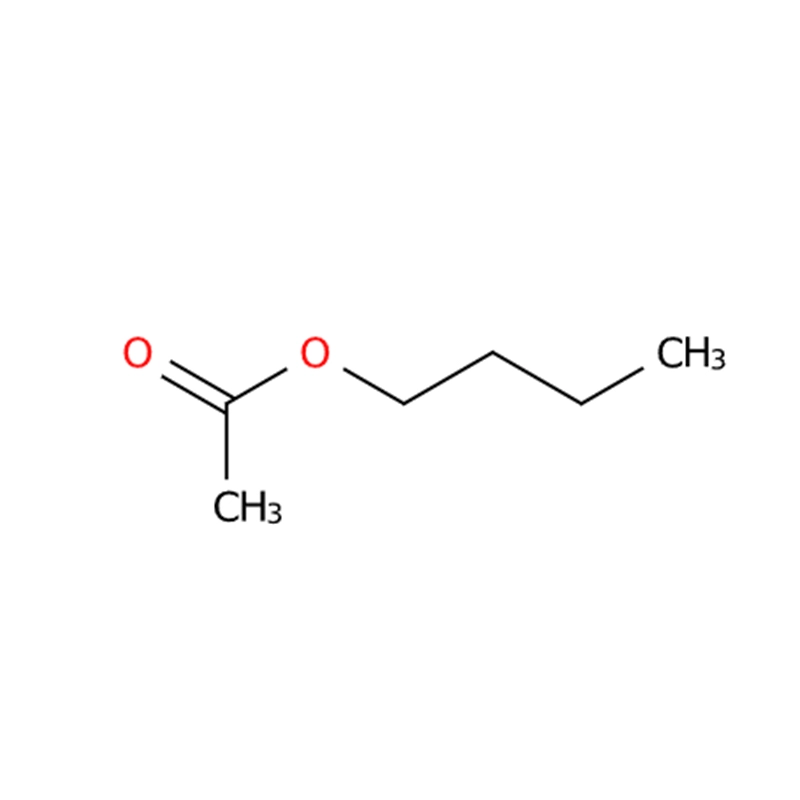
Product Description
Butyl acetate is a volatile, flammable ester compound with multiple isomers, among which n-butyl acetate and isobutyl acetate dominate commercial applications. With high volatility and a refreshing fruity scent, it delivers a pungent initial taste that fades into a sweet aftertaste. Its volatile vapor carries mild anesthetic properties, requiring standardized ventilation control during industrial operation.
As a naturally existing fragrance component, it is mainly applied in food flavor preparation. While its fragrance retention is relatively weak, its pure and vivid fruity tone makes it an indispensable blending ingredient in daily flavor formulation.
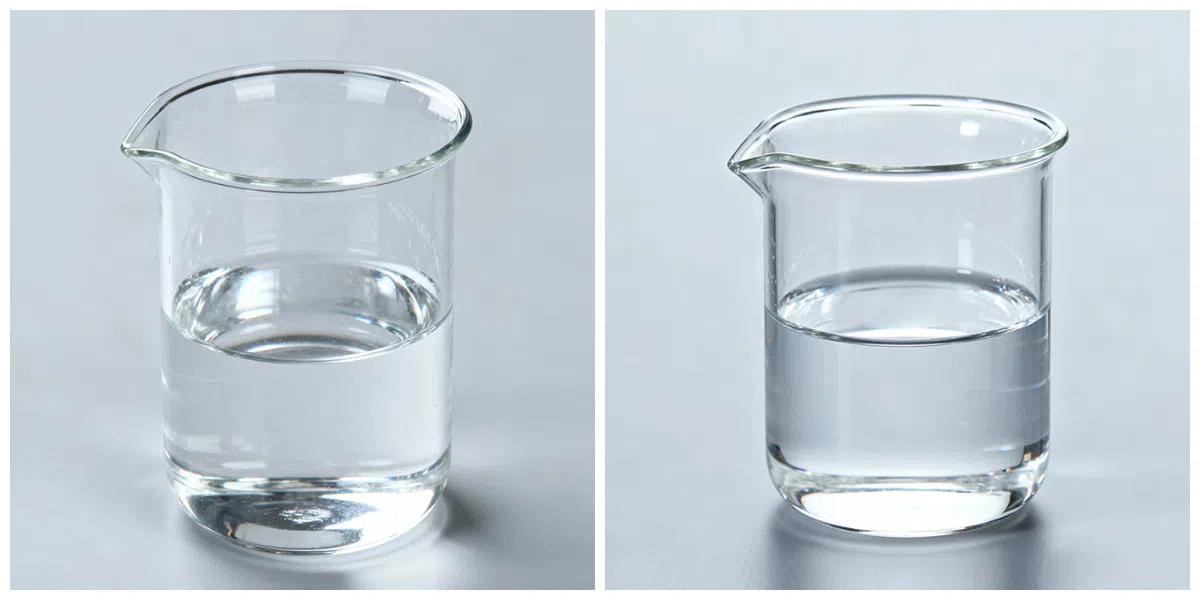
Product Parameters
| Melting point | -78 °C (lit.) |
| Boiling point | 124-126 °C (lit.) |
| density | 0.88 g/mL at 25 °C (lit.) |
| vapor density | 4 (vs air) |
| vapor pressure | 15 mm Hg ( 25 °C) |
| refractive index | n20/D 1.394(lit.) |
| FEMA | 2174 | BUTYL ACETATE |
| Fp | 74 °F |
| storage temp. | Store at +5°C to +30°C. |
| solubility | 5.3g/l |
| form | Liquid |
| color | ≤10(APHA) |
| Specific Gravity | 0.883 (20/20℃) |
| Odor | Characteristic; agreeable fruity (in low concentrations); non residual. |
| PH | 6.2 (5.3g/l, H2O, 20℃)(External MSDS) |
| explosive limit | 1.4-7.5%(V) |
| Odor Threshold | 0.016ppm |
| Odor Type | ethereal |
| Water Solubility | 0.7 g/100 mL (20 ºC) |
| FreezingPoint | -77.9℃ |
λmax | λ: 254 nm Amax: 1.0 |
| λ: 260 nm Amax: 0.20 | |
| λ: 275 nm Amax: 0.04 | |
| λ: 300 nm Amax: 0.02 | |
| λ: 320-400 nm Amax: 0.01 | |
| JECFA Number | 127 |
| Merck | 141535 |
| BRN | 1741921 |
| Henry's Law Constant | 5.79 at 37 °C (static headspace-GC, van Ruth et al., 2001) |
| Exposure limits | TLV-TWA 150 ppm (~710 mg/m3) (ACGIH, MSHA, and OSHA); TLV-STEL 200 ppm (~950 mg/m3); IDLH 10,000 ppm (NIOSH). |
| Dielectric constant | 5.0(20℃) |
| Stability: | Stable. Flammable. Incompatible with strong oxidizing agents, strong acids, strong bases. |
| InChIKey | DKPFZGUDAPQIHT-UHFFFAOYSA-N |
| LogP | 1.82-2.3 at 25℃ |
| CAS DataBase Reference | 123-86-4(CAS DataBase Reference) |
| NIST Chemistry Reference | Acetic acid, butyl ester(123-86-4) |
| EPA Substance Registry System | n-Butyl acetate (123-86-4) |
Safety Information
| Risk Statements | 10-66-67-R67-R66-R10 |
| Safety Statements | 25-S25 |
| RIDADR | UN 1123 3/PG 3 |
| OEB | A |
| OEL | TWA: 150 ppm (710 mg/m3), STEL: 200 ppm (950 mg/m3) |
| WGK Germany | 1 |
| RTECS | AF7350000 |
| Autoignition Temperature | 790 °F |
| TSCA | Yes |
| HS Code | 2915 33 00 |
| HazardClass | 3 |
| PackingGroup | III |
| Hazardous Substances Data | 123-86-4(Hazardous Substances Data) |
| Toxicity | LD50 orally in rats: 14.13 g/kg (Smyth) |
| IDLA | 1,700 ppm |
Application Scenarios
Primarily utilized as a high-efficiency flavor enhancer in the food industry for crafting fruity flavor systems. Thanks to its outstanding solvent miscibility and stable physical properties, it also acts as a universal solvent and formula modifier for various flavor and fine chemical products.


![5-CHLORO-3-METHYLBENZO[B]THIOPHENE](https://laisenxincailiao.cdn.aihuazhi.cn/cdn-cgi/image/width=400,height=400,fit=cover,format=auto,quality=80/22/28/1_7_jpg_25a9a6370d.webp)


