
Product Description
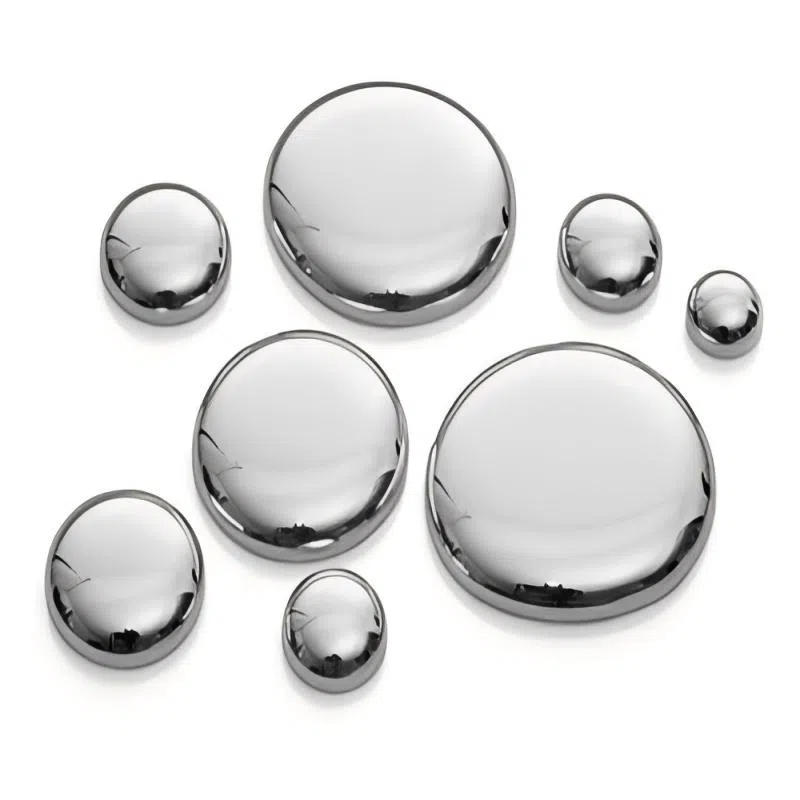
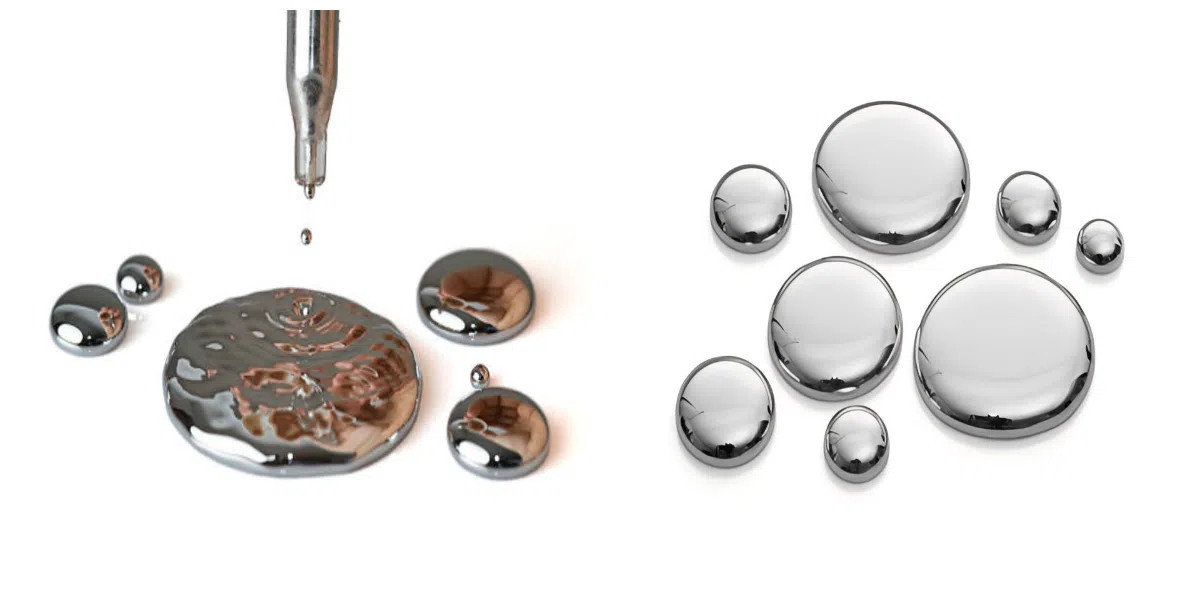
Mercury stands unique among all metallic elements as the sole metal that remains in liquid state under standard room temperature conditions. Naturally existent in the form of cinnabar (mercuric sulfide), mercury features a low boiling point, which enables simple industrial purification. It can be easily extracted from cinnabar ore through heating vaporization, followed by vapor condensation to obtain high-purity mercury metal up to 99.9% purity.
When solidified, mercury exhibits excellent ductility and malleability with extremely soft texture, allowing it to be cut effortlessly with a regular knife. Thermally, it serves as a low-efficiency heat conductor, while retaining stable electrical conductivity. Chemically, mercury presents inert characteristics similar to noble gases. It stays unreactive with most conventional acids, yet dissolves rapidly in strong oxidizing acids. Additionally, it can readily bond with diverse metals such as gold, zinc and aluminum to form stable mercury amalgams.
Product Parameters
| Chemical Formula: | Hg |
| Molecular Weight: | 200.59 g/mol |
| Melting Point: | -38.9 °C |
| Boiling Point: | 356.6 °C |
| Density: | 13.54 g/cm³ |
| Appearance: | Odorless, silvery liquid |
| Vapor pressure: | 0.0017 hPa ( 20 °C) |
| Quality Segment: | 100 |
| Form: | Liquid |
| Storage Temp: | 2-30℃ |
| InChI: | 1S/Hg |
Application Scenarios
Mercury possesses diverse industrial functions and is widely adopted across electrical engineering, chemical manufacturing, precision instrumentation, agriculture, pharmaceuticals and analytical fields.
1. Electrical and Electronic Industry
Mercury plays an essential role in electrical and electrolytic systems. It is commonly applied in mercury batteries and miniature cells for portable electronic devices, including radios, microphones, cameras, hearing aids, watches and smoke detectors. It is also a key material for electrical wiring, switches, rectifiers and discharge equipment. In lighting systems, mercury is widely used in mercury vapor lamps, fluorescent tubes and ultraviolet arc lamps.
2. Electrolytic Chemical Manufacturing
Mercury-based electrodes are core components in industrial electrolytic cells. Mercury cathodes are extensively utilized in the electrolysis of sodium chloride solution, supporting the large-scale production of caustic soda and chlorine gas for basic chemical industries.
3. Precision Measuring Instruments
Benefiting from its stable liquid metallic properties and precise thermal expansion characteristics, mercury is conventionally used to produce thermometers, manometers, barometers and various pressure sensing and calibration instruments.
4. Industrial Catalysis
Mercury and its derivatives serve as effective catalysts in fine chemical synthesis. They are widely used for the production of vinyl chloride monomers and urethane foams, as well as for the oxidation reaction of various organic compounds.
5. Agricultural and Coating Additives
With excellent antibacterial and mildewproof properties, mercury compounds have long been applied as fungicides for agricultural protection and anti-fouling, anti-mold industrial coatings.
6. Medicine, Chemical Reagents and Pigments
Mercury-related compounds are utilized in pharmaceutical formulations, industrial pigments and laboratory analytical reagents. They are also essential for preparing special chemical agents such as Millon’s reagent and supporting the Kjeldahl nitrogen determination method in chemical analysis.
7. Metallurgy and Special Industrial Materials
Mercury can form amalgams with precious metals, enabling efficient extraction and separation of gold and silver from mineral ores. It is also applied in mercury boiler manufacturing, mirror coating processing, the preparation of various mercury salts and mercury fulminate, as well as traditional dental amalgam materials.