Product Description
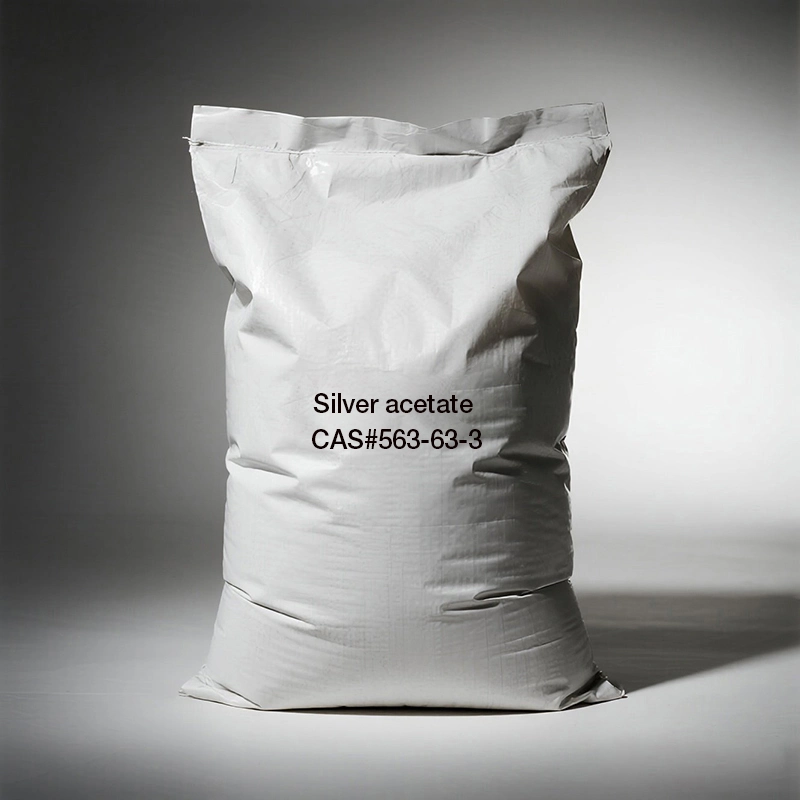
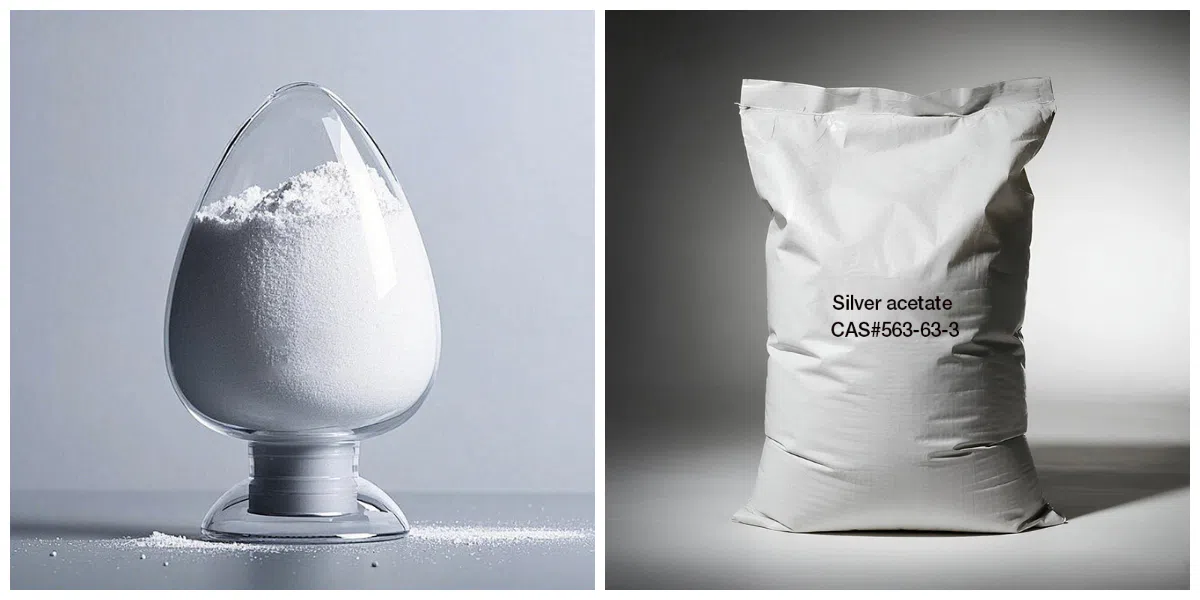
Silver acetate is an inorganic silver salt with the chemical formula CH₃COOAg. It typically appears as an off-white to white solid powder under normal conditions.
Silver acetate has limited solubility in water, with a reported solubility of approximately 10.2 g/L under specified conditions. Its solubility in organic solvents depends on the solvent, temperature, and product grade. Compatibility and solubility in ethanol, methanol, and acetone should be confirmed against reliable technical data.
Silver acetate should be stored in a tightly closed container under cool, dry conditions and protected from direct light. As with other silver compounds, exposure to light may affect product quality under certain conditions. Follow the supplier's Technical Data Sheet (TDS) and Safety Data Sheet (SDS) for appropriate storage and handling requirements.
Owing to its silver content and chemical properties, silver acetate is used in selected chemical synthesis, laboratory research, and specialty chemical applications. Its suitability depends on the required purity, formulation, and intended process.
Product Parameters
| Melting point | decomposes [STR93] |
| density | 3.25 |
| storage temp. | Store below +30°C. |
| solubility | 10.2g/l |
| form | Powder/Solid |
| color | White to gray |
| Specific Gravity | 3.259 |
| Water Solubility | 10.2 g/L (20 ºC) |
| Sensitive | Light Sensitive |
| Hydrolytic Sensitivity | 4: no reaction with water under neutral conditions |
| Merck | 148505 |
| Solubility Product Constant (Ksp) | pKsp: 2.71 |
| BRN | 3595636 |
| Exposure limits | ACGIH: TWA 0.01 mg/m3 |
| NIOSH: IDLH 10 mg/m3; TWA 0.01 mg/m3 | |
| Stability: | Stable, but light sensitive. Incompatible with strong reducing agents. |
| InChIKey | CQLFBEKRDQMJLZ-UHFFFAOYSA-M |
| CAS DataBase Reference | 563-63-3(CAS DataBase Reference) |
| NIST Chemistry Reference | Silver acetate(563-63-3) |
| EPA Substance Registry System | Silver acetate (563-63-3) |
| Hazard Codes | Xi,N |
| Risk Statements | 36/37/38-50 |
| Safety Statements | 26-36-37/39-61 |
| RIDADR | 1759 |
| WGK Germany | 3 |
| RTECS | AJ4100000 |
| F | 8 |
| TSCA | Yes |
| HazardClass | 9 |
| HS Code | 28432900 |
Application Scenarios
Silver acetate is used in specialty chemical synthesis, materials science, and laboratory research due to its silver content and chemical reactivity.
Conductive Silver Films: Silver acetate can serve as a silver precursor in the preparation of highly reflective, electrically conductive silver-polymer films for specialized materials research and functional coating development.
Organic Synthesis and Catalysis: Silver acetate can be used as a catalyst or silver source in selected organic reactions, including certain cycloaddition reactions involving isocyanoacetates and olefins. Its effectiveness depends on the reaction system and conditions.