
Product Description
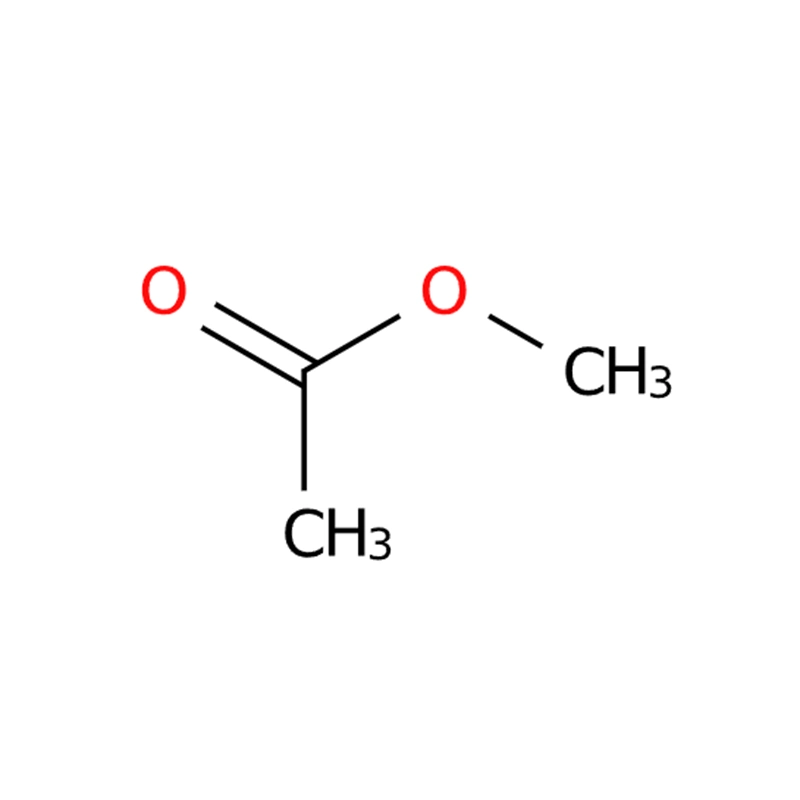
Methyl acetate is a flammable, transparent liquid ester with the molecular formula CH₃COOCH₃. Differing from ethyl acetate, it delivers notably higher water solubility and stronger formula flexibility. Chemically, it is susceptible to hydrolysis under strong acid and alkaline environments, requiring standardized storage and application management.
Product Parameters
| Melting point | -98 °C (lit.) |
| Boiling point | 57-58 °C (lit.) |
| density | 0.934 g/mL at 25 °C |
| vapor density | 2.55 (vs air) |
| vapor pressure | 165 mm Hg ( 20 °C) |
| refractive index | n20/D 1.361(lit.) |
| FEMA | 2676 | METHYL ACETATE |
| Fp | 3.2 °F |
| storage temp. | no restrictions. |
| solubility | 250g/l |
| form | Solution |
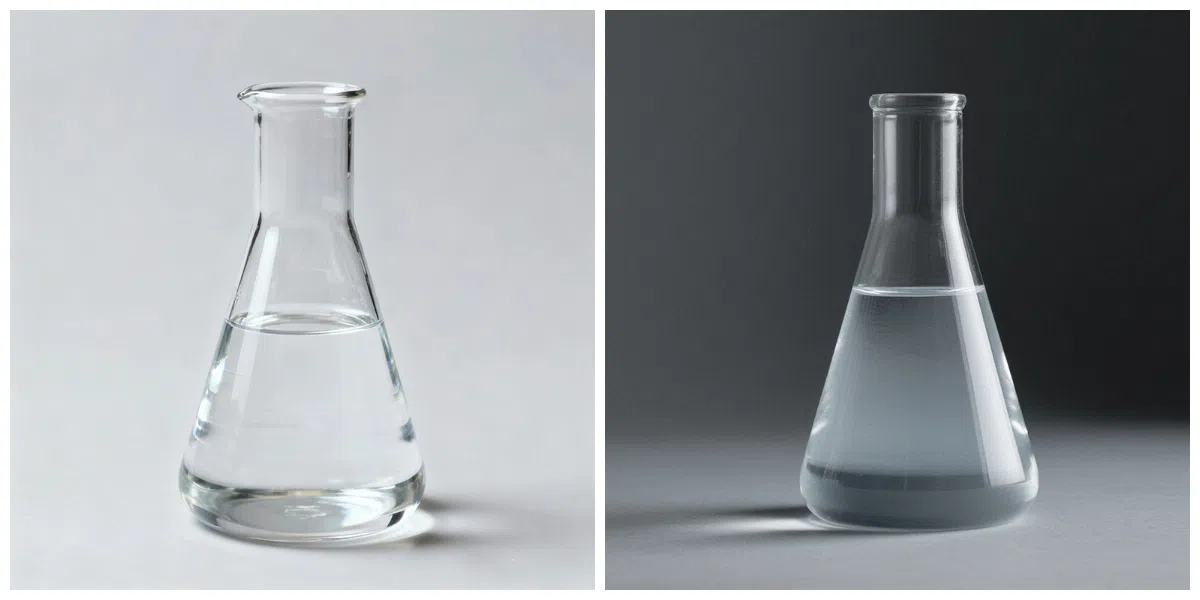
| color | Clear colorless to slightly pale yellow |
| Relative polarity | 0.253 |
| Odor | Slightly acrid, sweet; fragrant. |
| explosive limit | 3.1-16%(V) |
| Odor Threshold | 1.7ppm |
| Odor Type | ethereal |
| Water Solubility | 250 g/L (20 ºC) |
λmax | λ: 255 nm Amax: 1.0 |
| λ: 275 nm Amax: 0.1 | |
| λ: 300 nm Amax: 0.01 | |
| JECFA Number | 125 |
| Merck | 146008 |
| BRN | 1736662 |
| Henry's Law Constant | 0.90 at 20.00 °C, 1.56 at 30.00 °C (headspace-GC, Hovorka et al., 2002) |
| Exposure limits | TLV-TWA 200 ppm (~610 mg/m3) (ACGIH, MSHA, and OSHA); TLV-STEL 250 ppm (~760 mg/m3) (ACGIH); IDLH 10,000 ppm (NIOSH). |
| Dielectric constant | 7.3(20℃) |
| Stability: | Stable. Extremely flammable - readily forms explosive mixtures with air. Note low flash point and wide explosion limits. Incompatible with strong oxidizing agents, strong bases, strong acids, nitrates. May be moisture sensitive. |
| LogP | 0.18 at 20℃ |
| CAS DataBase Reference | 79-20-9(CAS DataBase Reference) |
| NIST Chemistry Reference | Acetic acid, methyl ester(79-20-9) |
| EPA Substance Registry System | Methyl acetate (79-20-9) |
Safety Information
| Hazard Codes | F,Xi |
| Risk Statements | 11-36-66-67 |
| Safety Statements | 16-26-29-33 |
| RIDADR | UN 1231 3/PG 2 |
| OEB | A |
| OEL | TWA: 200 ppm (610 mg/m3), STEL: 250 ppm (760 mg/m3) |
| WGK Germany | 1 |
| RTECS | AI9100000 |
| Autoignition Temperature | 936 °F |
| TSCA | Yes |
| HS Code | 2915 39 00 |
| HazardClass | 3 |
| PackingGroup | II |
| Hazardous Substances Data | 79-20-9(Hazardous Substances Data) |
| Toxicity | LD50 orally in Rabbit: > 5000 mg/kg LD50 dermal Rat > 2000 mg/kg |
| IDLA | 3,100 ppm [10% LEL] |
Application Scenarios
Beyond conventional solvent usage, it acts as a vital fine chemical intermediate. It participates in supercritical transesterification reactions to produce rapeseed oil-based fatty acid methyl esters and triacetin, and serves as an acyl acceptor for biodiesel manufacturing. It can also be applied for ethanol synthesis and catalytic preparation of n-butyl acetate, supporting the synthesis of multiple organic derivatives.