
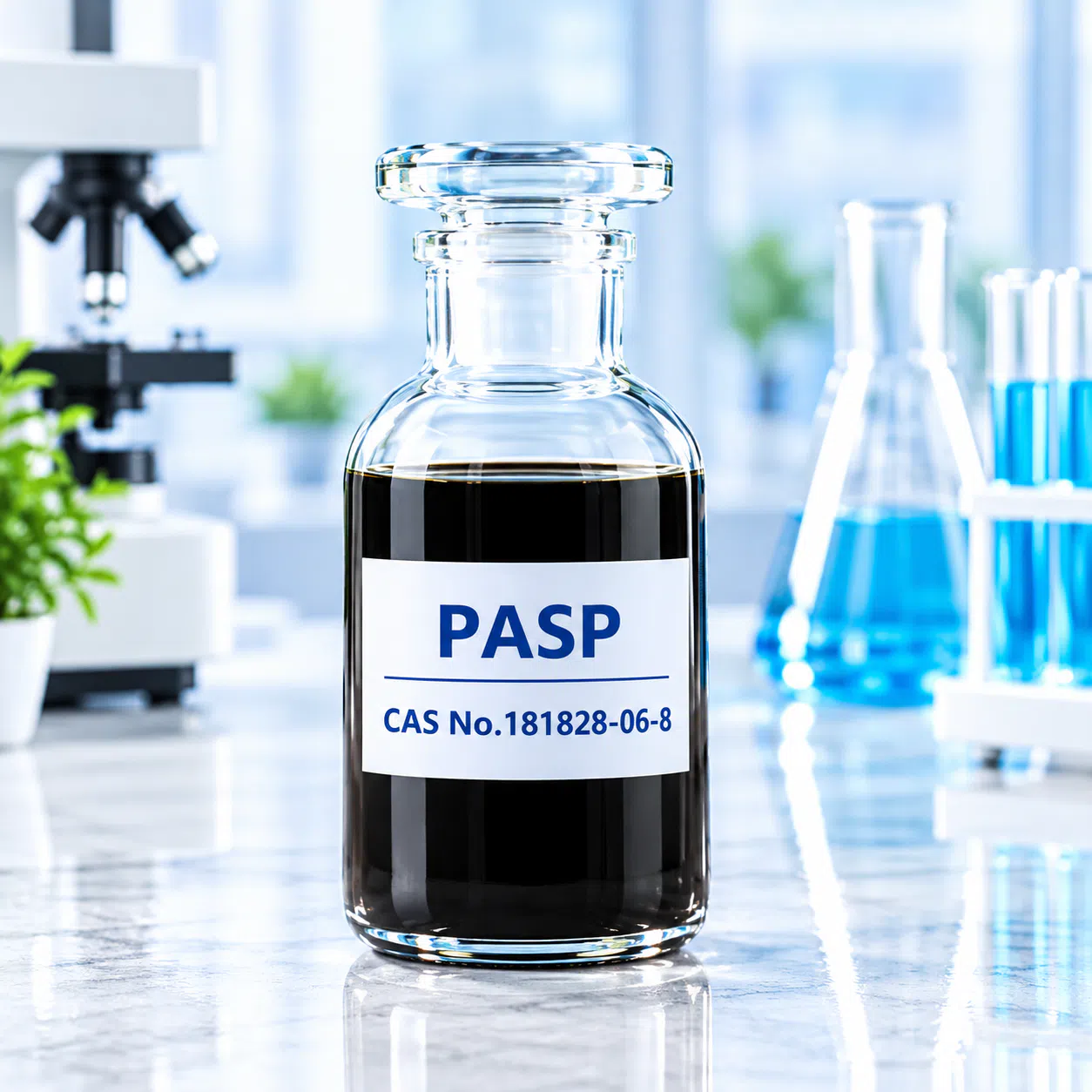
Product Description
PASP (Sodium Polyaspartate) is a water-soluble polymer and phosphorus-free green water treatment chemical.
It offers excellent biodegradability and is designed as an environmentally friendly alternative to conventional phosphorus-containing water treatment chemicals.
PASP has strong chelating and complexing capabilities toward metal ions and provides both scale inhibition and corrosion inhibition performance.
It is particularly effective in controlling mineral scale such as calcium carbonate, while also providing good dispersion of suspended particles and helping protect metal equipment from corrosion.
Under suitable test conditions, PASP can achieve a calcium carbonate scale inhibition rate of ≥95%.
Due to its phosphorus-free formulation and biodegradable characteristics, PASP can be used as an alternative to conventional phosphorus-containing scale inhibitors in applications where reducing phosphorus discharge and the risk of eutrophication is important.
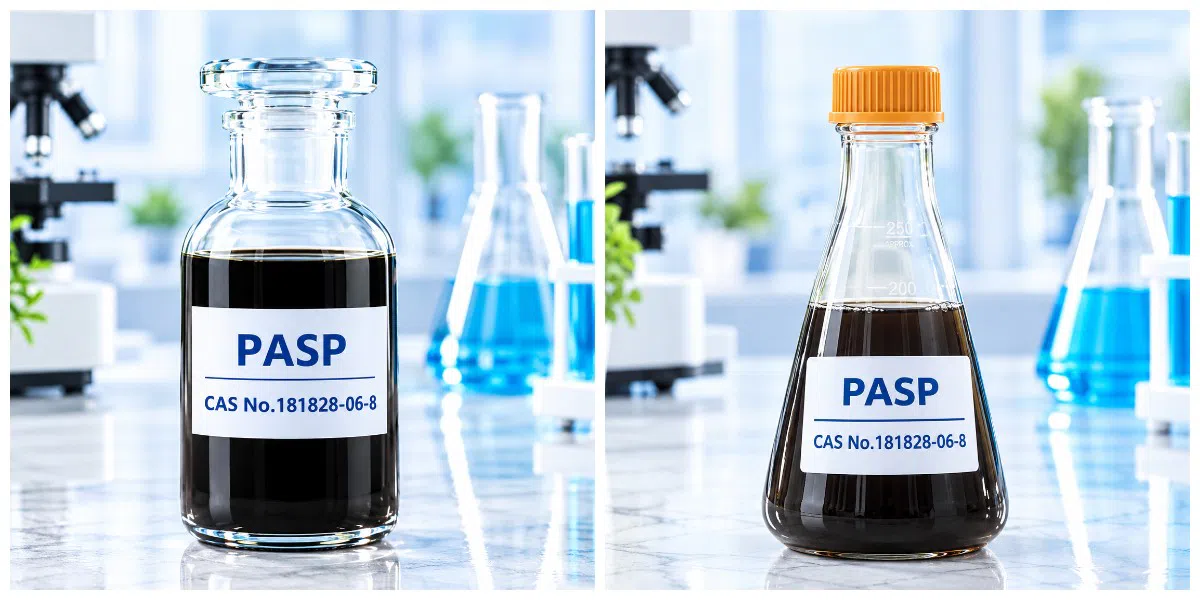
Product Parameters
| Item | Specification |
| Appearance | Yellow to reddish-brown liquid |
| Solid Content, % | ≥40.0 |
| pH (as supplied) | 8.5–10.5 |
Recommended Use
PASP is commonly used as a scale and corrosion inhibitor in industrial water treatment.
The optimum dosage should be determined according to water chemistry, operating conditions, equipment materials, and application-specific testing.
PASP can be formulated with other water treatment chemicals. In particular, combination with PBTCA can provide a synergistic effect and enhance overall scale inhibition performance.
For applications outside conventional water treatment, the recommended dosage should be established through laboratory and field trials.
Packaging and Storage
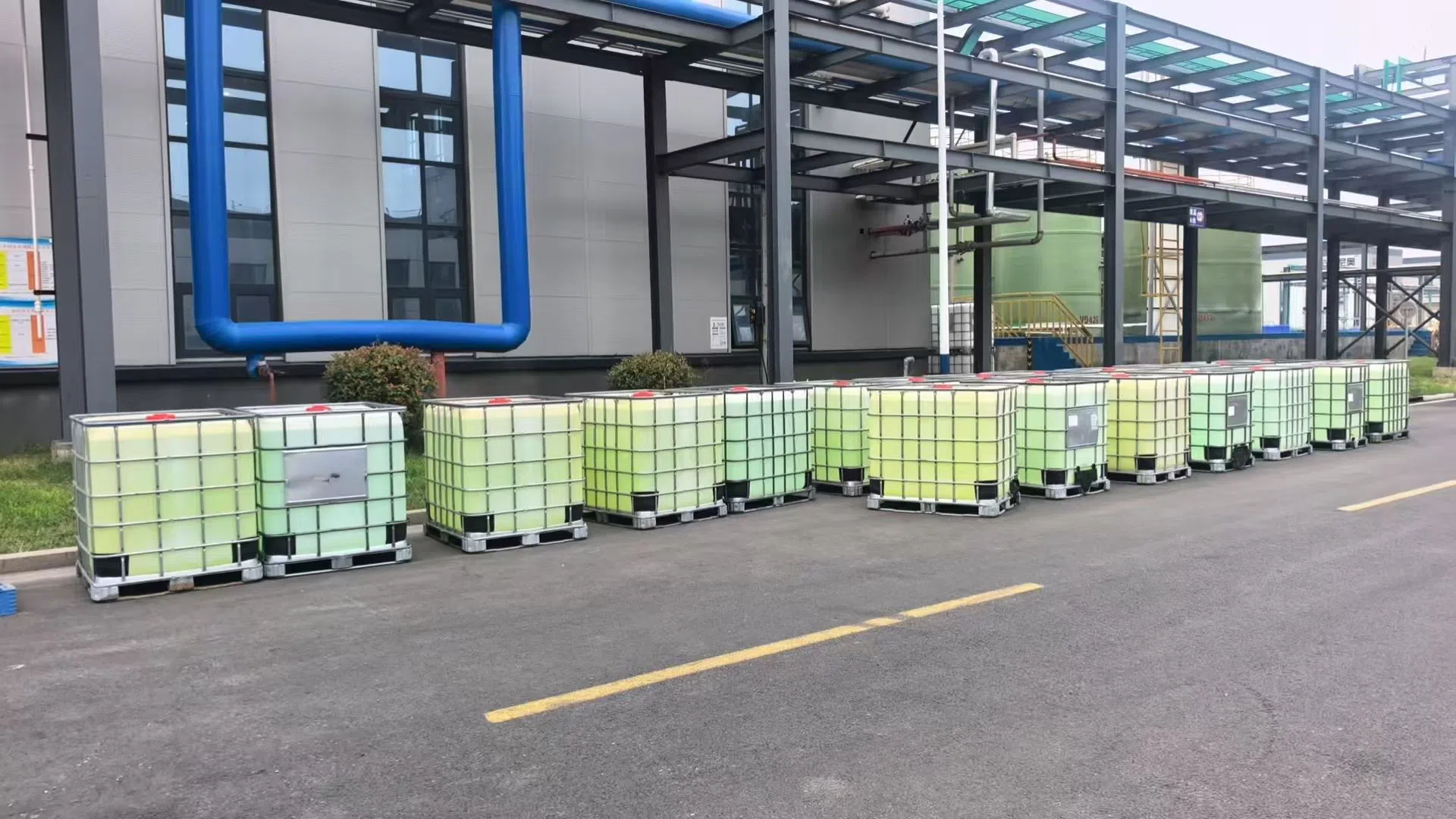
PASP is supplied in plastic drums, typically with a net weight of 25 kg or 250 kg per drum. Customized packaging is available according to customer requirements.
Store in a cool, dry indoor area, protected from direct sunlight and extreme temperatures. Keep containers tightly closed when not in use.
Recommended storage period: 12 months.
Safety and Handling
PASP is an alkaline aqueous polymer solution. Appropriate personal protective equipment should be worn during handling and application.
Avoid direct contact with the skin and eyes. In case of contact, rinse immediately and thoroughly with plenty of clean water.
For detailed information regarding safe handling, storage, transportation, and emergency procedures, please refer to the product's Safety Data Sheet (SDS).
Application Scenarios
1. Industrial Circulating Cooling Water
PASP is widely used as a scale and corrosion inhibitor in industrial circulating cooling water systems.
It is particularly suitable for systems with:
· High water hardness
· High alkalinity
· High pH
· High concentration cycles
PASP helps control calcium-based scale formation, disperse suspended particles, and provide additional protection against corrosion.
2. Boiler Water Treatment
PASP can be used in boiler water treatment programs to help control mineral deposition and corrosion.
Its phosphorus-free characteristics make it suitable for water treatment programs where reduced phosphorus discharge is a consideration.
3. Reverse Osmosis and Membrane Water Treatment
PASP can be used in reverse osmosis (RO) and membrane water treatment systems to help control mineral deposition and maintain membrane cleanliness.
4. Oilfield Water Treatment
PASP can be applied in oilfield water treatment and water injection systems for scale control and dispersion.
It is particularly suitable for challenging water conditions characterized by high hardness, alkalinity, or mineral scaling potential.
5. Household & Specialty Chemical Applications
Due to its environmentally friendly characteristics, PASP can also be used as a specialty additive in household and industrial formulations, including selected applications requiring low-phosphorus or phosphorus-free chemistry.
6. Agricultural Applications
PASP can be used in agricultural applications as a nutrient uptake enhancer.
It may help improve nutrient utilization and support the growth of crops such as:
· Vegetables
· Melons and fruits
· Flowers
· Other agricultural crops
When used together with agricultural chemicals, PASP may also help improve application performance. The appropriate formulation and dosage should be established through application-specific testing.