
Product Description
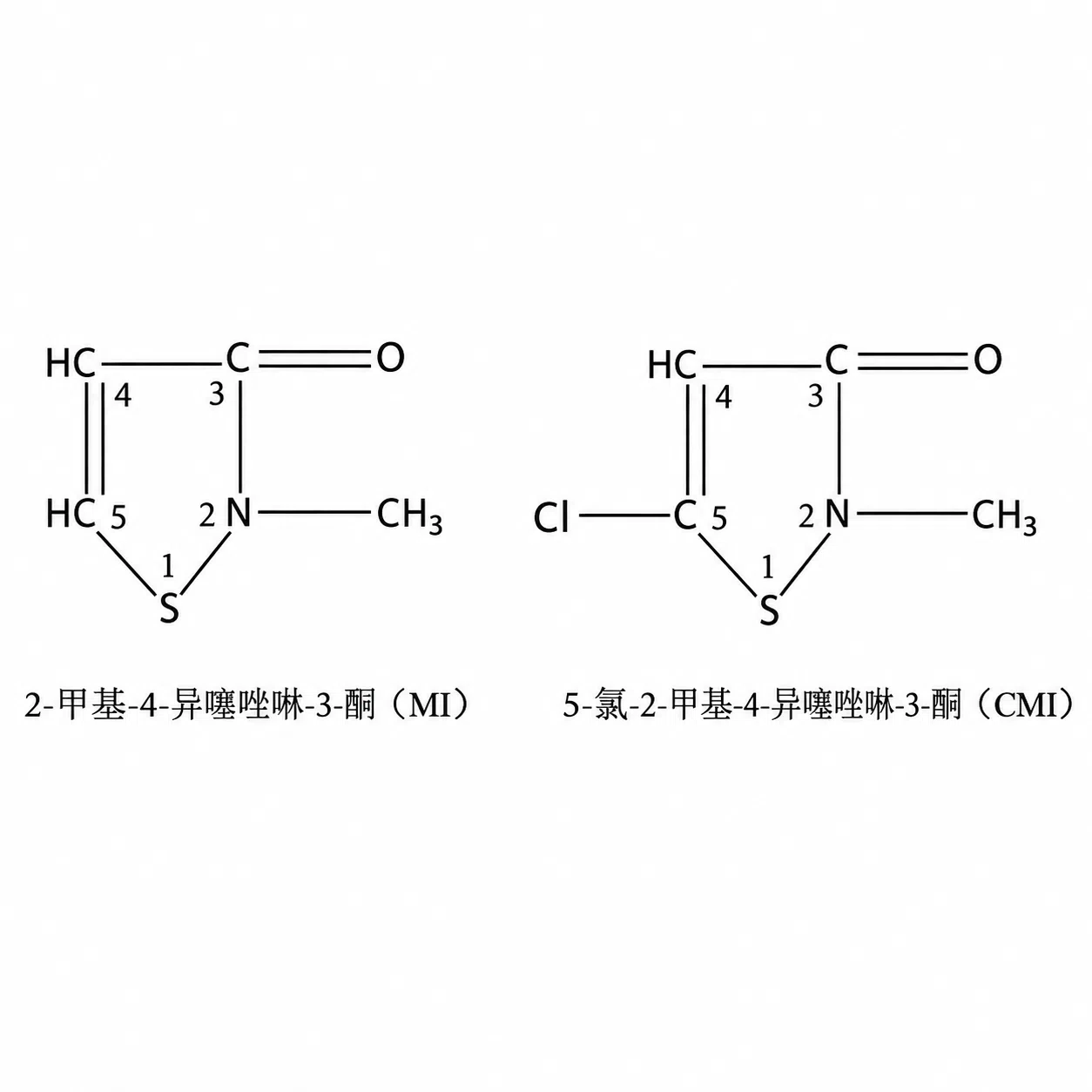
Isothiazolinones are mainly composed of:5-chloro-2-methyl-4-isothiazolin-3-one (CMI) and 2-methyl-4-isothiazolin-3-one (MI).
Isothiazolinones act as biocides by disrupting protein bonds in bacteria and algae, thereby preventing microorganisms from growing. Once microorganisms come into contact with isothiazolinones, they rapidly and irreversibly inhibit microbial growth, leading to cell death. Therefore, they show strong inhibitory and killing effects against common bacteria, fungi, and algae.
Compared with many other biocides, isothiazolinones feature:
high biocidal efficiency,
good degradability,
minimal residue (no significant residual buildup),
safe operation,
good compatibility with other chemicals,
strong stability, and
relatively low usage cost.
Isothiazolinones can be miscible with chlorine and most anionic, cationic, and nonionic surfactants. At higher dosages, isothiazolinones demonstrate significant performance in biofilm/slime control and detachment.
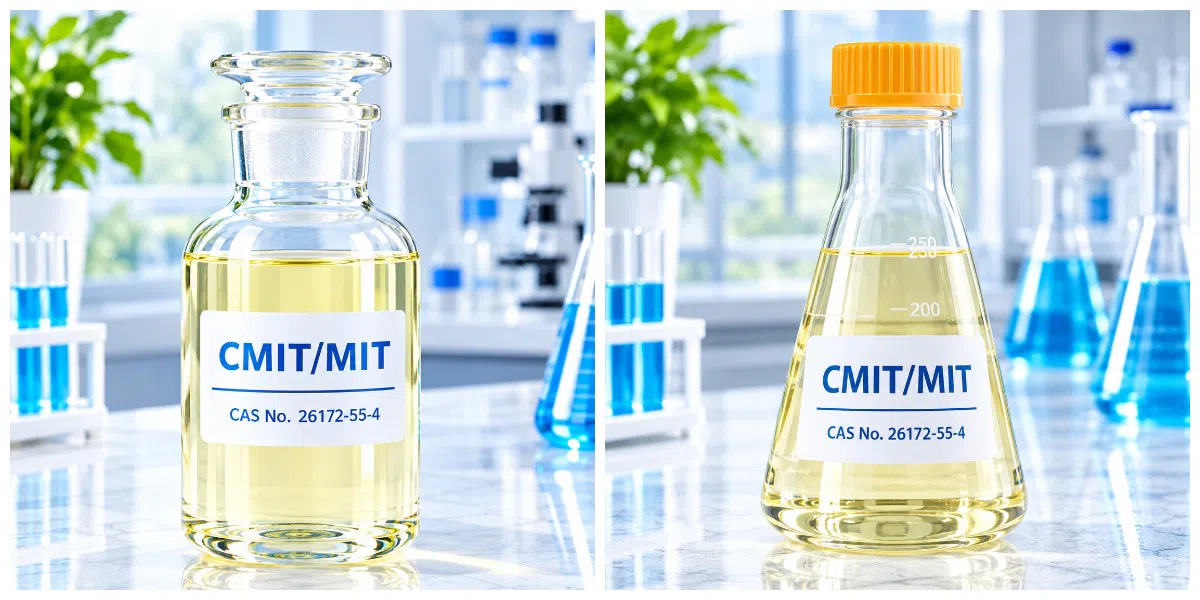
Product Parameters
| Item | Specification | I Category | II Category |
| Appearance | — | Light yellow to yellow-green transparent liquid | Light yellow or light blue-green transparent liquid |
| Active content / % | GB/T3657-2017 | 14.0–15.0 | ≥ 2.0 |
| pH (as supplied) | — | 2.0–4.0 | 2.0–5.0 |
| Density (20°C) / g·cm⁻³ | — | 1.24–1.32 | ≥ 1.03 |
| CMI/MI (mass %) | — | 2.5–3.4 | 2.5–3.4 |
Recommended Dosage and Use
(1) As a slime/biofilm detachment agent (Type II product)
Typical dosage: 150–300 mg/L.
(2) As a biocide (Type II product)
Add every 3–7 days.
Recommended dosage: 80–100 mg/L.
Compatibility notes:
Isothiazolinones can be used together with oxidizing biocides such as chlorine.
They cannot be used in cooling water systems containing sulfides.
Better performance is usually achieved when used in combination with quaternary ammonium compounds.
(3) As an industrial preservative / antifungal agent
Typical concentration: 0.05–0.4%.
Application Scenarios
Isothiazolinones are a broad-spectrum, high-efficiency, low-toxicity, and non-oxidizing biocide. They are widely used in industries such as:
oilfields,
paper-making,
agrochemicals,
cutting oils,
leather,
printing inks,
dyes, and
tanneries.