
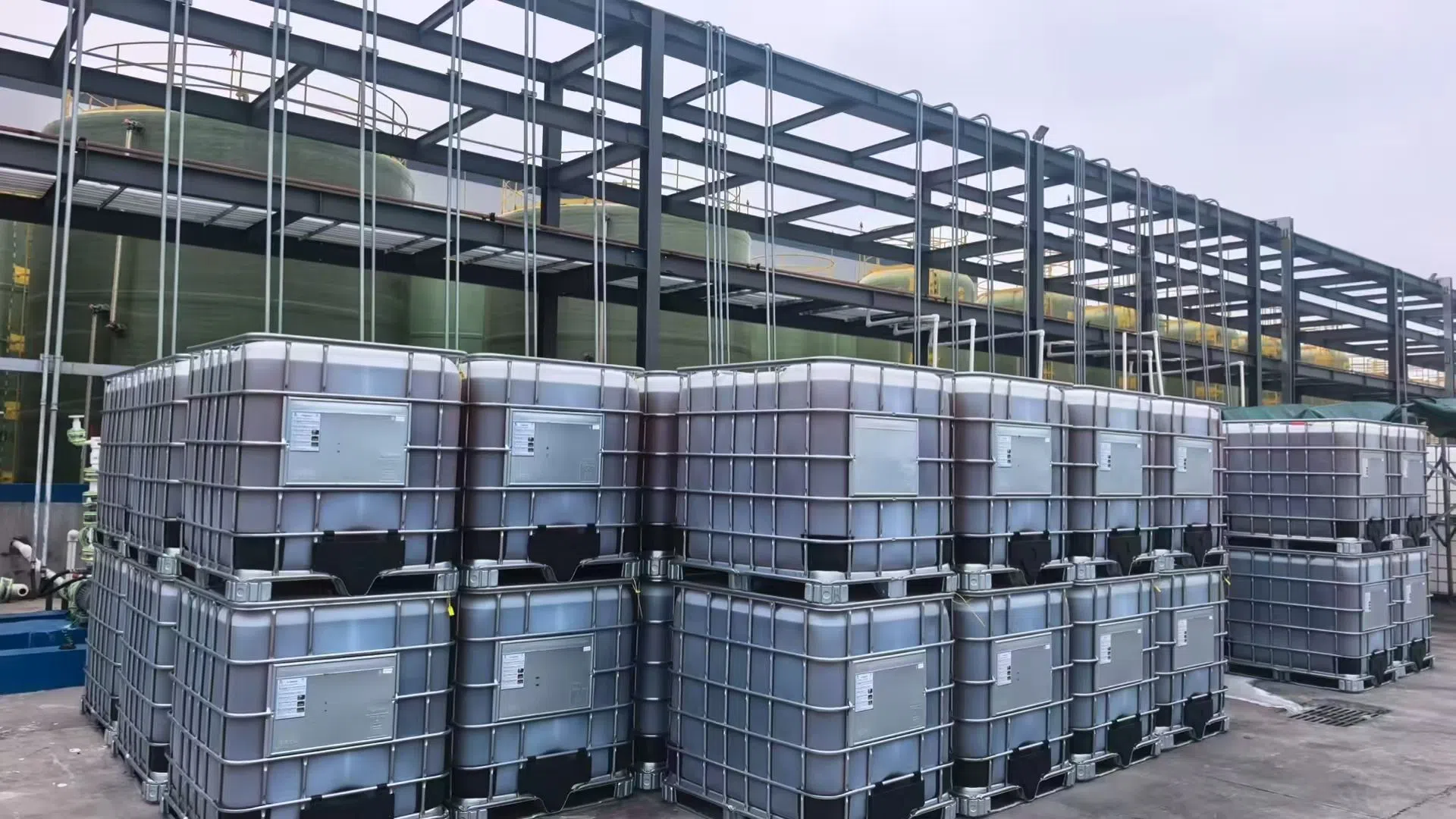
In industrial circulating water, cooling water, and high-hardness water systems, scale formation is more than simply a deterioration in water quality. It is a continuous process that can affect heat transfer efficiency, equipment performance, and overall system stability. When concentrations of scale-forming ions such as calcium and magnesium are high, especially under conditions of elevated alkalinity, temperature, or cycles of concentration, sparingly soluble salts such as calcium carbonate are more likely to precipitate and deposit on heat exchangers, pipelines, and other equipment surfaces.
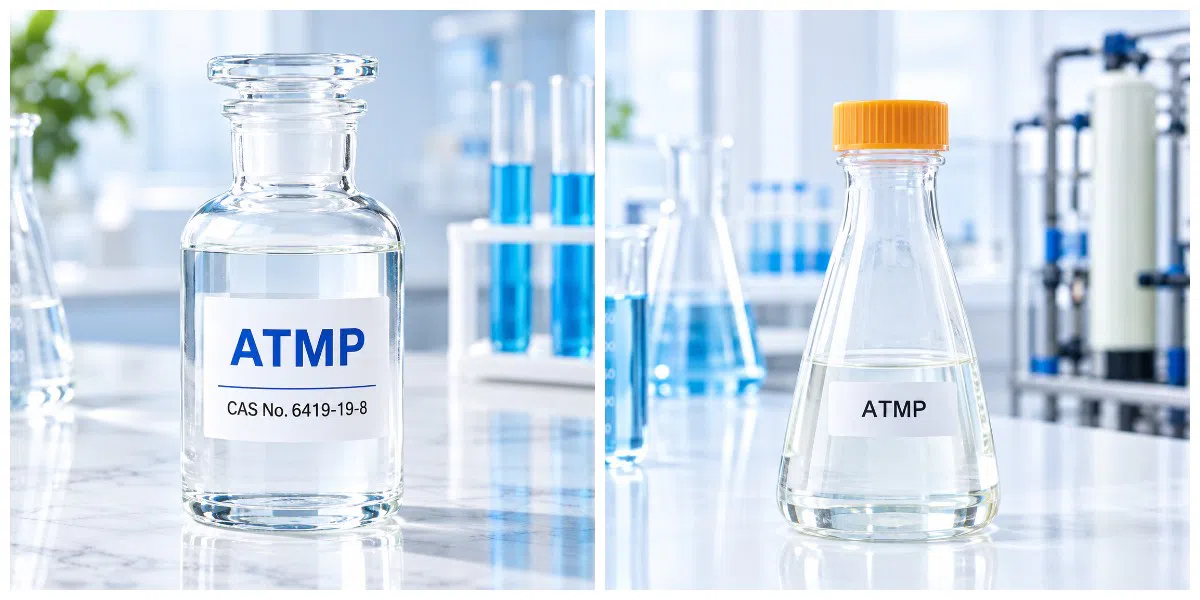
ATMP (Amino Trimethylene Phosphonic Acid), also known as aminotris(methylene phosphonic acid), is a widely used organic phosphonic acid in industrial water treatment. Its CAS No. is 6419-19-8, and its molecular formula is N(CH₂PO₃H₂)₃. ATMP has a strong ability to complex with metal ions and provides effective scale inhibition at low dosage through mechanisms such as threshold inhibition and crystal growth modification. As a result, it is widely used in industrial circulating cooling water, water treatment formulations, and metal surface treatment.
1. How Does ATMP Prevent Scale Formation?
Understanding ATMP goes beyond simply calling it a "scale inhibitor." Its key function is to interfere with the processes that lead to scale formation.
When Ca²⁺, Mg²⁺, and other metal ions react with anions such as carbonate and sulfate, the water may gradually become supersaturated. This can trigger a series of processes including nucleation, crystal growth, particle aggregation, and deposition.
Once ATMP is introduced into the water system, it can reduce the risk of scale deposition through several mechanisms.
1.1 Complexing with Metal Ions
ATMP contains multiple phosphonic acid groups that can interact with metal ions such as Ca²⁺, Mg²⁺, Fe³⁺, and Zn²⁺.
By complexing with these ions, ATMP changes their availability in the water and reduces the tendency of some metal ions to participate directly in scale-forming reactions.
1.2 Interfering with Crystal Growth
Even after small crystal nuclei have formed, ATMP can adsorb onto active growth sites on the crystal surface and interfere with the normal development of the crystal lattice.
Therefore, scale inhibition does not mean removing all calcium ions from the water. Instead, ATMP works primarily at low concentrations to modify the precipitation and crystal-growth process, making it more difficult for compact, firmly adherent hard scale deposits to develop.
1.3 Reducing Particle Aggregation and Deposition
In real circulating water systems, scaling is not caused solely by the formation of individual crystals. The aggregation, transport, and deposition of fine particles also play an important role.
Phosphonate-based water treatment chemicals can reduce deposition through a combination of metal-ion complexation, dispersion, and crystal-growth inhibition. In water treatment formulations, phosphonates are commonly associated with functions such as threshold scale inhibition, complexation, dispersion, and corrosion control.
2. What Are the Key Performance Characteristics of ATMP?
ATMP has become a widely used component in conventional organic phosphonate water treatment formulations because of its molecular structure and functional properties.
Low-Dosage Scale Inhibition
ATMP is a typical organic phosphonic acid scale inhibitor. It can interfere with scale-forming processes at relatively low concentrations, making it a useful component in formulated scale and corrosion inhibitors.
Effective Control of Calcium Carbonate Scale
Calcium carbonate is one of the most common types of scale encountered in industrial circulating cooling water systems.
ATMP provides effective control of calcium carbonate precipitation and is therefore widely used in industrial cooling water treatment.
Metal-Ion Complexation
In addition to scale inhibition, ATMP can function as a chelating or complexing agent.
Its ability to interact with metal ions such as iron, copper, zinc, calcium, and magnesium can help control certain metal-related problems in industrial water treatment systems.
Good Chemical Stability
ATMP exhibits good stability in aqueous systems and is generally more resistant to hydrolysis than some conventional condensed phosphate products.
This makes it suitable for continuous industrial water treatment applications where long-term control of scale formation is required.
3. What Industries Use ATMP?
ATMP is not designed for only one type of equipment or application. Its suitability depends largely on the water chemistry and operating conditions of the system.
Circulating Cooling Water Systems
In industries such as power generation, petrochemicals, chemicals, and metallurgy, circulating cooling water undergoes continuous evaporation, makeup-water addition, and concentration.
As a result, calcium hardness, alkalinity, and other dissolved ions may gradually increase.
ATMP can be incorporated into cooling water treatment programs to reduce the risk of carbonate scale formation. It can also be formulated together with other organophosphonates, polycarboxylate dispersants, and corrosion inhibitors.
Power Plant Cooling Water
Thermal power plants and other large industrial facilities typically operate large-scale circulating cooling water systems.
Significant scale deposition on heat-transfer surfaces can reduce heat transfer efficiency and increase operating energy consumption.
ATMP can therefore serve as one of the fundamental components in a circulating water scale-control program. The formulation and dosage should be determined based on factors such as makeup-water quality, cycles of concentration, operating temperature, and treatment targets.
Petrochemical and Chemical Industries
Circulating water systems in petrochemical and chemical plants often have relatively complex water chemistry. Their operation may also be affected by factors such as process-fluid leakage, concentration of dissolved salts, and accumulation of contaminants.
Under these conditions, relying on a single treatment chemical may not adequately address all water treatment requirements.
ATMP is therefore often used as a functional component in formulated treatment programs together with other scale inhibitors, dispersants, and corrosion inhibitors.
Phosphonates are used in a variety of industrial water treatment formulations, including cooling water, boiler water, oilfield water treatment, papermaking, and reverse osmosis (RO) systems.
Metal Surface Treatment
Because ATMP has metal-ion complexing properties and can provide a degree of corrosion control, it can also be used in metal surface treatment, industrial cleaning, and related chemical formulations.
Textile and Dyeing Processes
During textile processing and dyeing, metal ions may interfere with certain process steps.
ATMP can take advantage of its complexing properties to control metal ions and may be incorporated into relevant textile auxiliaries and process formulations.
4. More ATMP Does Not Necessarily Mean Better Scale Control
This is an important consideration when selecting and applying water treatment chemicals.
The performance of a scale inhibitor is not simply proportional to its dosage. If the dosage is too low, it may not provide adequate protection against the actual scaling risk. Excessive dosage, on the other hand, can increase chemical consumption and operating costs while unnecessarily changing the water chemistry.
The appropriate ATMP dosage should therefore be determined according to factors such as:
· Raw water hardness
· Alkalinity
· pH
· Operating temperature
· Cycles of concentration
· Circulating water flow rate
· Target water quality and scale-control requirements
Some publicly available technical references indicate a typical dosage range of approximately 1–20 mg/L for certain circulating cooling water applications. However, this range should only be regarded as a preliminary reference and should not replace actual water analysis and laboratory testing.
For complex industrial water systems, jar testing, dynamic simulation, pilot testing, or on-site trials are recommended to determine the optimum dosage and formulation.
5. How Should ATMP Be Combined with Other Scale Inhibitors?
Modern industrial water treatment increasingly relies on formulated products and synergistic treatment programs because different chemicals address different types of water chemistry and operating challenges.
ATMP is effective for metal-ion control, crystal-growth interference, and carbonate scale inhibition. However, when a system also involves sulfate scaling, high hardness, elevated temperature, high cycles of concentration, or complex organic contamination, ATMP alone may not provide sufficient control.
For this reason, ATMP can be combined with:
· Polycarboxylate dispersants
· Other organophosphonate scale inhibitors
· Corrosion inhibitors
· Chelating or complexing agents
· Other functional water treatment polymers
The specific formulation should be selected according to the characteristics of the water system.
For circulating cooling water, for example, a complete treatment program may be designed around three core functions:
Scale inhibition + Dispersion + Corrosion control
Rather than simply increasing the dosage of a single active ingredient, a properly designed formulation can use the synergistic effects of multiple treatment chemicals to provide broader and more consistent system protection.
6. What Should You Look for When Selecting an ATMP Product?
When purchasing ATMP, price per metric ton should not be the only consideration.
Active Content
Commercial ATMP is available in both liquid and solid grades.
Liquid ATMP products commonly contain around 50% active content, while solid grades are available at higher active-content levels. Exact specifications should always be confirmed against the supplier's Certificate of Analysis (COA) and the agreed product specification.
Impurity Control
Impurities such as chloride, iron, and phosphite may affect certain high-performance or sensitive water treatment formulations.
Therefore, product evaluation should consider the complete specification rather than active content alone.
Batch-to-Batch Consistency
For continuously operating industrial customers, consistent product quality from batch to batch can be more important than achieving the lowest purchase price for a single order.
Stable quality helps maintain consistent treatment performance and reduces the risk of process fluctuations.
Compatibility with Actual Water Chemistry
The same ATMP product may perform differently in water systems with different levels of hardness, alkalinity, temperature, pH, and cycles of concentration.
Therefore, water analysis and formulation validation should be carried out before large-scale application whenever possible.
This approach helps ensure that the selected ATMP product is properly matched to the operating conditions while minimizing overall chemical consumption.
Conclusion
ATMP is a well-established organic phosphonic acid used in industrial water treatment. Its value goes beyond the simple label of "scale inhibitor."
Through metal-ion complexation, crystal-growth inhibition, threshold scale inhibition, and reduction of deposition tendency, ATMP can effectively interfere with the scaling process in industrial water systems.
For different industrial applications, an effective ATMP treatment program should be developed based on water chemistry, process conditions, equipment requirements, and laboratory or field testing.
The key to successful application is not simply selecting a high-performance chemical, but ensuring that the chemical formulation, dosage, and treatment strategy are properly matched to the actual operating conditions.
With the right formulation and dosage, ATMP can help control scale formation while supporting stable system operation and optimizing overall water treatment costs.


