Product Description
Liquid Paraffin is a colorless, oily mineral oil with low volatility and limited water solubility. The following values are provided as reference data and should be verified against the specific product grade and its Safety Data Sheet (SDS).
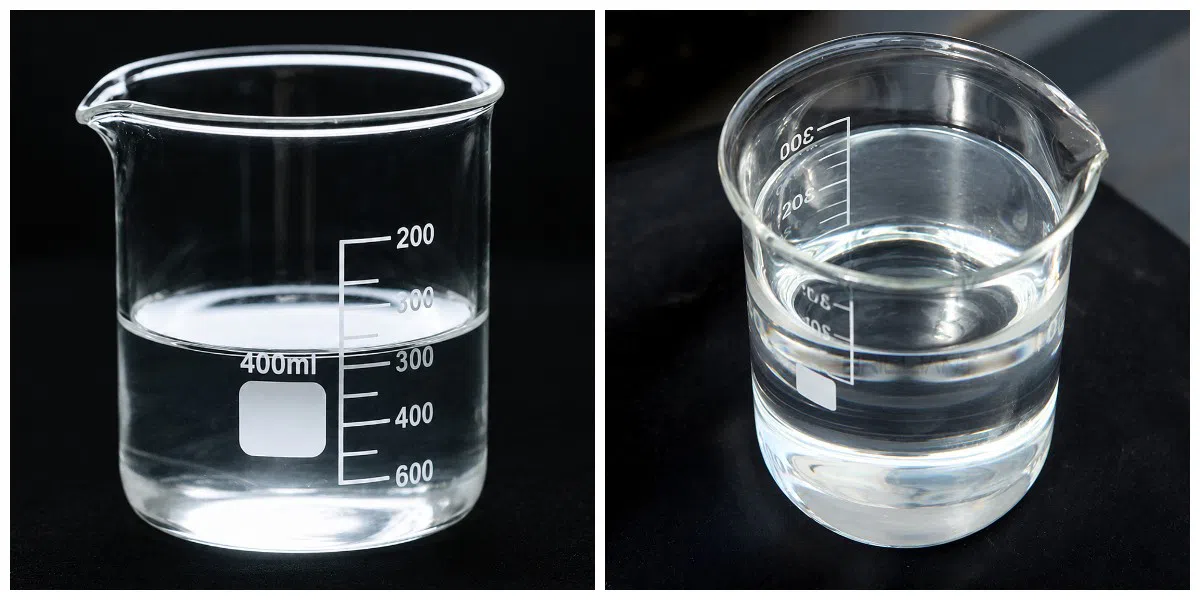
Appearance: Colorless, oily liquid
Specific Gravity: 0.865 at 60°C
Boiling Range: 250–360°C
Vapor Pressure: Less than 0.5 mmHg at 20°C
Flash Point: 193°C
Autoignition Temperature: 260–371°C
Water Solubility: Insoluble in water
NFPA 704 Rating: Health 0, Flammability 1, Reactivity 0, as reported in the supplied reference data
Handling and Safety Notes
Mineral oil mist may form when mineral oil is sprayed, atomized, or handled under conditions that generate airborne droplets. Such mist may have a characteristic oil odor, although odor and odor-threshold values depend on the oil composition and test conditions. Avoid inhaling oil mist and follow the handling, ventilation, and personal protective equipment recommendations specified in the product SDS.
Product Parameters
| Product Name: | Paraffin, liquid |
| Synonyms: | PARAFFIN VISCID, EXTRA PURE, DAB, PH. EU R., B. P., PH. FRANC.;VASELINE OIL EXTRA PURE COSMETIC GRADE;VASELINE OIL COLOURLESS FOOD GRADE;ParafinLiquidColourless,Heavy;ParaffinLiquidForIrSpectroscopy;ParafinLiquidColourless,Light;Mineraloil~ Paraffinoil;Paraffin, liquid, pure |
| CAS: | 8012-95-1 |
| MF: | unspecified |
| MW: | 0 |
| EINECS: | 232-384-2 |
| Product Categories: | Analytical Reagents;Analytical/Chromatography;Infrared (IR) Spectroscopy;IR Solvents;IR Spectroscopy Solvents;NMR;Solvent by Application;Solvents;Spectroscopy Solvents (IR;UV/Vis);Lipids and Related ProductsPharmacopoeia (USP);Pharmacopoeia A-Z;Core Bioreagents;Research Essentials;IR Spectroscopy;IR Spectroscopy Solvents;Spectroscopy |
| Mol File: | Mol File |
Paraffin, liquid Chemical Properties
| Melting point | -24 °C (lit.) |
| Boiling point | 300 °C (lit.) |
| Density | 0.827-0.890 g/mL at 20 °C |
| Refractive index | n20/D 1.467(lit.) |
| Fp | >300°C |
| Storage temp | Store at room temperature. |
| Solubility | Practically insoluble in ethanol (95%), glycerin, and water; soluble in acetone, benzene, chloroform, carbon disulfide, ether, and petroleum ether. Miscible with volatile oils and fixed oils, with the exception of castor oil. |
| Form | Light oil |
| Color | White |
| Specific Gravity | 0.870 (20/4℃) |
| Odor | Odorless |
| Water Solubility | Soluble in ether. Sparingly soluble in ethanol. Not miscible or difficult to mix in water. |
| Merck | 14,7023 |
| Exposure limits | ACGIH: TWA 5 mg/m3 OSHA: TWA 5 mg/m3 NIOSH: IDLH 2500 mg/m3; TWA 5 mg/m3; STEL 10 mg/m3 |
| Dielectric constant | 2.0(Ambient) |
| EPA Substance Registry System | Paraffin oils (8012-95-1) |
Application Scenarios
Cosmetics and Personal Care Products – Cosmetic-grade Liquid Paraffin is used as an emollient and skin-conditioning agent in creams, lotions, ointments, and other personal care formulations. It helps soften the skin and reduce moisture loss by forming a protective film on the skin's surface.
Pharmaceutical Formulations – Pharmaceutical-grade Liquid Paraffin is used in selected topical preparations and, where permitted by applicable regulations, in oral formulations such as mineral oil laxatives. Only grades meeting the relevant pharmacopeial standards should be used for pharmaceutical applications.
Industrial Lubricants – Industrial-grade Liquid Paraffin can serve as a base oil or lubricating component in selected industrial formulations, helping reduce friction between moving surfaces.
Textile Processing – It is used in certain textile lubricants and fiber-processing formulations to improve lubrication and support smoother processing of fibers and yarns.
Rubber and Polymer Processing – Depending on its compatibility with the material, Liquid Paraffin can be used as a processing aid, lubricant, or softening component in selected rubber and polymer formulations.
Industrial Formulations and Process Oils – It can be incorporated into suitable oil-based formulations where low volatility, chemical stability, and water insolubility are desirable. Product selection should be based on viscosity, purity, compatibility, and end-use requirements.
Release Agents and Surface Protection – Selected grades may be used as release or surface-conditioning agents in industrial processes where an oil-based barrier is appropriate. Performance should be confirmed through application testing.