
Product Description
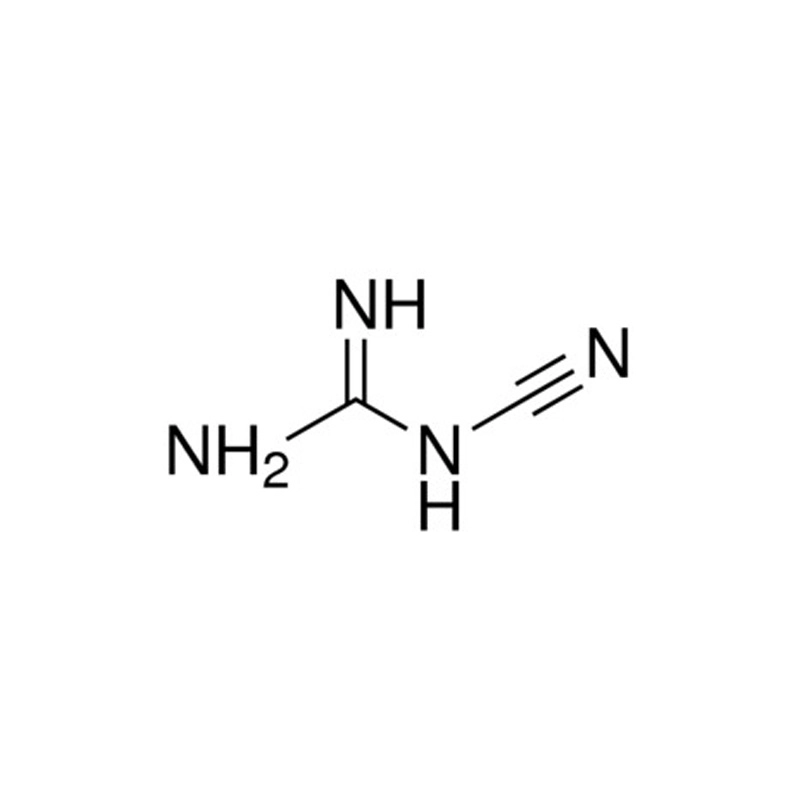
Dicyandiamide, commonly abbreviated as DICY or DCD, is an organic compound with the molecular formula C₂H₄N₄. It is a dimer of cyanamide and is also known as a cyano derivative of guanidine.
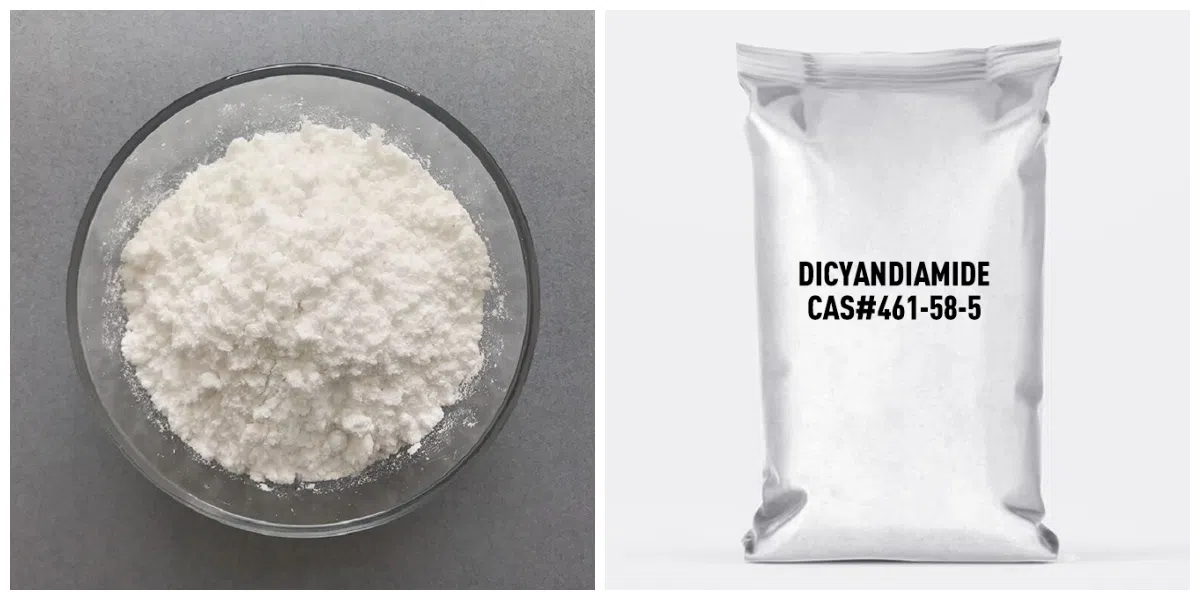
Dicyandiamide is typically supplied as a white crystalline powder. It is soluble in water and has varying solubility in organic solvents, including alcohols, ethylene glycol, and dimethylformamide (DMF). It is practically insoluble in solvents such as diethyl ether and benzene. The compound exhibits good stability under dry storage conditions when handled and stored according to the recommended specifications.
Due to its chemical properties, dicyandiamide is used in various industrial applications, including epoxy resin curing systems, chemical synthesis, fertilizer formulations, and the manufacture of selected specialty chemicals. Its suitability for specific applications depends on product grade, purity, and formulation requirements.
Product Parameters
| Melting point | 208-211 °C (lit.) |
| Boiling point | 144.35°C (rough estimate) |
| density | 1.40 |
| bulk density | 400kg/m3 |
| vapor pressure | 0.001Pa at 20℃ |
| refractive index | 1.6260 (estimate) |
| storage temp | 2-8°C |
| solubility | H2O: 0.1 g/mL, clear |
| pka | 0.73±0.70(Predicted) |
| form | Crystalline Powder |
| color | White |
| biological source | rabbit |
| Water Solubility | 32 g/L (20 ºC) |
| Merck | 14,3092 |
| BRN | 605637 |
| Stability | Stable. Incompatible with strong acids, strong oxidizing agents, strong bases. |
| InChIKey | QGBSISYHAICWAH-UHFFFAOYSA-N |
| LogP | -1 at 20℃ |
| CAS DataBase Reference | 461-58-5(CAS DataBase Reference) |
| NIST Chemistry Reference | Dicyandiamide(461-58-5) |
| EPA Substance Registry System | Dicyanodiamide (461-58-5) |
Safety Information
| Hazard Codes | Xn,T |
| Risk Statements | 20/21/22-43-36/38-25 |
| Safety Statements | 22-24/25-45-36-3 |
| RIDADR | UN 2811 6.1 / PGIII |
| WGK Germany | 1 |
| RTECS | ME9950000 |
| TSCA | Yes |
| HS Code | 29262000 |
| Hazardous Substances Data | 461-58-5(Hazardous Substances Data) |
| Toxicity | LD50 orally in Rabbit: > 5000 mg/kg LD50 dermal Rabbit > 2000 mg/kg |
Application Scenarios
Dicyandiamide (DICY), also known as dicyandiamide or cyanoguanidine, is an important chemical intermediate used in the production of specialty chemicals, fertilizers, resins, and other industrial materials.
1. Raw Material for Guanidine Compounds
Dicyandiamide reacts with suitable acids to produce various guanidine salts. It is also used as a precursor in the synthesis of guanidine derivatives and other nitrogen-containing compounds, which serve as intermediates in chemical manufacturing.
2. Textile Dye Fixatives
Dicyandiamide can react with formaldehyde to produce cationic resin intermediates used in certain textile dye-fixing formulations. These products help improve dye retention and color fastness, depending on the dye system and treatment conditions.
3. Fertilizers and Nitrogen Management
Dicyandiamide is used as a nitrification inhibitor in agricultural fertilizers. It helps slow the conversion of ammonium nitrogen into nitrate by inhibiting the activity of nitrifying microorganisms in soil. This can reduce nitrogen losses under suitable agricultural conditions and improve nitrogen-use efficiency.
4. Fine Chemical and Industrial Intermediates
Dicyandiamide is an important intermediate in the manufacture of various nitrogen-containing chemicals, including guanidine derivatives, thiourea-related compounds, and selected pharmaceutical intermediates. It is also used in the production of certain resin systems, adhesives, and other specialty chemical products.
5. Additional Industrial Applications
Depending on the formulation and application requirements, dicyandiamide is used in epoxy resin curing systems, selected resin synthesis processes, and the manufacture of certain industrial chemicals. Its derivatives also have applications in areas such as rubber processing and materials modification. Dicyandiamide can additionally be used in analytical chemistry for selected metal-ion determination methods.