
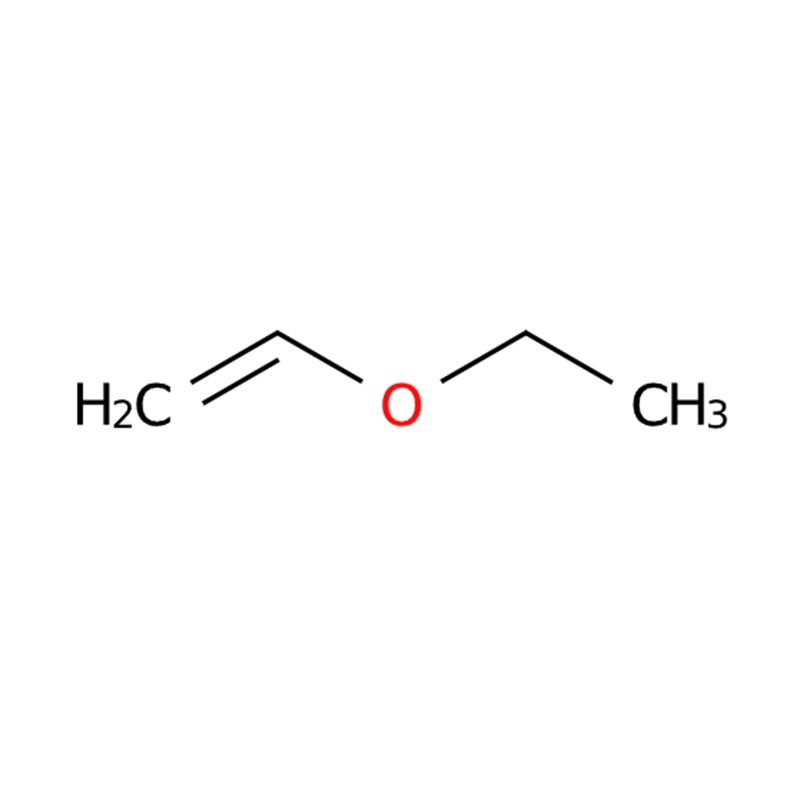
Product Description
Ethyl vinyl ether is a colorless, highly flammable liquid with high chemical reactivity. It polymerizes readily in both the liquid and vapor phases; industrial grades are therefore supplied with polymerization inhibitors to ensure storage stability.
Key physical properties include: melting point −115.8 °C (freezing point ≈ −115 °C); boiling point 35–36 °C; relative density d₂₀²⁰ = 0.754; refractive index n_D²⁰ = 1.3767; flash point −45.5 °C; autoignition temperature 201.66 °C; and viscosity 0.22 mPa·s at 20 °C.
It is only slightly soluble in water (~0.9 wt%) and exhibits a flammability range of 1.7–28 vol% in air.
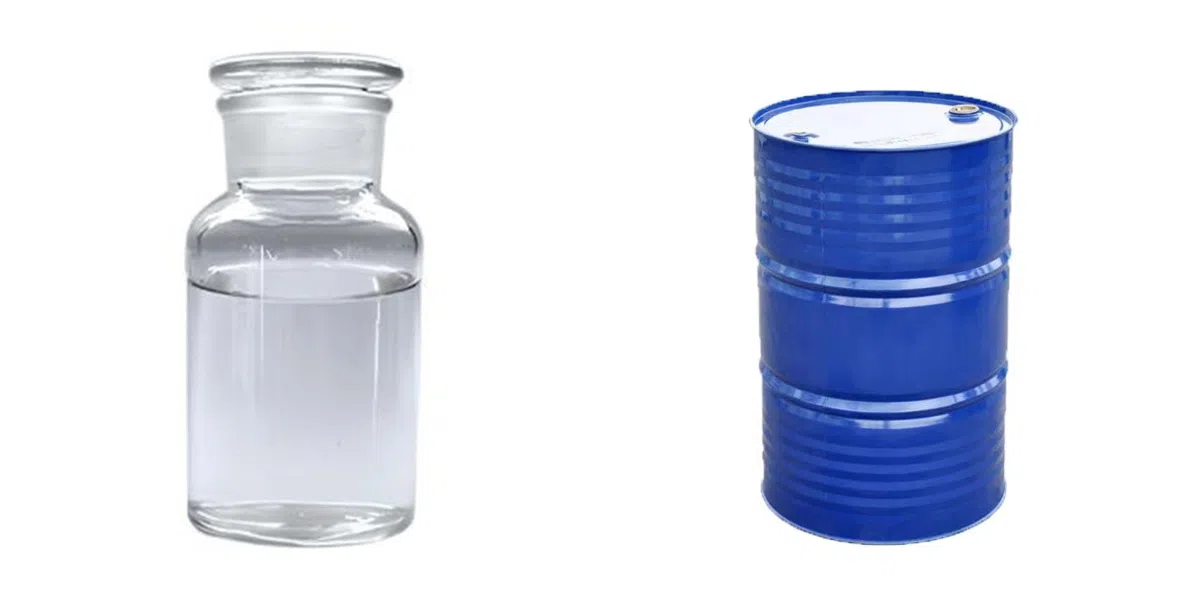
Product Parameters
| Melting point | -116 °C (lit.) |
| Boiling point | 33 °C (lit.) |
| density | 0.753 g/mL at 25 °C (lit.) |
| vapor pressure | 560 hPa (20 °C) |
| refractive index | n20/D 1.376(lit.) |
| Fp | −50 °F |
| storage temp. | 2-8°C |
| solubility | 8.3g/l |
| form | Liquid |
| color | Clear colorless |
| explosive limit | 1.3-12.0%(V) |
| Water Solubility | 7.8 g/L (25 ºC) |
| BRN | 605351 |
| Exposure limits | ACGIH: Ceiling 2 mg/m3 |
| NIOSH: Ceiling 2 mg/m3 | |
| Stability | Stable. Highly flammable. Incompatible with strong oxidizing agents. May form peroxides in storage - check for their formation before use. |
| InChIKey | FJKIXWOMBXYWOQ-UHFFFAOYSA-N |
| LogP | 1.63 at 25℃ |
| CAS DataBase Reference | 109-92-2(CAS DataBase Reference) |
| NIST Chemistry Reference | Ethene, ethoxy-(109-92-2) |
| EPA Substance Registry System | Vinyl ethyl ether (109-92-2) |
| Hazard Codes | F+,Xi,F |
| Risk Statements | 12-19-36/37/38-11 |
| Safety Statements | 16-23-26-3/7-33-36-9 |
| RIDADR | UN 1302 3/PG 1 |
| WGK Germany | 1 |
| RTECS | KO0710000 |
| F | 19 |
| Autoignition Temperature | 178 °C |
| TSCA | Yes |
| HazardClass | 3 |
| PackingGroup | I |
| HS Code | 29091900 |
| Hazardous Substances Data | 109-92-2(Hazardous Substances Data) |
| Toxicity | LD50 orally in Rabbit: 6120 mg/kg LD50 dermal Rabbit > 15000 mg/kg |
Application Scenarios
Ethyl vinyl ether is used in pharmaceuticals as an inhalational anesthetic and analgesic agent. It is also a key intermediate in fine-chemical synthesis, notably in the production of sulfadiazine and related sulfonamide compounds. Industrially, it serves as a reactive co-monomer for cationic copolymerization, a versatile building block in organic synthesis, and a feedstock for fragrance and lubricant-additive formulations.