Product Description
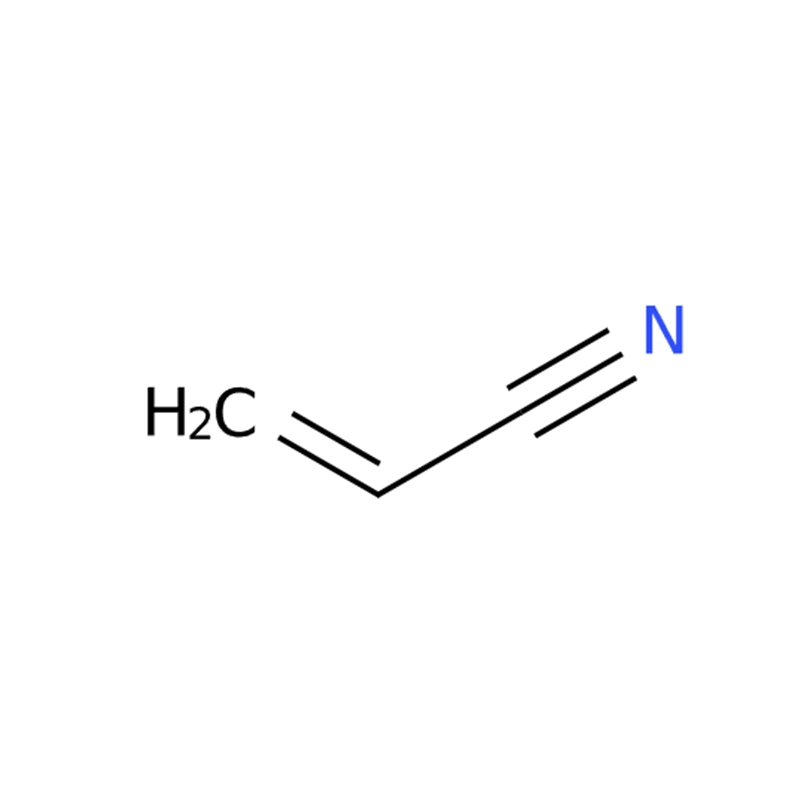
Acrylonitrile is a colorless to slightly yellow, flammable liquid with a characteristic odor. Its vapor can form flammable or explosive mixtures with air and therefore requires appropriate handling, storage, and process safety measures.
Acrylonitrile is an important industrial chemical feedstock and unsaturated nitrile compound produced on a large commercial scale. It does not occur naturally in significant quantities and is primarily manufactured for use in the production of polymers, synthetic fibers, plastics, and specialty chemicals.
The largest applications of acrylonitrile are in the manufacture of acrylic and modacrylic fibers, ABS (acrylonitrile-butadiene-styrene) resin, and SAN (styrene-acrylonitrile) resin. These materials are widely used in automotive components, consumer goods, electrical and electronic products, packaging, luggage, office equipment, and construction materials.
Acrylonitrile is also an important chemical intermediate for the synthesis of pharmaceuticals, dyes, antioxidants, and other specialty chemicals. One of its major derivatives, adiponitrile, is an important intermediate in the production of nylon and other chemical products.
Due to its versatility and broad downstream applications, acrylonitrile is an important feedstock for the acrylic fiber, engineering plastics, synthetic rubber, and specialty chemicals industries.
Note: Historical pesticide fumigation uses of acrylonitrile have been discontinued in many markets. Current applications are primarily focused on polymer production, chemical synthesis, and industrial manufacturing.
Product Parameters
| Melting point | -83 °C (lit.) |
| Boiling point | 77 °C (lit.) |
| density | 0.806 g/mL at 20 °C |
| vapor density | 1.83 (vs air) |
| vapor pressure | 86 mm Hg ( 20 °C) |
| refractive index | n20/D 1.391(lit.) |
| Fp | 32 °F |
| storage temp. | 2-8°C |
| solubility | 73g/l |
| form | Liquid |
| color | Clear |
| PH | 6.0-7.5 (50g/l, H2O, 20℃) |
| Odor | Mild pyridine-like odor at 2 to 22 ppm |
| Odor Threshold | 8.8ppm |
| explosive limit | 2.8-28%(V) |
| Water Solubility | Soluble. 7.45 g/100 mL |
| Sensitive | Light Sensitive |
| Merck | 14131 |
| BRN | 605310 |
| Henry's Law Constant | 1.30 at 30.00 °C (headspace-GC, Hovorka et al., 2002) |
| Exposure limits | NIOSH REL: TWA 1 ppm, 15-min C 1 ppm, IDLH 85 ppm; OSHA PEL: TWA 2 ppm, 15-min C 10 ppm; ACGIH TLV: TWA 2 ppm. |
| Dielectric constant | 33.01 |
| LogP | 0.017 at 21℃ |
| CAS DataBase Reference | 107-13-1(CAS DataBase Reference) |
| IARC | 2B (Vol. 71) 1999 |
| NIST Chemistry Reference | 2-Propenenitrile(107-13-1) |
| EPA Substance Registry System | Acrylonitrile (107-13-1) |
| Hazard Codes | F,T,N,Xn |
| Risk Statements | 45-11-23/24/25-37/38-41-43-51/53-39/23/24/25-62-63 |
| Safety Statements | 53-9-16-45-61-36/37 |
| RIDADR | UN 1093 3/PG 1 |
| OEB | D |
| OEL | TWA: 1 ppm, Ceiling: 10 ppm [15-minute] [skin] |
| WGK Germany | 3 |
| RTECS | AT5250000 |
| F | 8 |
| Autoignition Temperature | 481 °C |
| TSCA | Yes |
| HazardClass | 3 |
| PackingGroup | I |
| HS Code | 29261000 |
| Hazardous Substances Data | 107-13-1(Hazardous Substances Data) |
| Toxicity | LD50 orally in rats: 0.093 g/kg (Smyth, Carpenter) |
| IDLA | 60 ppm |
Application Scenarios
Acrylonitrile is primarily used as a feedstock for acrylic and modacrylic fibers and as a key monomer for a wide range of polymers and chemical intermediates.
Major Applications
Acrylic & Modacrylic Fibers: One of the major uses of acrylonitrile is the production of acrylic and modacrylic fibers, which are widely used in textiles, apparel, home furnishings, and industrial fabrics.
ABS Resin: Acrylonitrile is an important monomer for acrylonitrile-butadiene-styrene (ABS) resin. ABS typically contains around 20–30 wt% acrylonitrile, depending on the grade and formulation. It is widely used in automotive components, appliances, pipe fittings, consumer products, and electrical and electronic housings.
SAN Resin: Acrylonitrile is also used to produce styrene-acrylonitrile (SAN) resin, typically containing approximately 20–30 wt% acrylonitrile. SAN offers good clarity, rigidity, and chemical resistance and is used in automotive components, instrument panels, lenses, containers, and household products.
Chemical Intermediates: Acrylonitrile is used to manufacture important downstream chemicals, including adiponitrile, acrylamide, nitrile rubber, and specialty barrier resins.
Synthetic Rubber: Acrylonitrile is used in the production of nitrile rubber (NBR), which provides good resistance to oils, fuels, and chemicals and is widely used for seals, hoses, gaskets, and other industrial components.
Acrylonitrile has been an important commercial industrial chemical since the development of large-scale petrochemical production. Its broad downstream applications make it a key feedstock for the synthetic fiber, engineering plastics, synthetic rubber, and specialty chemical industries.
Note: Historical pesticide applications of acrylonitrile have been discontinued. Current industrial use is primarily focused on polymer production and chemical manufacturing.