Product Description
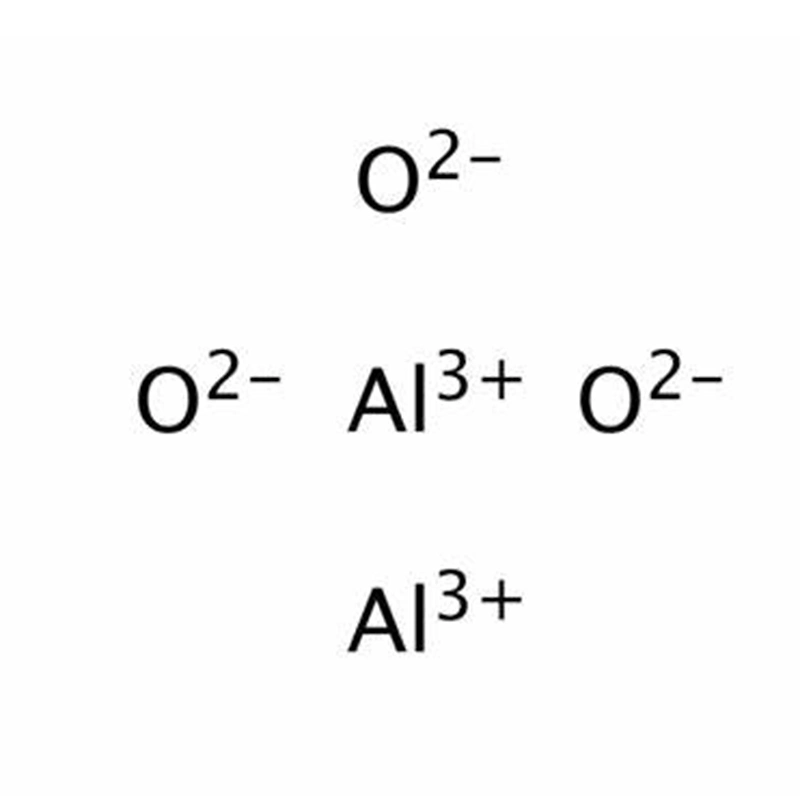
Alumina (Al₂O₃), also known as aluminum oxide, is a white, thermally stable inorganic compound that is practically insoluble in water. It has a melting point of approximately 2,050°C, a boiling point of around 2,980°C, and a specific gravity of approximately 3.9–4.0. With a Mohs hardness of around 9, alumina offers excellent hardness, wear resistance, and thermal stability.
Alumina exists in several crystalline phases, with α-alumina (corundum) being the most stable form and various transition phases, such as γ-alumina, occurring under different preparation and thermal conditions.
Industrial alumina is commonly produced from bauxite through the Bayer process, which involves refining bauxite to produce aluminum hydroxide followed by calcination to form alumina.
In nature, α-alumina occurs as corundum, a hard mineral used for abrasives and gemstones. Trace elements can impart different colors to corundum: chromium (Cr³⁺) produces the characteristic red color of ruby, while combinations of iron and titanium contribute to the colors of sapphire.
Product Parameters
| Melting point | 2040 °C(lit.) |
| Boiling point | 2980°C |
| density | 3.97 |
| bulk density | 950-1100g/L |
| vapor pressure | 17 mm Hg ( 20 °C) |
| refractive index | 1.765 |
| Fp | 2980°C |
| storage temp. | Sealed in dry,Room Temperature |
| solubility | Miscible with ethanol. |
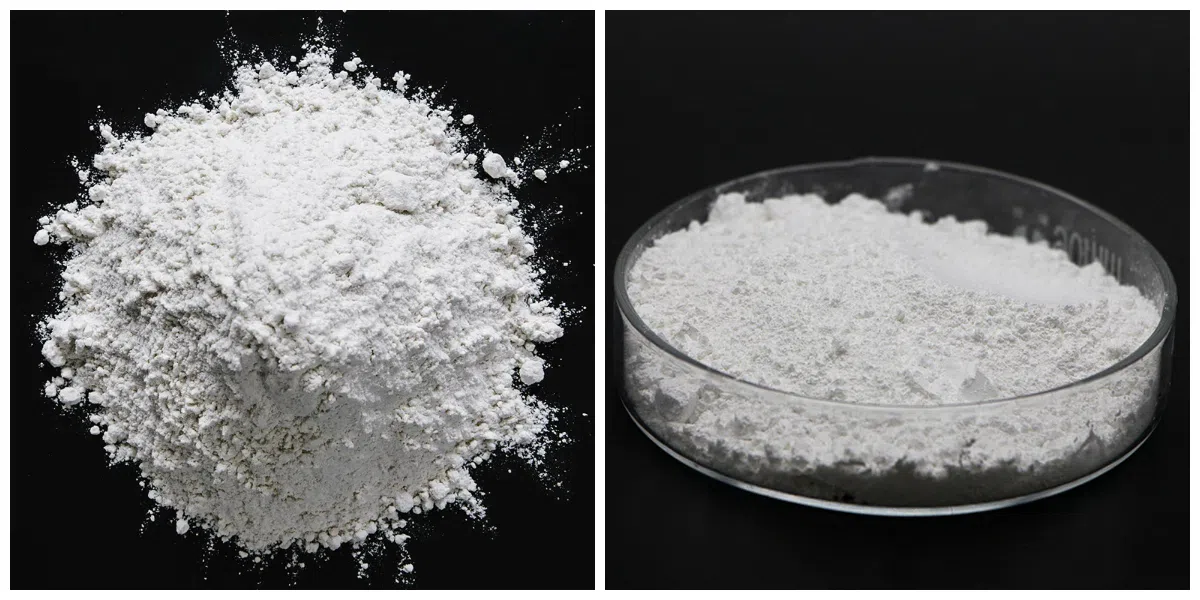
| form | powder |
| color | White to pink |
| Specific Gravity | 3.97 |
| Odor | Odorless |
| PH Range | 3.5 - 4.5 |
| PH | 7.0±0.5 ( in H2O) |
| Water Solubility | INSOLUBLE |
| semiconductor properties | <0001> |
| Crystal Structure | Trigonal |
| crystal system | Three sides |
| Merck | 14,356 |
| Space group | R3c |
| Lattice constant | a/nmb/nmc/nmα/oβ/oγ/oV/nm30.475890.475891.299190901200.2548 |
| Exposure limits | ACGIH: TWA 1 mg/m3 OSHA: TWA 15 mg/m3; TWA 5 mg/m3 |
| Dielectric constant | 4.5(Ambient) |
| InChIKey | PNEYBMLMFCGWSK-UHFFFAOYSA-N |
| CAS DataBase Reference | 1344-28-1(CAS DataBase Reference) |
| NIST Chemistry Reference | Aluminum oxide(1344-28-1) |
| EPA Substance Registry System | Alumina (1344-28-1) |
Safety Information
| Hazard Codes | Xi,F |
| Risk Statements | 36/37/38-67-36/38-11-36 |
| Safety Statements | 26-24/25-16-7-36 |
| WGK Germany | - |
| RTECS | BD1200000 |
| F | 3 |
| TSCA | Yes |
| HazardClass | 8 |
| HS Code | 28181010 |
| Hazardous Substances Data | 1344-28-1(Hazardous Substances Data) |
| Toxicity | Chronic inhalation of Al2O3 dusts may cause lung damage. |
Application Scenarios
Advanced manufacturing technologies enable the production of synthetic corundum and alumina-based gemstones through controlled crystallization processes. These materials can provide consistent optical, mechanical, and thermal properties and are used in both decorative and technical applications.
Alumina and corundum are widely used in high-speed machinery bearings, precision jewel bearings, abrasive materials, and high-temperature components due to their excellent hardness, wear resistance, and thermal stability.
Corundum crucibles are also used in high-temperature laboratory and industrial processes, where their thermal stability and chemical resistance allow them to withstand temperatures of approximately 1,800°C, depending on the material grade and operating conditions.