
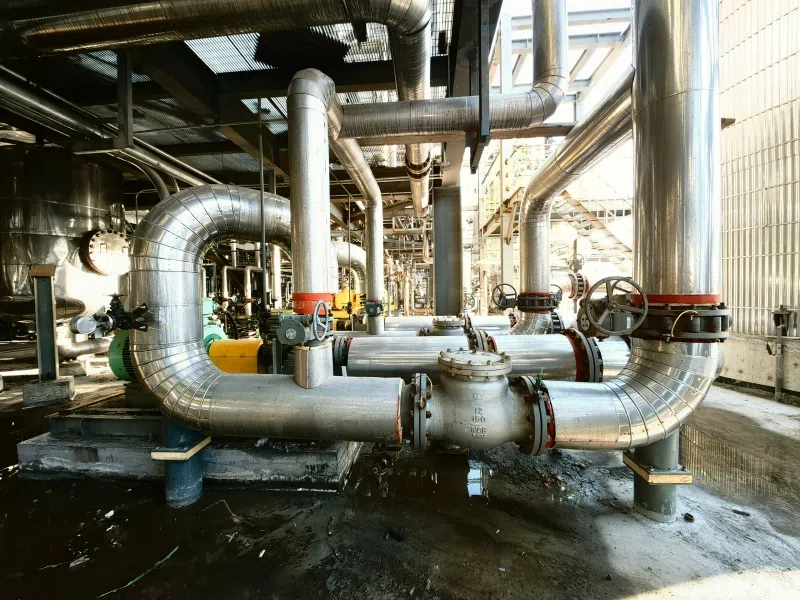
During long-term operation of industrial circulating water systems, two common problems need to be addressed. On the one hand, calcium and magnesium ions in the water become increasingly concentrated, which can lead to the formation of scale such as calcium carbonate and calcium sulfate, reducing heat transfer efficiency. On the other hand, dissolved oxygen, chloride ions, and fluctuations in water quality can accelerate metal corrosion and shorten equipment service life.
To control scaling and corrosion in industrial circulating water systems, corrosion and scale inhibitors are widely used as water treatment chemicals. By properly combining corrosion-inhibiting and scale-inhibiting components, these products can effectively control scale formation, reduce the corrosion rate of metal equipment, and improve the operational stability of industrial water systems.
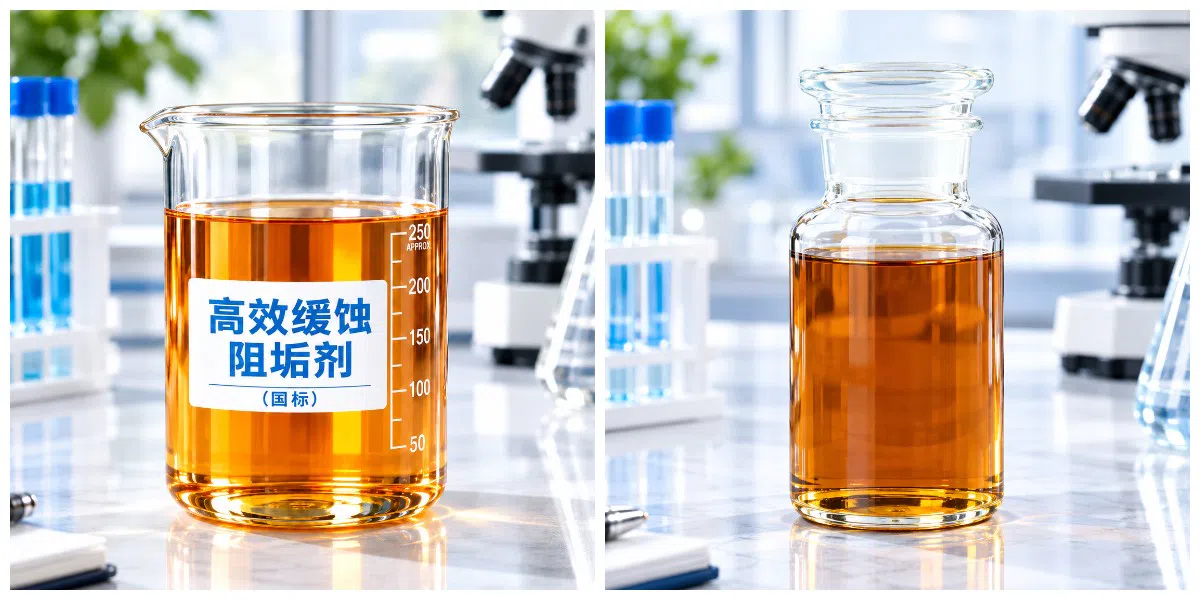
What Is a Corrosion and Scale Inhibitor?
A corrosion and scale inhibitor is a multifunctional chemical used in industrial water treatment systems. It provides both scale control and corrosion protection through mechanisms such as chelation, dispersion, crystal lattice distortion, and metal surface protection.
Compared with single-function water treatment chemicals, corrosion and scale inhibitors can address both scaling and corrosion problems in circulating water systems. This can help reduce the frequency of equipment cleaning and maintenance and improve the overall operating efficiency of industrial production systems.
Corrosion and scale inhibitors are widely used in industries such as power generation, steel manufacturing, petrochemicals, coal chemicals, textiles, pharmaceuticals, food processing, papermaking, and wastewater treatment.
Main Functions of Corrosion and Scale Inhibitors
1. Inhibiting Scale Deposition
As industrial circulating water continuously circulates and becomes concentrated, calcium ions, magnesium ions, carbonate ions, sulfate ions, and other substances in the water may exceed their solubility limits and form deposits of sparingly soluble salts.
The active components in corrosion and scale inhibitors can adsorb onto crystal surfaces, interfere with further crystal growth, and disperse fine particles in the water, thereby reducing the adhesion and accumulation of scale on heat-transfer surfaces and inside pipelines.
2. Protecting Metal Equipment and Reducing Corrosion
Metal equipment in circulating water systems is continuously exposed to water, oxygen, and various dissolved ions and can therefore be susceptible to electrochemical corrosion.
Corrosion-inhibiting components in corrosion and scale inhibitor formulations can form a protective film on metal surfaces, reducing direct contact between corrosive media and the metal substrate.
This can provide protection for commonly used materials such as carbon steel, copper, and stainless steel.
3. Improving Heat Transfer Efficiency
Scale deposits on equipment surfaces increase thermal resistance and reduce heat-transfer efficiency while increasing energy consumption.
The appropriate corrosion and scale inhibitor can reduce deposit formation and help maintain good heat-transfer performance in the circulating water system, potentially helping reduce operating costs.
Common Types of Corrosion and Scale Inhibitors
1. Organophosphonic Acid-Based Corrosion and Scale Inhibitors
Organophosphonic acid-based water treatment chemicals generally have good chelating properties and thermal stability and are widely used in industrial water treatment.
Common products include:
· ATMP (Aminotris(methylene phosphonic acid))
· HEDP (1-Hydroxyethylidene-1,1-Diphosphonic Acid)
· DTPMPA (Diethylenetriamine Penta(methylene Phosphonic Acid))
· PBTCA (2-Phosphonobutane-1,2,4-Tricarboxylic Acid)
These products can be used individually or formulated in combination according to specific water quality conditions to enhance scale and corrosion control performance.
2. Polymer-Based Corrosion and Scale Inhibitors
Polymer-based water treatment chemicals generally provide good dispersing performance and are particularly suitable for systems with high hardness, high alkalinity, or complex water quality.
Common products include:
· HPMA (Hydrolyzed Polymaleic Anhydride)
· AA/AMPS (Acrylic Acid/2-Acrylamido-2-Methylpropane Sulfonic Acid Copolymer)
· PAA (Polyacrylic Acid)
· MA/AA (Maleic Acid/Acrylic Acid Copolymer)
These polymers can help control the deposition of calcium carbonate, calcium phosphate, and other scale-forming substances and improve the operational stability of circulating water systems.
3. Formulated Corrosion and Scale Inhibitors
For different industries and operating conditions, professional water treatment chemical manufacturers can formulate organophosphonic acids, polymers, corrosion inhibitors, and other functional components based on water quality analysis.
This allows customized corrosion and scale control solutions to be developed for specific applications.
For example, circulating water systems in power plants, steel mills, and central air-conditioning systems may operate under different conditions and therefore require specially formulated treatment chemicals.
How to Choose the Right Corrosion and Scale Inhibitor?
When selecting a corrosion and scale inhibitor, companies should not focus solely on product price. Actual operating conditions should be considered comprehensively.
First, analyze the water quality, including parameters such as:
· Water hardness
· Alkalinity
· Electrical conductivity
· pH
· Chloride concentration
Second, consider the equipment and operating conditions, including:
· Equipment materials
· Operating temperature
· Circulation rate
· Cycles of concentration
· System recovery and concentration conditions
Finally, it is recommended to select a water treatment chemical manufacturer with strong R&D and technical service capabilities. A professional supplier should be able to analyze the specific operating conditions and provide an appropriate chemical dosing program.
For industrial circulating water systems, the right corrosion and scale inhibitor is not necessarily the product with the lowest unit price. The selection should be based on water quality, equipment materials, operating conditions, treatment performance, dosage, and overall operating cost.


