Product Description
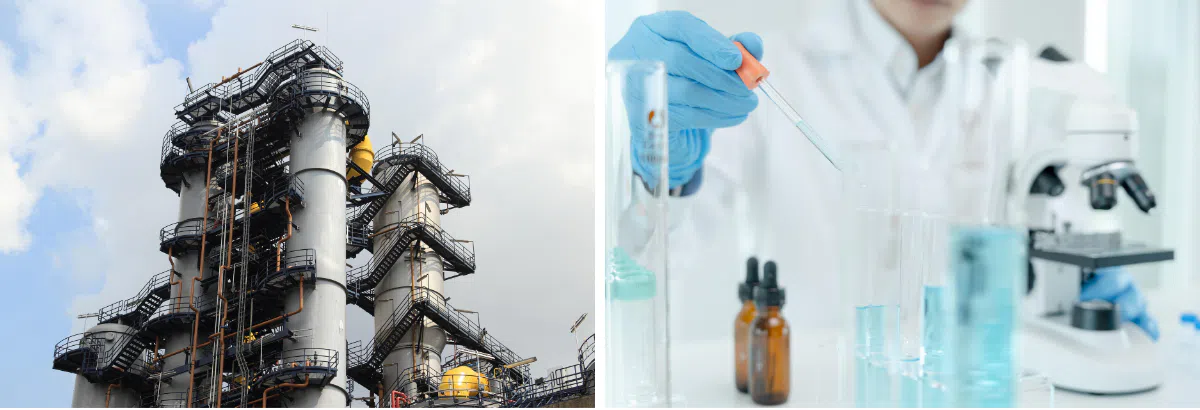
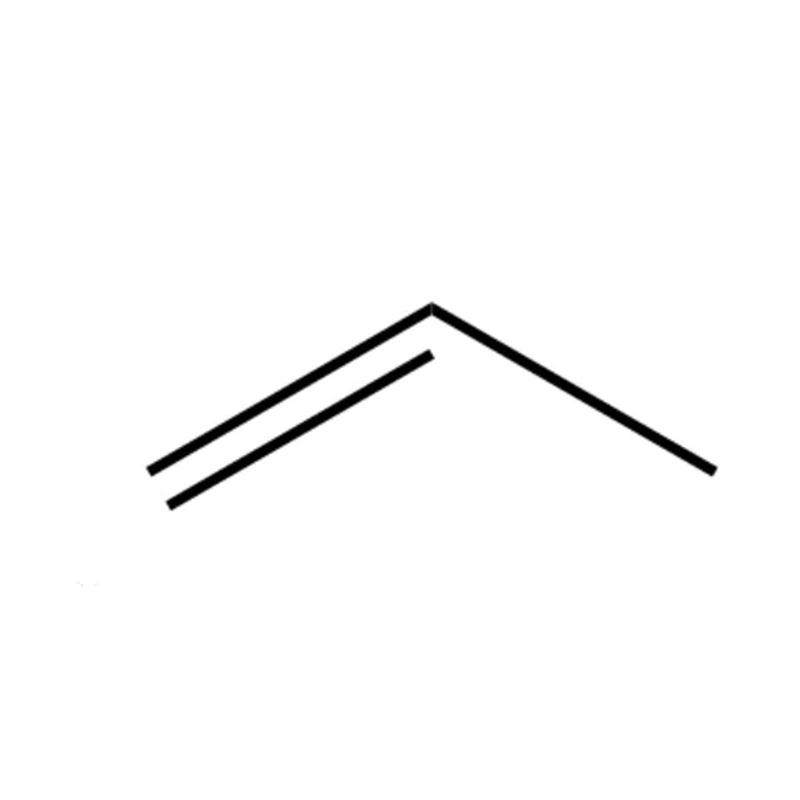
Propylene is a typical low-carbon unsaturated olefin with stable industrial production sources. Its highly reactive double bond allows rich chemical modification pathways, making it a pivotal intermediate to connect crude oil cracking processes and high-end chemical finished products.
Product Parameters
| Melting point | -185 °C(lit.) |
| Boiling point | -47.7 °C(lit.) |
| Density | 1.49 |
| Vapor density | 1.48 (vs air) |
| Vapor pressure | 15.4 atm (37.7 °C) |
| Refractive index | 1.3567 |
| Flash point | -108°C |
| Acidity coefficient (pKa) | 43(at 25°C) |
| Form | colorless gas |
| Explosion limits | 11.10% |
| Odor threshold | 13ppm |
| Water solubility | 0.33g/L(25 °C) |
| Thermal conductivity | 0.11 W/(m-K) |
| Freezing point | -185.25℃ |
| Merck | 137,941 |
| BRN | 1696878 |
| Henry's Law Con stant | 5.6x10⁻⁵ mol/(m3Pa) at 25℃, Plyasunov and Shock (2000) |
| Dielectric constant | 1.9 (20℃) |
| Stability | Stable. Highly flammable. Easily forms explosive mixtures with air. Incompatible with strong oxidizers, strong acids, and halogens. |
| InChI | 1S/C3H6/c1-3-2/h3H,1H2,2H3 |
| InChIKey | QQONPFPTGQHPMA-UHFFFAOYSA-N |
| SMILES | CC=C |
| LogP | 1.77 at 20℃ |
Application Scenarios
Oxidation & Ammoxidation Synthesis – It can be oxidized into acrolein and acrylic acid for producing allyl alcohol and methionine food additives. Ammonia oxidation yields acrylonitrile, a key monomer for synthetic fiber and rubber production.
Alkylation & Hydration Processing – Propylene alkylation produces cumene for phenol and acetone preparation. Hydration reaction generates isopropanol, which is further processed into acetone and isopropyl-series chemical products.
Polymerization & Deep Processing – Through oligomerization and polymerization, it produces polypropylene, propylene trimers and dodecene, widely used in surfactants, plasticizers, dyes and pesticide intermediates, realizing full industrial chain utilization.