Product Description
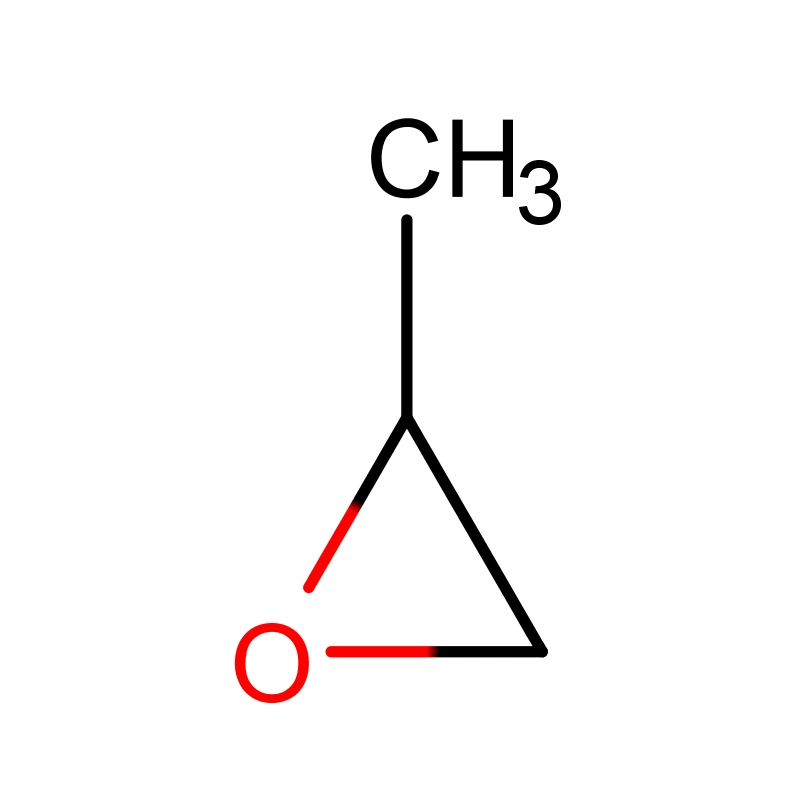
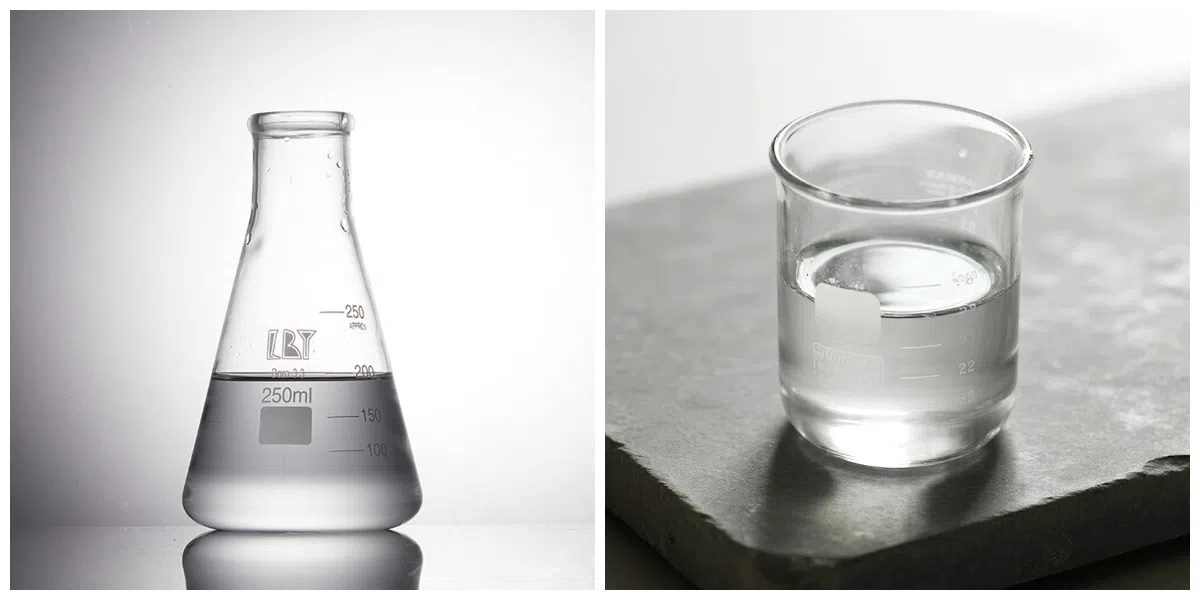
Propylene Oxide (PO), also known as 1,2-epoxypropane or methyl oxirane, is a colorless, highly volatile, and flammable liquid with a characteristic ether-like odor.
It has a molecular weight of 58.08 g/mol and a relative density of approximately 0.823 at 25°C. Key physical properties include a melting point of approximately −112.1°C, a boiling point of 34.2°C, a refractive index of 1.3664, and a closed-cup flash point of approximately −35°C. Its autoignition temperature is around 420°C.
Propylene oxide has significant vapor pressure due to its low boiling point and high volatility. It is highly soluble in water, with solubility of approximately 40.5% at 20°C and 60% at 30°C, and is compatible with many common organic solvents.
Propylene oxide can form azeotropic mixtures with water and various organic solvents, including dichloromethane, diethyl ether, cyclohexane, cyclopentane, and pentene. These physical properties make it an important reactive epoxide intermediate for a wide range of industrial chemical processes.
Due to its high volatility, flammability, and chemical reactivity, propylene oxide should be handled in accordance with appropriate industrial safety procedures, including suitable ventilation, ignition-source control, and closed-system handling where applicable.
Product Parameters
| Melting point | -112 °C |
| Boiling point | 34 °C(lit.) |
| density | 0.83 g/mL at 25 °C(lit.) |
| vapor density | 2 (vs air) |
| vapor pressure | 29.43 psi ( 55 °C) |
| refractive index | n20/D 1.366(lit.) |
| Fp | −35 °F |
| storage temp. | 2-8°C |
| solubility | 425-450g/l |
| form | Liquid |
| color | Clear |
| Odor | Ethereal; characteristic; sweet, alcoholyc; like natural gas. |
| explosive limit | 1.9-36%(V) |
| Water Solubility | 40 g/100 mL (20 ºC) |
| FreezingPoint | -112.13℃ |
| Merck | 147856 |
| BRN | 79763 |
| Henry's Law Constant | Not an environmentally important parameter because propylene oxide reacts rapidly with water |
| Exposure limits | TLV-TWA 50 mg/m3 (20 ppm) (ACGIH), 240 mg/m3 (100 ppm) (OSHA); IDLH 2000 ppm. |
| Stability: | Stable. Incompatible with acids, bases, oxidizing agents, copper, copper alloys, brass, bronze, iron, metal chlorides, peroxides and a wide variety of other materials. Reacts with compounds containing labile hydrogen. Extremely flammable - note low boiling point, low flash point and very wide explosion limits. Moisture sensitive. |
| LogP | 0.03 |
| CAS DataBase Reference | 75-56-9(CAS DataBase Reference) |
| NIST Chemistry Reference | Propylene oxide(75-56-9) |
| IARC | 2B (Vol. Sup 7, 60) 1994 |
| EPA Substance Registry System | Propylene oxide (75-56-9) |
Safety Information
| Hazard Codes | F+,T |
| Risk Statements | 45-46-12-20/21/22-36/37/38 |
| Safety Statements | 53-45 |
| RIDADR | UN 1280 3/PG 1 |
| WGK Germany | 3 |
| RTECS | TZ2975000 |
| Autoignition Temperature | 430 °C |
| TSCA | Yes |
| HS Code | 2910 20 00 |
| HazardClass | 3 |
| PackingGroup | I |
| Hazardous Substances Data | 75-56-9(Hazardous Substances Data) |
| Toxicity | LD50 orally in rats: 1.14 g/kg (Smyth) |
| IDLA | 400 ppm |
Application Scenarios
Propylene Oxide (PO) is an important petrochemical feedstock and reactive chemical intermediate widely used in the production of various downstream chemicals.
Its major applications include:
· Polyether Polyols: A key raw material for producing polyether polyols used in polyurethane foams, elastomers, coatings, adhesives, and sealants.
· Propylene Glycol: Widely used as a feedstock for manufacturing propylene glycol and related derivatives.
· Surfactants: Used in the production of various nonionic surfactants and specialty surface-active chemicals.
· Foaming Agents: Used as a chemical intermediate in the manufacture of foaming agents and related formulations.
· Demulsifiers: Applied in the production of demulsifiers used in petroleum and industrial processing.
· Mineral Processing Chemicals: Used as a raw material or intermediate in selected mineral flotation and ore-processing formulations.
Overall, propylene oxide is a versatile epoxide intermediate with broad applications across the polyurethane, petrochemical, surfactant, petroleum, and specialty chemical industries.