Product Description
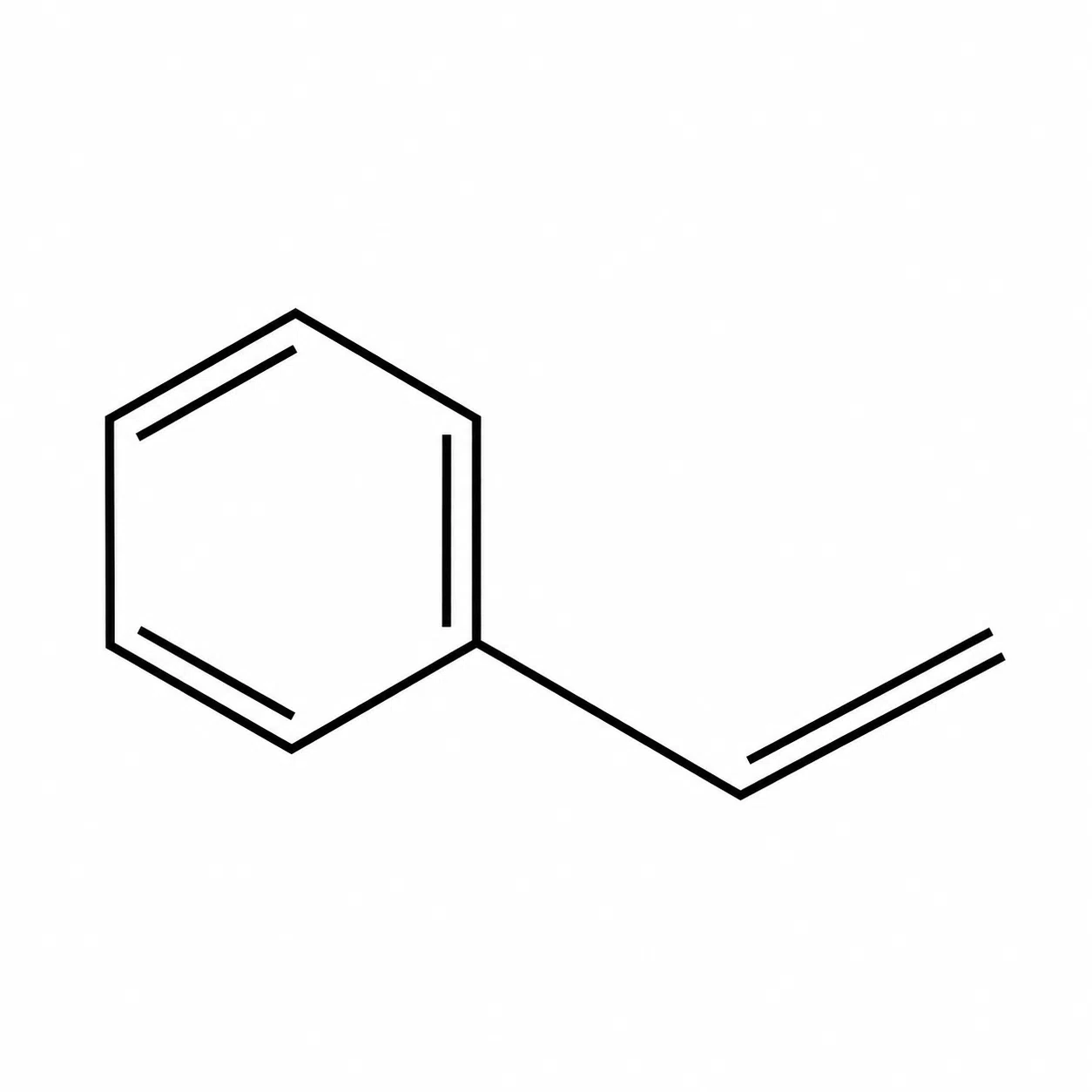
Styrene is an aromatic organic compound with the molecular formula C₈H₈ and the structural formula C₆H₅CH=CH₂. It is also known as styrol, vinylbenzene, or phenylethene.
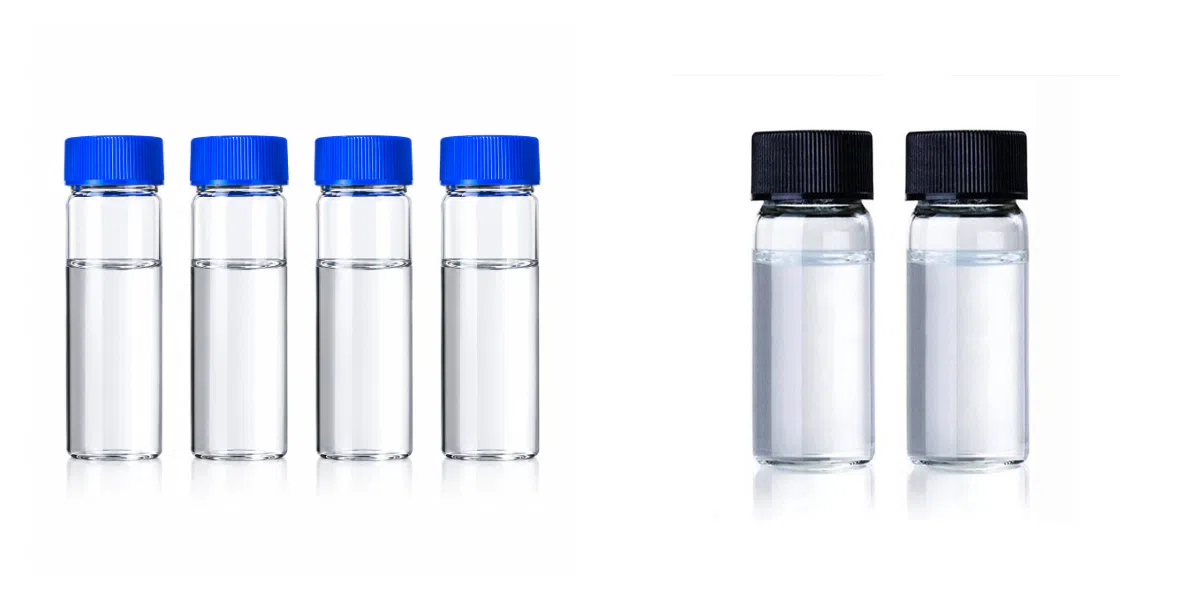
At room temperature and atmospheric pressure, styrene is a clear, colorless to slightly yellow liquid with a characteristic aromatic odor. Its molecular structure consists of a benzene ring attached to a vinyl group, giving it high reactivity and making it an important monomer for polymerization.
Styrene is a major chemical feedstock and polymer intermediate widely used in the manufacture of polystyrene (PS), expanded polystyrene (EPS), ABS resin, SAN resin, styrene-butadiene rubber (SBR), unsaturated polyester resins, and various adhesives and coatings.
Due to its excellent polymerization properties and broad downstream applications, styrene is an important raw material for the plastics, synthetic rubber, resins, adhesives, and construction materials industries.
Product Parameters
| Melting point | -31 °C (lit.) |
| Boiling point | 145-146 °C (lit.) |
| density | 0.906 g/mL at 25 °C |
| vapor density | 3.6 (vs air) |
| vapor pressure | 12.4 mm Hg ( 37.7 °C) |
| refractive index | n20/D 1.546(lit.) |
| Fp | 88 °F |
| storage temp. | Store at <= 20°C. |
| solubility | 0.24g/l |
| form | Liquid |
| pka | >14 (Schwarzenbach et al., 1993) |
| Specific Gravity | 0.909 |
| color | Colorless |
| Odor | at 0.10 % in triacetin. sweet balsam floral plastic |
| Odor Type | balsamic |
| Odor Threshold | 0.035ppm |
| explosive limit | 1.1-8.9%(V) |
| Water Solubility | 0.3 g/L (20 ºC) |
| FreezingPoint | -30.6℃ |
| Sensitive | Air Sensitive |
| Merck | 14,8860 |
| BRN | 1071236 |
| Henry's Law Constant | (x 10-3 atm?m3/mol): 3.91 at 25 °C (static headspace-GC, Welke et al., 1998) |
| Exposure limits | TLV-TWA 50 ppm (~212 mg/m3) (ACGIH and NIOSH), 100 ppm (~425 mg/m3) (OSHA and MSHA); ceiling 200 ppm, peak 600 ppm/5 min/3 h (OSHA); STEL 100 ppm (~425 mg/m3) (ACGIH). |
| Dielectric constant | 2.4(25℃) |
| Stability: | Stable, but may polymerize upon exposure to light. Normally shipped with a dissolved inhibitor. Substances to be avoided include strong acids, aluminium chloride, strong oxidizing agents, copper, copper alloys, metallic salts, polymerization catalysts and accelerators. Flammable - vapour may travel considerable distance to ignition source |
| InChIKey | PPBRXRYQALVLMV-UHFFFAOYSA-N |
| LogP | 2.96 at 25℃ |
| CAS DataBase Reference | 100-42-5(CAS DataBase Reference) |
| IARC | 2A (Vol. 60, 82, 121) 2019 |
| NIST Chemistry Reference | Styrene(100-42-5) |
| EPA Substance Registry System | Styrene (100-42-5) |
Safety Information
| Hazard Codes | Xn,T,F |
| Risk Statements | 10-20-36/38-40-36/37/38-39/23/24/25-23/24/25-11-48/20-63 |
| Safety Statements | 23-36-26-16-45-36/37-7-46 |
| RIDADR | UN 2055 3/PG 3 |
| OEB | A |
| OEL | TWA: 50 ppm (215 mg/m3), STEL: 100 ppm (425 mg/m3) |
| WGK Germany | 2 |
| RTECS | WL3675000 |
| Autoignition Temperature | 914 °F |
| TSCA | Yes |
| HS Code | 2902 50 00 |
| HazardClass | 3 |
| PackingGroup | III |
| Hazardous Substances Data | 100-42-5(Hazardous Substances Data) |
| Toxicity | LD50 in mice (mg/kg): 660 ± 44.3 i.p.; 90 ± 5.2 i.v. |
| IDLA | 700 ppm |
Application Scenarios
Styrene is an important monomer and chemical feedstock widely used in the production of plastics, synthetic rubber, resins, adhesives, and other specialty materials.
1. Plastics and Resin Production
Styrene is a key raw material for manufacturing polystyrene (PS), expandable polystyrene (EPS), and other styrene-based polymers. It is also widely used to produce ion-exchange resins and foam plastics.
2. ABS and SAN Resins
Styrene is copolymerized with acrylonitrile and butadiene to produce ABS (acrylonitrile-butadiene-styrene) resin, which is widely used in automotive components, household appliances, electrical and electronic products, consumer goods, and industrial equipment.
Copolymerization of styrene with acrylonitrile produces SAN (styrene-acrylonitrile) resin, which offers good rigidity, transparency, chemical resistance, and impact performance for various applications.
3. Synthetic Rubber and Thermoplastic Elastomers
Styrene is an important monomer for producing styrene-butadiene rubber (SBR) and styrene-based thermoplastic elastomers such as SBS (styrene-butadiene-styrene) and SIS (styrene-isoprene-styrene).
These materials are widely used in tires, footwear, adhesives, sealants, asphalt modification, coatings, and other flexible polymer products.
4. Unsaturated Polyester Resins and Coatings
Styrene is commonly used as a reactive diluent and crosslinking monomer in unsaturated polyester resin systems. It helps reduce resin viscosity and participates in the curing process.
These resin systems are widely used in fiberglass-reinforced plastics (FRP), coatings, composite materials, construction products, and industrial components.
5. Adhesives and Emulsions
Styrene can be copolymerized with acrylic monomers and vinyl acetate to produce styrene-acrylic emulsions and other polymer systems used in adhesives, coatings, paints, and construction formulations.
6. Specialty Chemical Synthesis
In addition to polymer production, styrene is used as an intermediate for the synthesis of various specialty chemicals, dyes, agricultural chemicals, and other organic compounds.
Overall, styrene is a versatile aromatic vinyl monomer and an important industrial feedstock supporting the plastics, synthetic rubber, coatings, adhesives, composites, and specialty chemicals industries.